

Table of Contents
- Step 1: Declutter and Discard Old Equipment
- Step 2: Deep Clean the Space
- Step 3: Categorize and Sort Your Tack
- Tack Room Storage Ideas That Actually Work
- How to Store Horse Saddles for Long-Term Care
- Tack Room Cleaning Checklist for Ongoing Maintenance
- Pest Prevention and Climate Control
- Labeling and Inventory Systems for Shared Spaces
Last Updated: August 20, 2026
Step 1: Declutter and Discard Old Equipment
The first move toward organizing a messy tack room is brutal honesty about what you actually use. Most riders hold onto equipment that hasn't seen use in years. Clearing out dead weight is a significant unlock for a functional space.
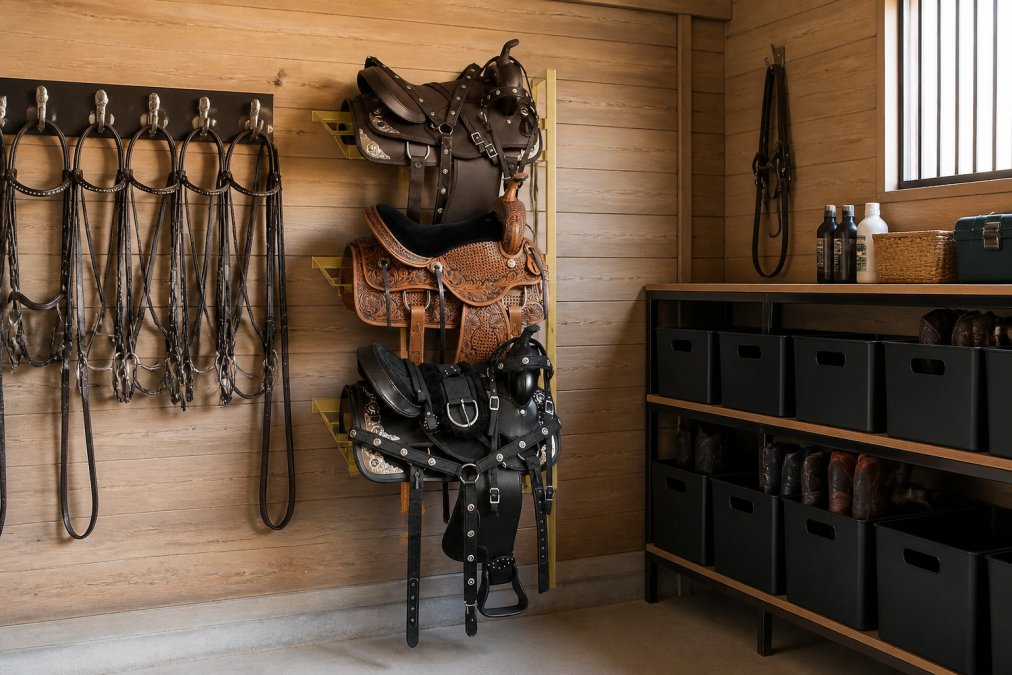
Start by pulling everything out into a staging area. Create three piles: keep, donate, and discard. Be ruthless with the donate pile. Cracked leather tack, torn saddle pads, dried-out hoof oils, and bridles that no longer fit your horse are taking up premium real estate. Donate usable items to local riding programs or rescues; toss anything genuinely damaged beyond repair.
Check expiration dates on first-aid supplies and medications. Expired liniment, old antibiotics, and oxidized leather treatments are liabilities, not assets. Replace them with fresh stock. Once you've whittled down to what you genuinely use, you'll be shocked at how much space opens up.
Step 2: Deep Clean the Space
Before organizing anything back, clean the space properly. Use a broom to knock down cobwebs and dust from corners and high shelves. Sweep or vacuum the entire floor, getting into corners and under where shelving will go. Wipe down any existing shelving, racks, or wall space with a damp cloth to remove dust and grime.
Pay special attention to areas where moisture collects; these are prime spots for mold and mildew, which damage leather and create health hazards. Clean windows to maximize natural light, which transforms how a space feels and makes it easier to find what you need. If natural light is limited, consider adding battery-operated LED strips or clip-on work lights.
Step 3: Categorize and Sort Your Tack
Organize what remains into logical categories. Group items by type and frequency of use: saddles together, bridles together, saddle pads with their matching saddles. Daily-use grooming supplies belong in the most accessible spot. Seasonal items like heavy blankets go higher up or further back. First-aid supplies should be in one designated, clearly labeled container.
Consider who uses this space. If multiple family members or barn staff access the tack room, your categorization needs to be intuitive enough that anyone can find what they need without asking. Don't organize by what looks nice; organize by workflow. Where do you stand when tacking up? What do you grab first? Build your layout around how you actually use the space.
Tack Room Storage Ideas That Actually Work
Wall-mounted solutions are non-negotiable for efficient organization. Vertical storage transforms a cramped space into a functional one by using wall space that would otherwise sit empty.
Wall-Mounted Saddle Racks and Bridle Hooks
Saddle racks are the anchor point of any organized tack room. A quality wall-mounted saddle rack keeps your saddles visible, accessible, and properly supported. The GOLASON 3-Tier Wall-Mounted Saddle Rack ($163.99) is built for heavy-duty use and holds multiple saddles securely.

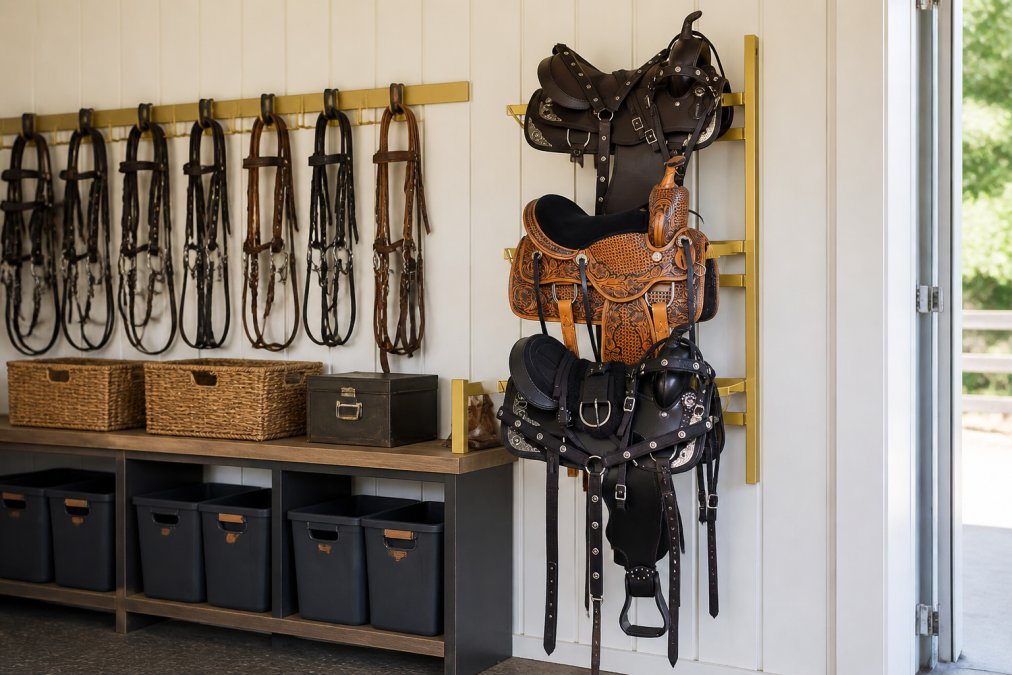
Position your saddle rack at eye level so you can see all your saddles at a glance. For larger collections, consider the Paterr Wall-Mount Saddle Rack Set ($148.99) or the VEVOR Wall-Mount Saddle Rack Set ($462.87). Bridle hooks should be installed at a comfortable height, usually around 5-6 feet up the wall. The Intrepid International 4-Hook Bridle Rack ($68.99) is compact and durable. If you have more than four bridles, install multiple hook sets spaced apart rather than clustering them to prevent tangling.
Vertical Storage and Translucent Containers
Heavy-duty metal shelving is more durable than wood, especially in damp environments. Aim for shelves deep enough to hold standard storage bins, usually 12-18 inches. Translucent storage containers let you see what's inside without opening every bin. Label each container clearly on the front and spine so you can identify contents from across the room.
Stack containers strategically. Heavy items like saddle pads and blankets go on lower shelves. Lighter items like grooming supplies can go higher up. This prevents strain and keeps your tack room safer.
Organizing First-Aid and Grooming Supplies
First-aid supplies deserve their own dedicated space in a large translucent plastic bin that's easy to access in an emergency. Organize supplies by type: wound care, medications, and bandaging materials in separate sections. Label everything clearly, including expiration dates.
Organize grooming supplies by function: brushes and curry combs together, hoof care tools in their own section, shampoos and coat treatments grouped separately.
How to Store Horse Saddles for Long-Term Care
Saddles are often the most expensive piece of equipment in your tack room, so storing them correctly protects your investment. Use saddle racks that support the tree properly. Wall-mounted racks like the GOLASON option distribute weight evenly across the saddle, preventing stress on the tree.
Store saddles in a climate-controlled space when possible. Extreme temperature swings and high humidity cause leather to dry out, crack, or develop mold. Use a dehumidifier or moisture-absorbing products like silica gel canisters to keep humidity levels down.
Protect saddles from dust and direct sunlight. Keep saddles away from windows to prevent fading and leather deterioration. Before storing a saddle long-term, clean it thoroughly and condition the leather. A well-maintained saddle stored properly can last decades.
Tack Room Cleaning Checklist for Ongoing Maintenance
Organization only sticks if you maintain it. A simple checklist keeps your tack room functional week to week.
Weekly Tasks:
- Sweep the floor and clear debris
- Return items to their designated spots immediately after use
- Check that all containers are properly closed and labeled
Monthly Tasks:
- Deep sweep and mop the floor
- Wipe down all shelving and storage containers
- Check for signs of moisture, mold, or pests
- Organize grooming supplies and discard dried-out products
Seasonal Tasks (quarterly):
- Pull everything off shelves and wipe them down thoroughly
- Check expiration dates on first-aid supplies and medications
- Rotate heavy blankets and seasonal gear
- Inspect wall-mounted racks for loose hardware
Annual Tasks:
- Full inventory of all equipment
- Condition all leather saddles and bridles
- Replace worn-out storage containers
- Assess whether your organization system still works
A 15-minute daily tidy and a 30-minute monthly deep clean prevent the slow creep back into messiness.
Pest Prevention and Climate Control
A well-organized tack room is only half the battle. Protecting your equipment from pests and environmental damage keeps your gear in usable condition.
Prevent infestations by sealing gaps around doors, windows, and where pipes enter the building. Install door sweeps on the bottom of doors. Store grain, supplements, and treats in metal containers with tight-fitting lids, not in open bags. Keep these containers elevated off the floor and away from walls where pests can hide.
Use natural pest deterrents like peppermint oil-soaked cotton balls or cedar blocks in storage areas. Snap traps are more effective than poison if you spot rodent activity.
Climate control is equally important. Leather deteriorates in high humidity and extreme temperature swings. Aim for humidity levels between 30-50%; anything higher encourages mold and mildew. Ventilation prevents stale air and moisture buildup. Open windows or doors when weather permits. If your tack room lacks windows, install a simple exhaust fan to move air through the space.
Labeling and Inventory Systems for Shared Spaces
If multiple people use your tack room, labeling becomes essential. Label every storage container on the front and spine using a consistent format. Include what's inside and, if relevant, what horse it belongs to.
Create a master inventory list and post it on the inside of the tack room door or on a clipboard. Include what's stored where, quantities, and any special notes. This prevents panic searches and helps you spot what needs replacing.
For shared spaces with multiple riders, consider assigning each person a color. All of Sarah's gear gets red labels, all of Emma's gets blue. This prevents mix-ups and makes it obvious when someone's equipment is in the wrong spot.
Update your inventory quarterly as you add new equipment or retire old pieces.
Organizing a messy tack room isn't a one-time project; it's the foundation for a functional barn routine. When your equipment is clean, accessible, and properly stored, you spend less time searching and more time riding. Horsey Horse Store carries the wall-mounted saddle racks, bridle hooks, and storage solutions that make this system work. Quality storage hardware like the GOLASON and Paterr saddle racks turns a cluttered space into one that actually functions. Get started with the right tools and a clear plan, and you'll wonder why you waited so long to tackle it.
Frequently Asked Questions
How can I organize my tack room when I don't have much wall space?
Maximize vertical storage by installing wall-mounted saddle racks and bridle hooks high up, freeing floor space. Use tension rods inside cabinets to hang bridles, and stack translucent containers on shelves so you can see contents without opening them. Over-the-door organizers and corner shelving units also work well in tight spaces. Focus on using every inch of wall and ceiling height rather than spreading items across the floor.
What should be on a tack room cleaning checklist?
A basic tack room cleaning checklist includes: sweep and mop floors weekly, wipe down saddle racks and bridle hooks monthly, check for dust and cobwebs, inspect leather for mold or mildew, organize grooming supplies and return items to their labeled spots, and deep clean the entire room seasonally. Include a pest inspection as part of monthly maintenance. Set a reminder to rotate and check first-aid supplies for expiration dates every quarter.
How do I store horse saddles properly to prevent damage?
Store saddles on wall-mounted racks or saddle stands that support the tree and distribute weight evenly. Keep them in a climate-controlled area away from extreme heat and moisture, which can warp leather. Use saddle pads underneath to protect the leather surface, and avoid stacking saddles directly on top of each other. Clean saddles before storage, and store them away from direct sunlight. A wall-mounted saddle rack like the GOLASON 3-Tier ($163.99) or Paterr Wall-Mount option ($148.99) prevents warping and saves floor space.
How do I keep a shared tack room organized with multiple riders?
Assign each rider a labeled section or color-coded storage area for their bridles, saddle pads, and grooming supplies. Create a simple inventory system using a whiteboard or printed checklist showing who owns what. Establish a rule that all items must be returned to their labeled spot after use. Hold a monthly group organization session to catch items that get misplaced. Clear labeling prevents confusion and makes it easy for everyone to find and return gear quickly.
This article was written using GrandRanker