

Table of Contents
- Why Regular Grooming Is Your First Defense Against Stains
- Step 1: Identify the Stain Type Before You Start
- Step 2: Gather Your Grooming Kit and Cleaning Agents
- Step 3: How to Clean Stubborn Horse Stains With Spot Treatment
- Step 4: Rinse Thoroughly and Dry to Restore Coat Shine
- The Best Horse Stain Remover for Set-In Marks
- How to Keep a White Horse Clean Between Baths
- Common Mistakes That Make Stains Worse
- Frequently Asked Questions
Last Updated: September 5, 2026
Why Regular Grooming Is Your First Defense Against Stains
The best way to clean stubborn horse stains is to stop them from setting in the first place. A daily grooming routine removes dirt, sweat, and organic matter before it has time to bond with the coat fibers. This guide from Horsey Horse Store walks through the exact process for tackling those tough marks, from fresh manure smears to set-in urine scald on white socks.
Most stain problems start with a simple gap in routine. When you skip a day of currying, mud and manure dry into the hair shaft, making the job ten times harder later. A quick five-minute session with a curry comb and stiff brush each day lifts loose debris and distributes natural oils, which act as a barrier against future staining.
Consistency matters more than intensity. Horses turned out in muddy paddocks need attention twice daily, while stalled horses might only need a thorough once-over in the morning. The goal is simple: keep the coat surface clean so nothing has time to oxidize or dry into a permanent mark.
Step 1: Identify the Stain Type Before You Start
Not all horse stains respond to the same treatment, so identifying what you are dealing with comes first. Manure stains, urine scald, grass stains, and mud each have different chemical profiles that require different cleaning agents and techniques.
Manure and urine stains are organic and protein-based. They respond well to enzymatic cleaners and warm water, which break down the biological compounds. Grass stains contain chlorophyll and plant pigments that need a slightly alkaline solution to lift. Mud is mostly mineral-based and usually rinses free with plain water once dried and brushed out.
The age of the stain changes your approach too. Fresh marks lift with a damp towel and mild soap, while set-in stains that have dried and oxidized require a dedicated spot treatment and more patience. Check the affected area in good light before choosing your method.
Step 2: Gather Your Grooming Kit and Cleaning Agents
A well-stocked grooming kit makes the difference between a quick fix and a long battle. For stubborn stains, you need more than just a brush and water.

Your essential kit includes a curry comb to loosen surface dirt, a stiff bristle brush for deep coat work, a hoof pick for debris, and a sweat scraper for bathing. For stain work specifically, add clean white cloths or sponges, a spray bottle, and your chosen cleaning agent. A complete set like the 10-Piece Horse Grooming Kit keeps everything organized in one tote so you are not hunting for tools mid-task.
Choose your cleaning agents carefully. Many commercial stain removers are pH-balanced for horse coats, matching the natural slightly acidic pH of equine skin, around 5.5 to 6.5. Harsh household detergents or human shampoos disrupt this balance and can strip natural oils, leaving the coat dull and the skin irritated. For sensitive horses, look for hypoallergenic, residue-free formulas that rinse out completely.
| Stain Type | Best First Action | Cleaning Agent | Rinse Method |
|---|---|---|---|
| Fresh manure | Lift with paper towel | Mild soap + water | Damp towel wipe |
| Dried manure | Brush out loose debris | Enzymatic cleaner | Warm water rinse |
| Urine scald | Rinse with cool water | pH-balanced wash | Thorough rinse + dry |
| Grass stains | Pre-soak area | Alkaline spot treatment | Full rinse |
| Mud | Dry, then brush | Plain water | Hose or sponge |
Step 3: How to Clean Stubborn Horse Stains With Spot Treatment
Spot treatment is the core technique for cleaning stubborn horse stains without giving the whole horse a bath. It targets the affected area directly, using concentrated product and focused effort where it is needed most. The difference between a stain that lifts in one pass and one that requires three days of repeated work comes down to how you apply, dwell, and agitate the cleaner.
Begin by removing any loose dirt or dried manure with a curry comb and stiff brush. Working product into a dirty coat just spreads the stain and grinds grit into the hair. Once the surface is clean, dampen the stained area with warm water, not hot, which can set protein-based stains, and not cold, which closes the hair shaft and reduces product penetration. Warm water opens the cuticle just enough for the cleaner to reach the pigment trapped between the hair fibers.
Apply your chosen spot treatment directly to the stain. Work it in with your fingers or a soft brush, using a gentle circular motion to lift the pigment from the hair. Work from the outside of the stain toward the center to avoid spreading the pigment into clean coat. Let the product sit for two to three minutes, then agitate again. For heavy stains, repeat the application before rinsing.

For enzymatic cleaners, the best choice for manure and urine, dwell time is critical. Enzymes need time to digest protein bonds; a quick scrub-and-rinse defeats the purpose. Most enzymatic formulas require 5 to 10 minutes of contact time to fully break down organic matter (peer-reviewed research). Apply, let it sit while you groom another area, then return to agitate and rinse. Oxygen-based brighteners work faster but need thorough rinsing to avoid leaving a white residue on dark coats.
A common mistake is using too much product. A saturated coat dilutes the active ingredients and makes rinsing harder. Instead, use a spray bottle to mist the area lightly, then work the product in with a damp sponge. You want the hair coated, not dripping. For set-in stains on white socks, a paste made from a pH-balanced shampoo and warm water can be applied directly and left to dwell for 5 minutes before agitation.
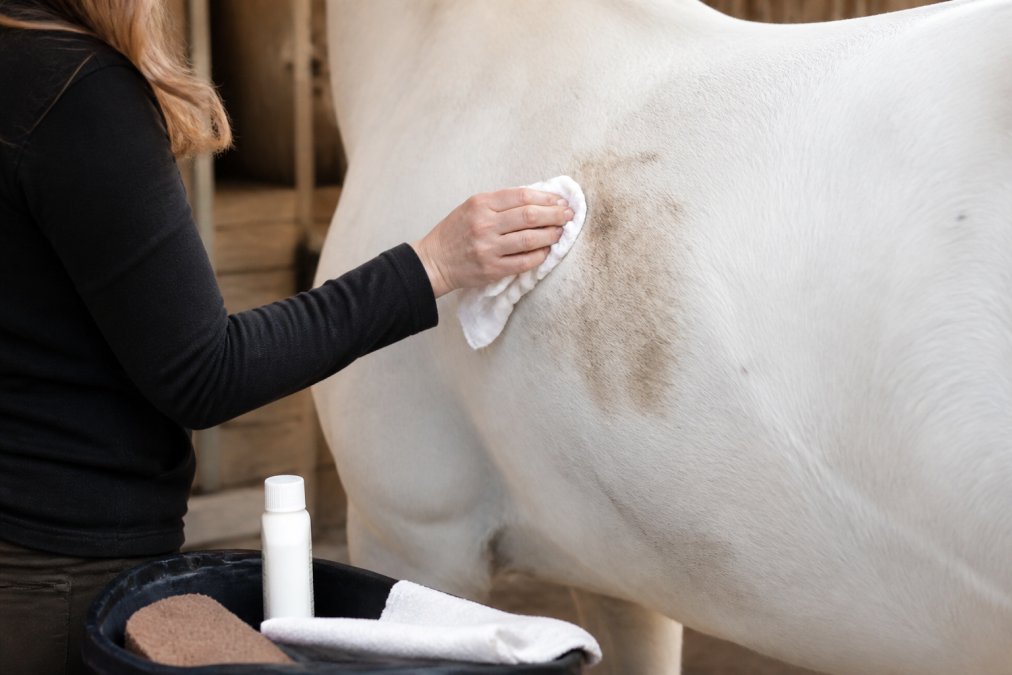
After the dwell time, agitate again, then rinse with clean warm water until the water runs clear. Pat the area dry with a clean towel, do not rub, which can tangle the hair and push residue back into the coat. For white or grey horses, follow with a diluted coat brightener to neutralize any yellowing.
One technique that outperforms plain spot treatment on textured areas like fetlocks and feathers is the "soak-and-press" method. Dampen a clean white cloth with your diluted cleaner, press it onto the stain for 30 seconds to saturate the hair, then lift straight up. Repeat with a fresh section of the cloth. This pulls pigment out of the hair rather than pushing it deeper, and it avoids the friction that causes matting in long coat hair.
Step 4: Rinse Thoroughly and Dry to Restore Coat Shine
Rinsing is the step most people rush, and it is exactly where stains come back to haunt you. Cleaning agent left in the coat dries as a residue that attracts new dirt and can dull the coat or irritate the skin.
Use clean, warm water to rinse the treated area completely. A spray bottle works well for small spots, while a hose with a gentle nozzle suits larger areas. Keep rinsing until the water runs clear and you feel no slippery residue left from the soap or cleaner.
Dry the area with a clean, dry towel, patting rather than rubbing to avoid tangling the hair. For white coats and grey horses, drying is particularly important because lingering moisture can lead to yellowing or fungal growth. Finish by brushing the dried coat to restore the natural lay of the hair.
The Best Horse Stain Remover for Set-In Marks
For set-in stains that have survived basic washing, you need a product specifically formulated to break down stubborn organic matter. The best horse stain remover tackles the stain at a chemical level rather than just scrubbing at the surface. The real differentiator is how the remover interacts with your horse's skin pH and natural oil barrier over repeated use.
Equine skin has a natural pH between 5.5 and 6.5, slightly acidic, which supports beneficial bacteria and maintains the protective acid mantle (PubMed). Harsh bleaches, optical brighteners, and dish soaps push the pH alkaline, stripping this mantle and leaving skin vulnerable to irritation, fungal growth, and future staining. A stain remover that works today but damages the coat barrier means tomorrow's stains set faster and deeper. The best products are pH-balanced to match equine skin.
Look for removers with enzymatic or oxygen-based active ingredients. Enzymatic cleaners digest the proteins in manure and urine, breaking the bonds that anchor the stain to the hair shaft. Oxygen-based formulas, typically sodium percarbonate, release hydrogen peroxide when mixed with water, lifting plant pigments from grass stains and oxidizing organic discoloration without the harshness of chlorine bleach (PubMed). Both work well on white coats and grey horses.
When choosing a product, check the label for three things: pH-balanced formulation, absence of chlorine bleach, and residue-free rinsing. Many brightening products rely on optical brighteners, UV-reactive dyes that make hair appear whiter but do not actually remove the stain. These can cause skin irritation and leave a coating that attracts dirt once the brightener degrades. A gentle, targeted remover used consistently will outperform a harsh chemical used once.
For set-in urine scald on white socks, look for a remover containing both enzymes and a mild chelating agent. Urine scald is not just a surface stain; it is a combination of ammonia burn and mineral deposits from dried urine. Enzymes break down the urea, while chelating agents bind to the calcium and magnesium in the deposit, allowing them to rinse away. Products formulated for this combination are rare but far more effective than a general-purpose brightener.
For ongoing maintenance between deep cleans, keep a spray-on remover in your grooming kit for quick touch-ups after turnout. Spray, let it dwell for 2 to 3 minutes, then wipe with a damp cloth. This prevents fresh stains from becoming set-in stains. If a stain has been set for more than a week, expect to repeat the treatment over two to three days, no single application will reverse oxidation that has bonded with the hair fiber.

How to Keep a White Horse Clean Between Baths
Keeping a white horse clean is a daily commitment, not a weekly chore. The key is a layered approach: prevent stains from setting, spot-clean immediately, and reserve full baths for when they are truly needed.
Start each day with a thorough grooming session. A curry comb loosens dirt and manure, while a soft brush lifts it away from the coat. Pay extra attention to the legs, belly, and muzzle, the areas most likely to pick up stains. For horses turned out in muddy conditions, consider leg wraps or a light sheet to reduce exposure.
Between full baths, use spot cleaning and dry shampoos to manage everyday grime. A damp towel with a mild, pH-balanced cleaner handles fresh marks instantly. Powdered dry shampoos absorb oils and brighten white hair without water, making them useful for touch-ups before a show. Daily maintenance is the single most effective strategy for keeping a white horse clean, and it protects coat health by avoiding over-bathing.
Common Mistakes That Make Stains Worse
Several well-intentioned habits actually make horse stains worse, and knowing what to avoid saves you time and protects your horse's coat.
Using human shampoo or dish soap is a top mistake. These products are not pH-balanced for equine skin and strip natural oils, leaving the coat dry, brittle, and more prone to future staining. Scrubbing too hard damages the hair cuticle, creating rough patches that trap dirt. Skipping the rinse leaves residue that attracts new grime. Bathing too frequently removes protective oils, making the coat more vulnerable to stains.
Another overlooked issue is dirty equipment. A curry comb caked with old hair and grease just redistributes dirt back onto the coat. Clean your brushes regularly with warm soapy water and let them dry completely. Well-maintained tools protect your horse's coat health as much as the cleaning products you use.
Tackling stubborn horse stains comes down to consistent daily grooming, the right pH-balanced products, and patient spot treatment rather than harsh scrubbing. When your brushes and removers are organized and ready, the job gets faster and your horse's coat stays healthier. Horsey Horse Store carries the grooming essentials you need, from complete brush kits to targeted stain removers, all backed by free shipping over $25 and 30-day returns. Get started with Horsey Horse Store and simplify your barn routine today.
Frequently Asked Questions
How do you get deep-set manure stains out of a white horse?
For deep-set manure stains, first let the area dry completely, then brush away the dried debris with a curry comb. Apply a pH-balanced spot treatment or whitening shampoo directly to the mark. Work it into a lather with your fingers or a soft brush, let it sit for 3-5 minutes, then rinse thoroughly with warm water. Repeat the process if needed, but avoid harsh scrubbing, which can irritate the skin.
Should you scrape a horse off after hosing?
Yes, you should use a sweat scraper to remove excess water after hosing, but do it gently. Scraping helps remove dirty water and speeds up drying, which prevents the remaining water from redepositing dirt onto the coat. Follow up by toweling off sensitive areas like the face and legs. This also helps restore coat shine and prevents the horse from getting chilled in cooler weather.
Can you wash a horse with Dawn dish soap?
While Dawn is effective at cutting grease, it is not recommended for regular use on horses. Dish soap strips the natural oils from the coat, leaving it dull and potentially causing skin irritation. For stubborn stains, use a dedicated equine shampoo or a pH-balanced coat care product. These are formulated to lift manure and grass stains without damaging the horse's skin or coat health.
What is the best way to remove yellow stains from a horse's tail?
Yellow stains in a white or grey tail are often from urine or environmental buildup. To remove them, wet the tail and apply a clarifying or whitening shampoo. Gently work it through the hair and let it sit for a few minutes before rinsing thoroughly. For set-in stains, a vinegar solution (one part vinegar to three parts water) can help break down the residue. Always condition the tail afterward to prevent breakage and keep it tangle-free.
This article was written using GrandRanker