

Table of Contents
- Quick Comparison: Best Grooming Tools for Daily Use
- Horse Grooming Kit Essentials Every Barn Should Have
- Coat-Specific Grooming Tools: Matching the Right Tool to the Job
- How to Groom a Horse Daily: The Right Order and Routine
- Tool Longevity: Cleaning, Blade Maintenance, and Sharpening Schedules
- Ergonomics and Storage: Protecting Your Hands and Your Gear
- Which Grooming Setup Is Right for You?
- Conclusion
Last Updated: August 18, 2026
Choosing the best grooming tools for daily use matters far more than it appears. At Horsey Horse Store, we've put together this guide to help horse owners build a grooming kit that works for their horse's coat type, their own hands, and their daily routine. Below, you'll find specific tool recommendations, a coat-matching guide, a daily routine breakdown, and two angles most grooming guides skip: ergonomics and tool longevity.

Quick Comparison: Best Grooming Tools for Daily Use
| Tool | Best For | Key Feature | Price |
|---|---|---|---|
| 10-Piece Horse Grooming Kit | All-around daily use | Complete kit with tote, sweat scraper, curry comb, hoof pick | $59.99 |
| 8-Piece Horse Grooming Box Kit | Organized barn storage | Includes plastic tool box for tack room | $237.99 |
| Desert Equestrian Legends Cowboy Brush | Body finishing and coat shine | Palmyra fiber bristles for topcoat polish | $73.99 |
| Harrison Howard Mane and Tail Brush | Detangling without breakage | Non-slip handle, professional-grade bristles | $38.99 |
| Horse Shedding Rake | Shedding season and dense coats | Durable undercoat rake design | $20.99 |
| Master Grooming Tools Ergonomic Dematting | Mat removal on thick coats | Molded ergonomic grip, 12-blade comb | $35.99 |
| Jeffers Equine Hoof Dressing Brush | Hoof care and dressing application | Dust-proof container included | $31.99 |
| Gracefur Sheepskin Grooming Gloves | Sensitive horses and tack cleaning | Real sheepskin for gentle contact | $79.99 |
Horse Grooming Kit Essentials Every Barn Should Have
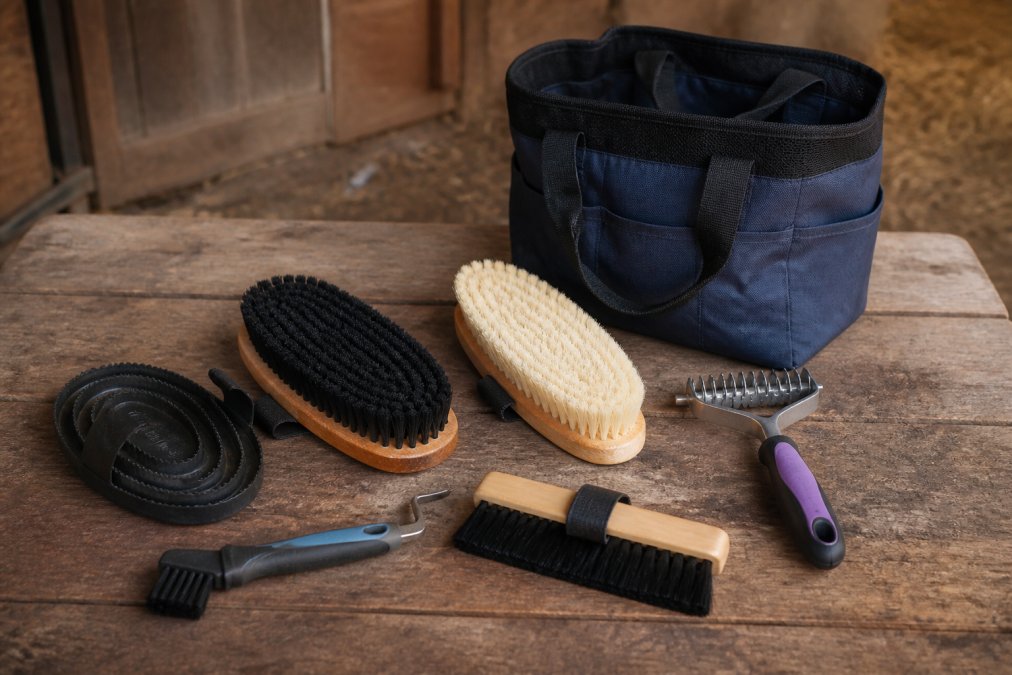
A well-stocked grooming kit covers five core jobs: loosening dirt and debris, removing it with a body brush, detangling the mane and tail, picking the hooves, and finishing the topcoat.
Curry Combs and Rubber Brushes
The rubber curry comb starts every grooming session, working in circular motions to loosen dried sweat, mud, and embedded dirt before a brush can remove it. The 10-Piece Horse Grooming Kit ($59.99) includes a curry comb alongside a sweat scraper, hoof pick, and body brushes. The Gracefur Sheepskin Grooming Gloves ($79.99) offer an alternative for horses that dislike rigid tools, and they double as tack cleaning mitts.
Body Brushes: Stiff vs. Soft Bristle
Most riders need two body brushes: a stiff-bristle brush to remove loosened debris and a soft-bristle brush to lift fine dust and add shine. The Desert Equestrian Legends Cowboy Brush ($73.99) uses palmyra fiber bristles that sit between stiff and soft, firm enough to clear debris yet fine enough to finish without irritating skin. For multiple horses, the 8-Piece Horse Grooming Box Kit ($237.99) organizes both brush types in a practical plastic tool box.


Mane, Tail, and Hoof Tools
The Harrison Howard Mane and Tail Brush ($38.99) is designed for detangling without excessive breakage. For hoof care, the Jeffers Equine Hoof Dressing Brush with Container ($31.99) comes with a dust-proof container. According to the American Farriers Journal's hoof care guidelines, daily hoof picking and regular dressing application are the two most consistent factors in preventing common hoof problems.
Coat-Specific Grooming Tools: Matching the Right Tool to the Job
Coat texture and hair density determine which tools you actually need. A slicker brush that works on a Thoroughbred's fine coat won't penetrate a draft cross's dense winter coat.
Fine Coats and Sensitive Skin
Horses with fine coats have skin that sits closer to the surface. Hard bristles and aggressive curry combs can cause irritation. The Gracefur Sheepskin Grooming Gloves are the practical first choice, soft enough for sensitive skin while providing friction to loosen light surface dirt. Follow with a soft-bristle body brush to finish the topcoat. For thin manes prone to tangling, apply a detangling product first to reduce friction.
Dense Coats and Heavy Undercoats
Draft breeds, native ponies, and horses with heavy winter coats need an undercoat rake. The Horse Shedding Rake ($20.99) is built to work through thick hair density without bending. For mats in the mane or forelock, the Master Grooming Tools Ergonomic Dematting tool ($35.99) uses a 12-blade comb to cut through tangles without pulling hair out.
How to Groom a Horse Daily: The Right Order and Routine
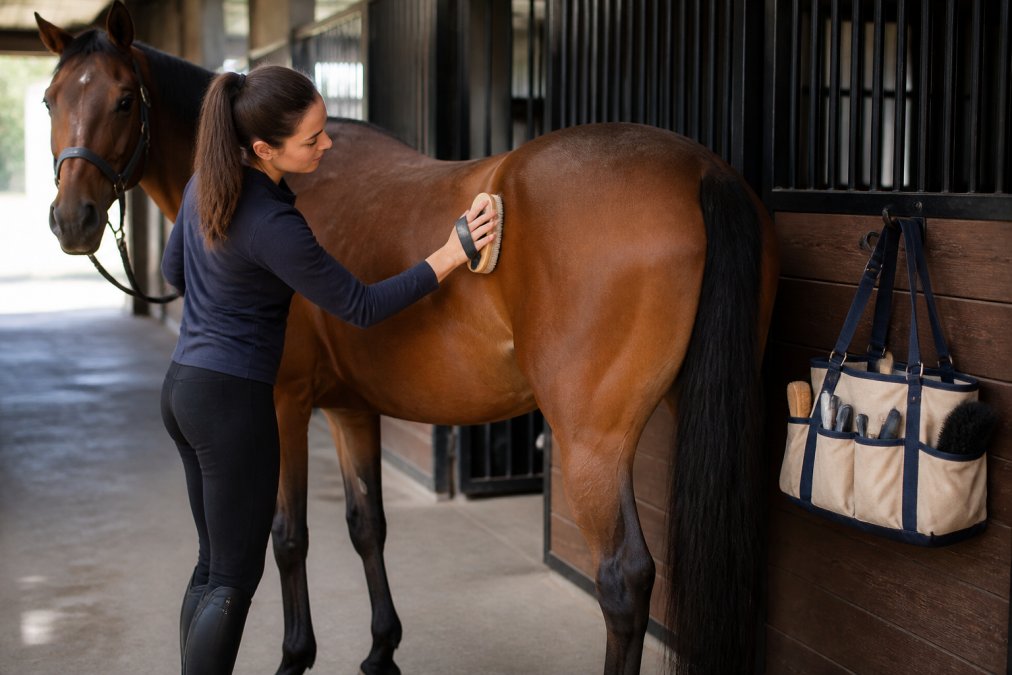
Grooming follows a consistent sequence that builds on each step.
- Tie the horse safely in cross-ties or at a single tie point.
- Curry comb the body in circular motions on muscled areas to loosen dirt, sweat, and loose hair.
- Body brush (stiff bristle) with short, flicking strokes to sweep away loosened debris.
- Body brush (soft bristle) to remove fine dust and lay the coat flat.
- Mane and tail using a detangling brush in sections from the bottom up.
- Hooves by picking from heel to toe and applying dressing if needed.
- Face with a soft cloth or dedicated face brush.
- Final check by running your hands along the legs to check for heat, swelling, or cuts.
The sequence takes around 15-20 minutes for a clean horse.
| Step | Tool | Time Estimate |
|---|---|---|
| Curry comb | Rubber curry comb or grooming gloves | 3-5 min |
| Stiff body brush | Dandy or stiff-bristle brush | 3-5 min |
| Soft body brush | Finishing brush | 2-3 min |
| Mane and tail | Detangling brush | 3-5 min |
| Hooves | Hoof pick and dressing brush | 2-3 min |
| Face and legs | Soft cloth, face brush | 2 min |
Tool Longevity: Cleaning, Blade Maintenance, and Sharpening Schedules
Most grooming tools fail early because they're never cleaned. A body brush caked with grease and dead hair stops working within weeks.
Brushes: Tap brushes against each other after each session to knock out loose hair. Deep-clean weekly by soaking in warm water with dish soap, then rinse thoroughly and dry bristle-side down. Never store brushes bristle-side down while wet.
Dematting blades and shedding rakes: Rinse after use and apply blade oil every two to three weeks to prevent rust. According to the Professional Pet Groomers Association's tool care standards, blade oil before storage is the most effective way to extend blade life.
Hoof picks and metal tools: Wipe down after each use and store dry to prevent rust.
Sharpening schedule: Grooming shears and dematting blades used daily should be professionally sharpened every three to four months. Tools used a few times a week can go six months between sharpenings.
Ergonomics and Storage: Protecting Your Hands and Your Gear
Repetitive strain from daily grooming is a real issue for barn managers working multiple horses. The grip pattern for brushing puts consistent load on the forearms.
- Choose tools with molded or contoured handles. The Master Grooming Tools Ergonomic Dematting tool distributes pressure across the palm rather than concentrating it at the fingers.
- Alternate hands where possible. Body brushing is a natural task to switch between hands, balancing load across both arms.
- Take short breaks on the wrist. After currying, shake out the hand and flex the fingers before picking up the body brush.
- Use gloves for tack cleaning. The Gracefur Sheepskin Grooming Gloves protect hands during tack cleaning sessions.
As the American Physical Therapy Association's guidance on repetitive strain notes, the most effective prevention is tool selection combined with technique variation.
Storage matters too. The 8-Piece Horse Grooming Box Kit keeps everything in one place and protects bristles between sessions. For multiple horses, labeling each kit by horse name prevents cross-contamination, particularly important for horses with skin conditions.
Which Grooming Setup Is Right for You?
The right setup depends on how many horses you're managing, what coat types you're dealing with, and how much organization your barn routine needs.
For a single horse with a standard coat: The 10-Piece Horse Grooming Kit at $59.99 covers the full daily routine. Add the Harrison Howard Mane and Tail Brush ($38.99) for detangling and you have a complete daily kit for under $100.
For a horse with a dense or double coat: Add the Horse Shedding Rake ($20.99) for shedding season and the Master Grooming Tools Ergonomic Dematting comb ($35.99) for mat removal.
For a barn managing multiple horses: The 8-Piece Horse Grooming Box Kit ($237.99) makes the most sense as a base setup, keeping everything organized and comprehensive enough to handle daily grooming on most coat types.
For sensitive horses or riders prioritizing comfort: The Gracefur Sheepskin Grooming Gloves ($79.99) are worth the investment, gentler on reactive horses and reducing hand fatigue during longer sessions.
Horse grooming kit essentials don't need to be complicated. The core tools, curry comb, two body brushes, mane and tail brush, hoof pick, handle the vast majority of daily needs. Everything else is a targeted addition based on your horse's specific coat and your barn's routine.
For guidance on hoof health as part of a broader daily care routine, the University of Minnesota Extension's horse care resources provide a thorough overview of what daily inspection should cover alongside grooming.
Frequently Asked Questions
What are the essential grooming tools for daily horse care?
A complete daily grooming kit includes a curry comb, stiff body brush, soft finishing brush, mane and tail brush, hoof pick, and a shedding rake for seasonal coat maintenance. A grooming tote or box keeps everything organized at the barn. The 10-Piece Horse Grooming Kit at $59.99 covers all these bases in one purchase, making it a practical starting point for daily at-home grooming without buying tools individually.
How do you choose the right brush for a horse's coat type?
Match bristle stiffness to hair density. A slicker brush or stiff-bristle body brush works on thick, dense coats to lift dirt and loose hair. Fine or sensitive coats respond better to a soft pin brush or sheepskin grooming glove that won't irritate the skin. An undercoat rake or deshedding tool handles heavy shedding seasons. For mane and tail detangling, a wide-tooth brush with an ergonomic grip prevents breakage and reduces hand fatigue during longer grooming sessions.
What is the proper order to use daily grooming tools?
Start with a rubber curry comb in circular motions to loosen dirt and stimulate circulation. Follow with a stiff body brush to sweep debris away from the coat. Use a soft finishing brush to smooth the topcoat and remove fine dust. Detangle the mane and tail with a dedicated brush, working from the ends upward. Finish by picking out each hoof and applying hoof dressing if needed. This sequence takes roughly 15 to 20 minutes for a daily grooming routine.
How often should you deep clean your horse grooming brushes?
Brushes used daily should be tapped out after every session to remove loose hair and debris. A full wash with warm water and a small amount of mild soap is recommended every one to two weeks, depending on how much product or sweat the brushes pick up. Allow them to dry bristle-side down so water does not loosen the ferrule. Metal tools like hoof picks and rakes should be wiped down and dried after each use to prevent rust and maintain blade sharpness.
What grooming tools work best for horses with sensitive skin?
Horses with sensitive skin or fine coats do best with soft-bristle brushes, sheepskin grooming gloves, and rubber curry combs rather than stiff or metal tools. The Gracefur Sheepskin Grooming Gloves ($79.99) conform to the horse's body and distribute pressure evenly, reducing the risk of irritation. Avoid wire slicker brushes on bare or clipped skin. A fine-tooth comb works for mane detangling without pulling, and a gentle dematting tool handles any small mats without causing discomfort.
Keeping a consistent grooming routine is straightforward once the right tools are in place, the challenge is usually having the wrong brush for the job, or a kit that's so disorganized it slows down every session. Horsey Horse Store carries a curated selection of grooming supplies designed for everyday barn use, with free shipping on orders over $25 and 30-day returns if something doesn't work for your horse. Browse the Grooming Corner and add the tools that fit your setup to cart.
This article was written using GrandRanker