

Table of Contents
- Why Proper Drying Matters for Saddle Pad Care
- How to Wash Saddle Pads Before Drying
- How to Clean Felt Saddle Pads Properly
- Air Drying vs. Machine Drying: Which Method Works Best
- Step-by-Step Guide to Drying Saddle Pads
- How Often to Clean Horse Saddle Pads
- Preventing Mold and Mildew During Storage
- Common Drying Mistakes to Avoid
Last Updated: August 28, 2026
Why Proper Drying Matters for Saddle Pad Care
Drying saddle pads correctly is one of the most overlooked steps in tack maintenance. Improper drying causes shrinkage, mildew growth, fiber breakdown, and permanent loss of cushioning, especially in felt and gel-insert pads (peer-reviewed research). The best drying method determines whether your investment lasts two seasons or ten.
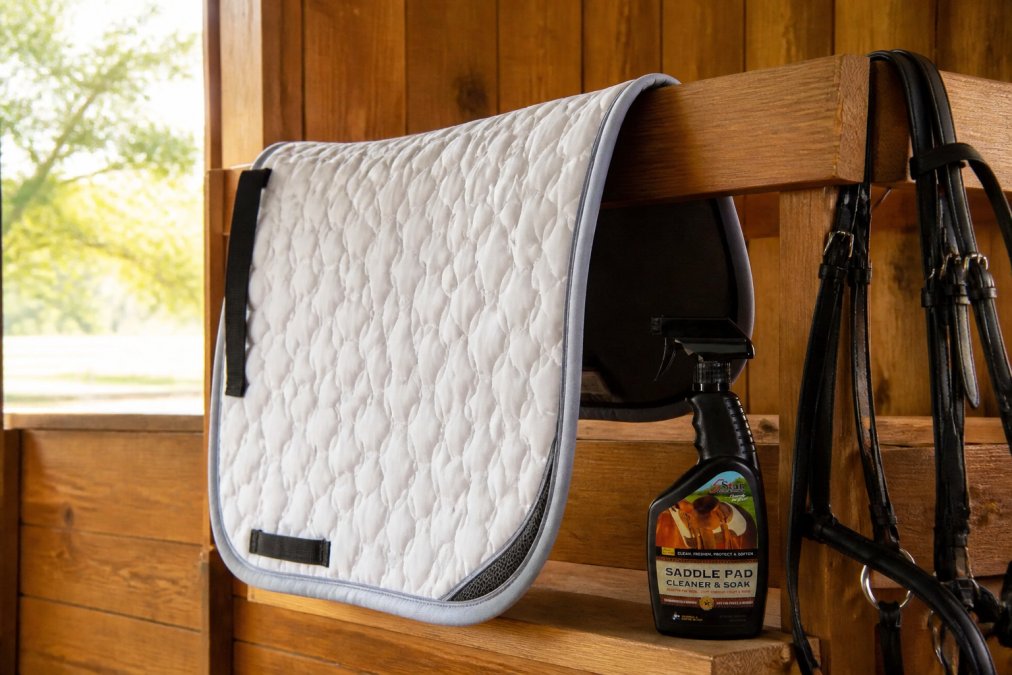
Proper drying preserves the structural integrity of synthetic fibers, maintains moisture-wicking properties, and prevents mold and mildew that thrive in damp spaces. A saddle pad dried correctly will maintain its shape, support, and hygiene through hundreds of rides. A saddle pad dried wrong becomes a breeding ground for bacteria and loses its ability to absorb sweat effectively.

How to Wash Saddle Pads Before Drying
You can't dry a saddle pad properly if you don't start with the right washing technique.
Cleaning Felt Saddle Pads
Felt requires a gentler approach than synthetic options. Start by removing loose hair and dust with a stiff brush or vacuum. Fill a bathtub with lukewarm water, never hot, which causes shrinkage. Add mild detergent or specialized saddle pad cleaner like 5 Star Equine Saddle Pad Cleaner & Soak, formulated specifically for felt and wool materials.
Submerge the pad and soak for 15-20 minutes. Use a soft brush to gently work the solution through the fabric, paying attention to areas contacting the horse's back. Rinse thoroughly with cool water until clear; soap residue accelerates mildew growth.
Never wring or twist a felt pad. Instead, gently squeeze out excess water by pressing between your hands to preserve the felt's structure.
Cleaning Synthetic and Gel-Insert Pads
Synthetic pads can tolerate slightly more agitation than felt. Use the same lukewarm water and mild detergent approach. For gel-insert pads, avoid direct pressure on gel sections; focus on the fabric cover. Rinse thoroughly, as detergent buildup reduces breathability.
For stubborn stains or heavy sweat buildup, soak for 20-30 minutes before washing to loosen embedded dirt without harsh scrubbing.
How to Clean Felt Saddle Pads Properly
Felt accumulates sweat, hair, and moisture more readily than synthetic options because of its dense structure. Understanding felt's specific cleaning needs ensures proper drying and mold resistance.
Use cool to lukewarm water exclusively. Hot water causes felt fibers to contract, leading to permanent shrinkage that cannot be reversed (the FDA).
For heavily soiled felt pads, pre-soak in cool water with mild detergent for 20-30 minutes. Gently agitate by hand, massage rather than scrub. Pay special attention to the underside where sweat accumulates most heavily.
Rinse multiple times. Felt retains soap more stubbornly than synthetic materials, so continue rinsing until water is completely clear and detergent odor is gone. Residual soap traps moisture and accelerates mildew development.
After rinsing, press the pad gently between your hands to remove excess water. Never use a washing machine or wringer, which applies too much pressure and causes permanent deformation.
Air Drying vs. Machine Drying: Which Method Works Best
The choice between air drying and machine drying determines your saddle pad's lifespan.
Why Tumble Drying Damages Saddle Pads
Tumble drying is destructive. Direct heat shrinks felt and synthetic fibers, damages gel inserts by breaking down their structure, and creates stress points leading to premature wear. Even "low heat" settings are problematic. The combination of tumbling motion and sustained heat damages structural integrity. Additionally, tumble drying traps moisture inside the pad, creating ideal conditions for mold and mildew once it cools.
The Benefits of Air Drying
Air drying is slower but infinitely safer. It preserves fiber structure, maintains gel insert integrity, and allows moisture to escape gradually from all layers without trapping dampness inside.
Air-dried pads retain their shape, cushioning properties, and moisture-wicking capabilities. They last longer, feel better under the saddle, and resist mold and mildew because they dry completely.
The only downside is time. A typical saddle pad takes 24-48 hours to air dry completely, depending on climate, humidity, and airflow (the CDC). This investment in patience pays dividends in pad longevity.
Step-by-Step Guide to Drying Saddle Pads
Here are the three primary approaches, each suited to different situations.
Flat Drying Method
This is the gold standard for saddle pad drying.
-
Lay the pad flat on a clean, dry surface. Use a clean towel, drying rack, or mesh table. Never lay on concrete or dirt, which introduces contamination and prevents airflow underneath.
-
Position in a well-ventilated area with indirect sunlight. Indirect exposure near a window is ideal. Direct sunlight can fade colors and cause uneven drying.
-
Ensure airflow on both sides. If using a drying rack, the pad should be elevated so air circulates underneath. Flip the pad every 8-12 hours for even drying.
-
Check for dampness in the pad's interior. After 24 hours, press your hand into the center. It should feel cool and dry, not damp or cold.
-
Allow 24-48 hours for complete drying. Felt pads typically need the full 48 hours. Synthetic pads may dry in 24 hours in dry climates. Gel-insert pads take 36-48 hours.
Hanging Rail Method
If you lack floor space, hang the pad over a rail or rope in a well-ventilated area.
-
Drape the pad evenly over a clean rail or rope without bunching or folding. Avoid hanging over sharp edges, which create permanent creases.
-
Position in an area with good airflow. A tack room with open windows, barn aisle with cross-ventilation, or outdoor covered area all work well.
-
Flip or rotate the pad every 12 hours to ensure even drying and prevent one side from drying much faster than the other.
-
Expect 36-48 hours for complete drying. Hanging allows better airflow than flat drying but may take slightly longer.
-
Check the gullet hole area specifically. This is the lowest point when hanging, and moisture tends to collect there. Press your fingers into the gullet hole to ensure it's completely dry before storing.
Quick-Dry Techniques for Busy Riders
When you need a saddle pad dry quickly, these techniques accelerate the process without damaging the pad.
Use fans strategically. A portable fan positioned to blow air across and underneath the pad accelerates evaporation significantly, reducing drying time by 8-12 hours.
Hang the pad in direct sunlight briefly. While prolonged direct sunlight can fade colors, 2-3 hours of direct exposure accelerates drying without causing fiber damage.
Squeeze out excess water more aggressively after washing. Use towels to press water out of the pad; apply firm pressure to extract moisture.
Separate gel-insert pads from their covers if possible. If removable, separate them for drying. The gel compartment and fabric cover will dry independently and much faster.
Use a dehumidifier in humid climates. A dehumidifier in your tack room accelerates evaporation, particularly useful during rainy seasons.
These quick-dry techniques work best in combination, reducing drying time to 16-20 hours while maintaining pad integrity.
| Drying Method | Time Required | Best For | Key Consideration |
|---|---|---|---|
| Flat drying | 24-48 hours | Standard home barn use | Requires dedicated floor space |
| Hanging rail | 36-48 hours | Limited floor space | Needs good cross-ventilation |
| Quick-dry techniques | 16-24 hours | Shows or urgent needs | Requires fans or direct sunlight |
How Often to Clean Horse Saddle Pads
Cleaning frequency depends on your riding schedule, climate, and how sweaty your horse gets. A saddle pad accumulates sweat, salt, dirt, and bacteria with every ride, accelerating fiber breakdown and creating ideal conditions for mold and mildew.
For daily riders, wash your saddle pad every 7-10 days. If you ride multiple horses or use multiple pads in rotation, extend to every 10-14 days because each pad gets more rest between uses.
For recreational riders using pads 3-4 times per week, washing every 2-3 weeks is reasonable. However, if you notice visible sweat stains, odor, or mildew signs, wash immediately.
In humid climates, wash more frequently. Weekly washing is better than bi-weekly washing since humidity prevents complete drying between rides.
After particularly sweaty rides or hot weather riding, rinse the pad that same day, even if you don't do a full wash. A quick rinse removes bulk sweat and salt, reducing the load on your next full cleaning.
Preventing Mold and Mildew During Storage
Mold and mildew develop when saddle pads are stored while damp or in environments with poor airflow and high humidity. Prevention is far easier than dealing with established mold growth.
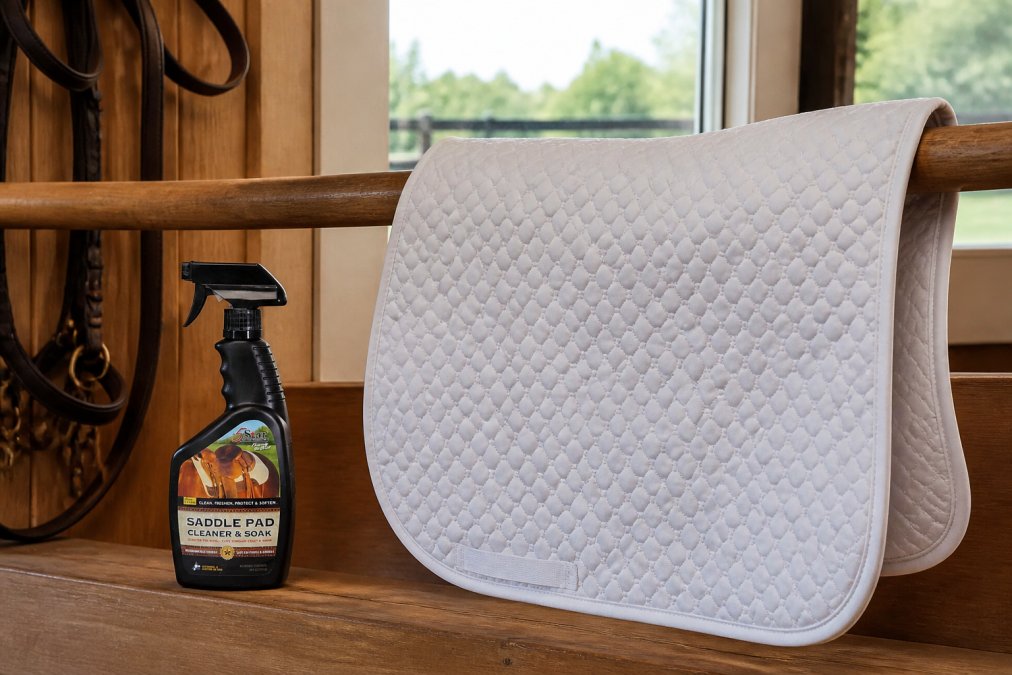
Never store a damp saddle pad. Ensure complete drying before putting it away. If unsure whether a pad is fully dry, wait another 12 hours.
Store pads in a well-ventilated tack room or barn area. Avoid enclosed plastic bins or sealed storage areas where air cannot circulate. If you must use bins, choose ones with ventilation holes or use breathable fabric storage bags.
Keep your storage area dry. If your tack room has moisture issues, damp walls, condensation, or musty smell, address those problems before storing saddle pads. A dehumidifier in a damp tack room prevents mold development.
Hang pads on racks or rails rather than folding them. Folded pads trap moisture in creases and create ideal mold conditions. Wall-mounted saddle racks like the GOLASON 3-Tier Wall-Mounted Saddle Rack or Paterr Wall-Mount Saddle Rack Set provide excellent storage solutions that keep pads elevated and exposed to airflow.

Inspect stored pads monthly for discoloration, musty odors, or visible mold growth. Early detection allows you to address problems before they spread. If you spot mold, wash the pad immediately with cool water and mild detergent, then dry thoroughly.
In extremely humid climates, store pads with moisture-absorbing packets or baking soda nearby to reduce mold risk.
Common Drying Mistakes to Avoid
Don't use a clothes dryer under any circumstances. The damage is permanent and irreversible. Even one cycle can shrink a felt pad beyond usability.
Don't hang pads in direct sunlight for extended periods. While brief direct sunlight accelerates drying, prolonged exposure fades colors and damages synthetic fibers. Aim for 2-3 hours maximum.
Don't store pads while still damp. Dampness trapped inside leads to mold growth that spreads quickly and becomes difficult to remove.
Don't leave pads bunched or folded during drying. Folded pads trap moisture in creases and dry unevenly, with interiors remaining damp long after exteriors feel dry.
Don't dry pads in enclosed spaces without ventilation. Closed closets, sealed storage rooms, or garages without windows prevent proper air circulation.
Don't use fabric softener on saddle pads. Fabric softener coats fibers, reduces moisture-wicking properties, and traps moisture against the fabric, increasing mold risk.
Don't bleach felt or synthetic saddle pads. Bleach damages fibers, causes discoloration, and weakens structural integrity.
Don't apply direct heat from space heaters or heat lamps. These cause the same damage as tumble dryers: shrinkage, fiber breakdown, and moisture trapping.
Proper saddle pad drying requires patience and attention to detail. The methods outlined above, flat drying, hanging, and quick-dry techniques, all preserve your pad's integrity while ensuring complete, safe drying. Your saddle pad is an investment in your horse's comfort and your riding experience.
At Horsey Horse Store, we understand that quality tack requires quality maintenance. Our curated selection of grooming supplies, including the 5 Star Equine Saddle Pad Cleaner & Soak, and storage solutions like wall-mounted saddle racks, help you maintain your equipment properly and organize your tack room efficiently. Get started with the right tools and techniques, and your saddle pads will reward you with lasting performance and durability.
== FAQ ANSWERS (audit these too, same rules) ==
[1] Q: Can you put saddle pads in the dryer? A: No. Tumble drying damages saddle pads by exposing them to direct heat, which shrinks synthetic fibers and felt, warps gel inserts, and compromises the pad's shape and cushioning. Always air dry saddle pads instead. Machine drying also risks melting moisture-wicking fabrics and causing permanent damage to the pad's structural integrity.
[2] Q: How often should you clean and dry your saddle pad? A: Clean your saddle pad after every 3-5 rides or weekly if you ride regularly. More frequent cleaning prevents sweat buildup, mold, and odor. After cleaning, allow 24-48 hours for complete air drying in a well-ventilated space. Felt pads may take longer due to their density. Regular drying prevents dampness that leads to mildew and extends the pad's lifespan.
[3] Q: What is the best way to air dry a heavy felt saddle pad? A: Lay the felt pad flat on a clean, dry surface in a well-ventilated area away from direct sunlight. Flip it every 12 hours to ensure even drying on both sides. Alternatively, hang it over a padded rail or rope in a dry tack room with good airflow. Felt pads are denser than synthetic options and require 48-72 hours to dry completely. Avoid direct heat sources and ensure adequate airflow to prevent mold.
[4] Q: Can you use a fan to speed up saddle pad drying? A: Yes. A fan significantly speeds drying by increasing airflow around the pad. Position a box fan or portable fan near the pad without blowing directly on it, which can cause uneven drying. A fan can reduce drying time from 48 hours to 24-36 hours for synthetic pads and 36-48 hours for felt pads. Ensure the space remains well-ventilated to prevent moisture from becoming trapped.
Frequently Asked Questions
Can you put saddle pads in the dryer?
No. Tumble drying damages saddle pads by exposing them to direct heat, which shrinks synthetic fibers and felt, warps gel inserts, and compromises the pad's shape and cushioning. Always air dry saddle pads instead. Machine drying also risks melting moisture-wicking fabrics and causing permanent damage to the pad's structural integrity.
How often should you clean and dry your saddle pad?
Clean your saddle pad after every 3-5 rides or weekly if you ride regularly. More frequent cleaning prevents sweat buildup, mold, and odor. After cleaning, allow 24-48 hours for complete air drying in a well-ventilated space. Felt pads may take longer due to their density. Regular drying prevents dampness that leads to mildew and extends the pad's lifespan.
What is the best way to air dry a heavy felt saddle pad?
Lay the felt pad flat on a clean, dry surface in a well-ventilated area away from direct sunlight. Flip it every 12 hours to ensure even drying on both sides. Alternatively, hang it over a padded rail or rope in a dry tack room with good airflow. Felt pads are denser than synthetic options and require 48-72 hours to dry completely. Avoid direct heat sources and ensure adequate airflow to prevent mold.
Can you use a fan to speed up saddle pad drying?
Yes. A fan significantly speeds drying by increasing airflow around the pad. Position a box fan or portable fan near the pad without blowing directly on it, which can cause uneven drying. A fan can reduce drying time from 48 hours to 24-36 hours for synthetic pads and 36-48 hours for felt pads. Ensure the space remains well-ventilated to prevent moisture from becoming trapped.
This article was written using GrandRanker