

Quick Summary
Stall floor mats give horses a firmer, more consistent surface that cushions joints and legs, insulates against cold, hard ground, and improves traction. They also make stalls easier to clean and can cut down on bedding use over time.
- Rubber mats absorb some of the shock from standing and shifting weight on hard surfaces.
- Thickness and density matter: choose a mat thick enough to cushion but firm enough to stay stable.
- Mats keep horses off cold, damp concrete or packed earth, so the stall feels warmer and drier underfoot.
- Measure bedding use for two weeks before and after installing mats to see your real savings.
- Mat service life depends on the drainage of the base beneath, so treat base preparation as part of the cost.
Table of Contents
- Why Stall Floor Mats Matter for Horse Comfort and Support
- Cushioning and Impact Absorption for Joints and Legs
- Insulation From Cold, Hard, and Damp Surfaces
- Traction, Slip Resistance, and Safer Footing
- Horse Stall Mats Pros and Cons: The Trade-Offs to Weigh
- What to Put Under Horse Stall Mats for Drainage and Hygiene
- How to Clean Horse Stall Mats and Cut Down on Bedding Use
- Choosing the Right Mat and Installing It for Your Stall
- Frequently Asked Questions
Why Stall Floor Mats Matter for Horse Comfort and Support
Stall floor mats give horses a firmer, more consistent surface to stand and lie on. For many owners, that single change improves daily comfort more than any other stall upgrade.
Many barns start with mats because the bare-earth or packed-clay floor is hard, uneven, and slow to drain. Horses that stand on hard ground for long periods may show more stiffness and fatigue than horses on a supportive base.
Here are the main reasons stall mats are worth a closer look:
- Comfort: A supportive layer reduces pressure on feet, legs, and joints.
- Cleaner stalls: Mats make it easier to remove manure and wet bedding.
- Less bedding: A solid base can cut down on the shavings or straw you buy each month.
- Better footing: Textured rubber helps horses keep their balance.
At Horsey Horse Store, we see stall flooring as part of the daily care routine, not a one-time purchase. The right mat should support the horse, make cleaning simpler, and hold up to years of use.
Cushioning and Impact Absorption for Joints and Legs
Cushioning is the benefit most owners ask about first. A rubber mat absorbs some of the shock that comes from standing and shifting weight on a hard surface. For more horse comfort and everyday tack options, browse the shop's range.
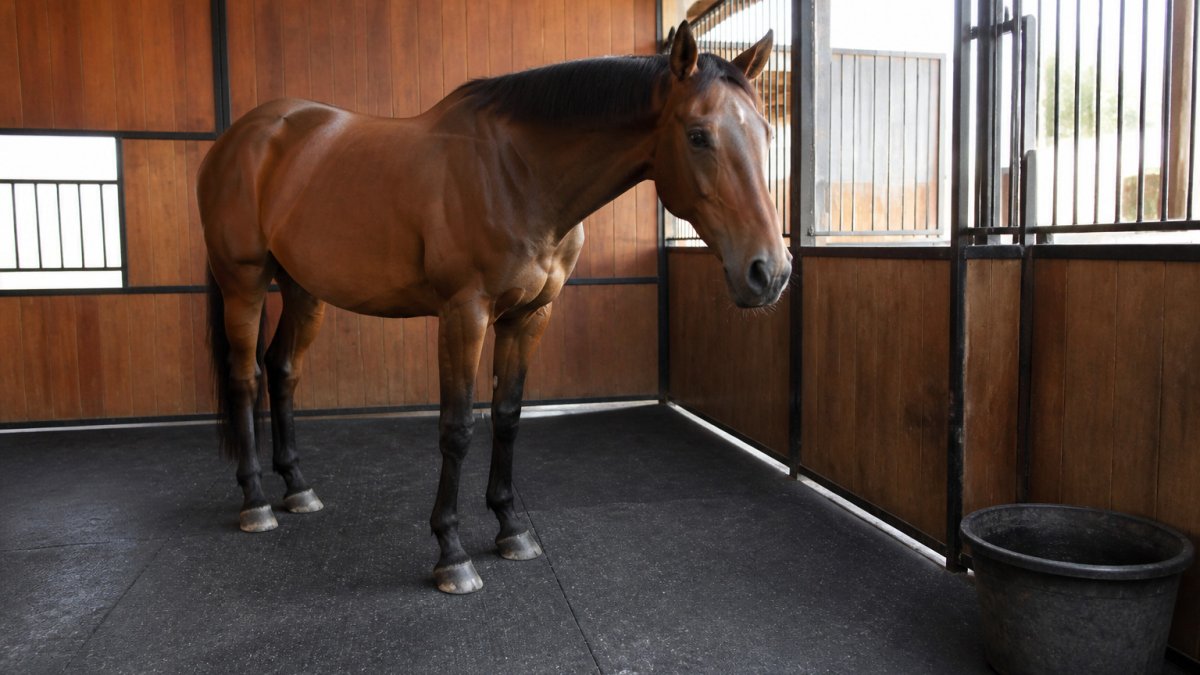
The key is thickness and density. A thin mat offers little give, while a thicker, denser mat supports the horse without feeling spongy underfoot.
Watch out: a mat that is too soft can let a horse sink or shift, which can cause the horse to lose footing. Test the mat in the stall before committing to a full installation.
Insulation From Cold, Hard, and Damp Surfaces
Concrete and packed earth hold cold and moisture, especially in winter. A stall mat creates a barrier between the horse and that surface. A mat can make the stall feel warmer and drier underfoot than a concrete or packed-earth floor.
Damp surfaces can also soften hooves and lead to problems if moisture sits under bedding for long periods. A mat that sits on a properly prepared base keeps the horse off that wet ground. Insulation works best when the base beneath the mat is also dry and well drained.
Traction, Slip Resistance, and Safer Footing
Smooth or wet floors can cause slips, especially when a horse turns quickly or gets up from lying down. Textured rubber surfaces can give the horse better grip.
When choosing a mat, look for a surface that grips well when wet and clean. Slip resistance also depends on keeping the mat free of loose manure and standing water. A quick daily sweep helps the mat keep its grip.
Horse Stall Mats Pros and Cons: The Trade-Offs to Weigh
Stall mats offer clear advantages, but they are not right for every barn. If you want to compare alternative protective products, you can read about other options before buying. The useful way to weigh them is not a simple pro-and-con list but a lifecycle comparison: what you pay upfront versus what you save in bedding, cleaning time, and replacement over the years the mat is in service.
Pros:
- Cushioning that supports joints and legs
- Better insulation from cold, hard ground
- Easier manure removal and less bedding
- Good traction when kept clean
- A surface that does not soak up urine the way bare dirt does
Cons:
- Higher upfront cost than bare ground or simple bedding
- Heavy and awkward to move and install
- Can trap moisture and odor if the base is not drained
- Require regular cleaning to stay safe
- Rubber odor can be noticeable in a closed barn when mats are new
Running the Bedding Math
The savings most owners care about come from bedding. On a bare-earth or clay stall, shavings or straw are doing double duty: cushioning the horse and absorbing urine. A mat takes over the cushioning job, so bedding becomes a thin top layer for moisture and manure rather than a deep bed.
The exact difference in bedding use depends on your bedding type, your horse's habits, and how deep you bed the stall. Rather than rely on a general estimate, measure it: track bedding use for two weeks before the mats go in, then track it again for two weeks after.
Cleaning Time and Replacement
Labor is the second savings. Picking a matted stall is faster because wet spots sit on the surface instead of soaking in, and manure lifts cleanly off rubber. Over a year, that is minutes per day that add up.
Replacement is the cost owners underestimate. Mat service life depends heavily on the drainage of the base beneath it, since trapped moisture and odor can shorten a mat's life. Budget for inspection and possible replacement, and treat base preparation as part of the mat's cost, not a separate project.
The trade-offs come down to upfront cost against the savings in bedding, cleaning time, and service life.
| Factor | Mat effect | What to do |
|---|---|---|
| Upfront cost | Higher than bare ground or simple bedding | Include base prep in the total |
| Bedding use | Mat takes over cushioning; bedding becomes a thin layer | Measure use for two weeks before and after |
| Cleaning time | Wet spots stay on the surface; manure lifts cleanly | Savings add up over a year |
| Service life | Depends on the drainage of the base beneath | Budget for inspection and possible replacement |
| Installation | Heavy and awkward to move | Plan for the effort before buying |
What to Put Under Horse Stall Mats for Drainage and Hygiene
A mat is only as good as the base beneath it. Odor, trapped moisture, and mats that shift can often trace back to the base underneath. Getting the base right is the difference between a mat that lasts years and one that becomes a smelly nuisance.
Start With the Subfloor
Before installing, check the existing floor for low spots, standing water, and soft areas. A mat needs a firm, stable subfloor; a spongy base lets the mat shift under a horse's weight and traps moisture in the soft spots.
A common approach is a compacted, well-graded base of crushed stone or gravel, topped with a layer of sand or fine stone to level the surface. Some owners use a geotextile fabric between the base and the mat to limit moisture movement and weed growth. The goal is a firm, level surface that lets liquid drain away rather than pool under the mat.
Slope, Seams, and Urine Management
Drainage is not just about what is under the mat; it is about where liquid goes. A slight slope toward a drain or the stall edge lets urine and wash water move away instead of sitting under the mat. Confirm the slope before you lay mats, because correcting it later means lifting everything.
Seams matter as much as the base. Gaps between mats let urine and bedding work their way underneath, where they are hard to clean and quick to smell. Interlocking or tongue-and-groove mats reduce seam gaps, and tight-fitting edges keep a horse from catching a hoof.
Hygiene Routine
Urine and moisture trapped under a mat can create odor and bacterial growth. Lift mats periodically to inspect the base and dry it out if needed.
The principle is consistent: firm base, slight slope, tight seams, and a regular inspection habit.
How to Clean Horse Stall Mats and Cut Down on Bedding Use
Mats make cleaning faster, but they still need a routine. Remove manure and wet spots daily. Sweep or squeegee the surface, then add a thin layer of bedding where needed.
For deeper cleaning, use a mild, barn-safe disinfectant and rinse thoroughly. Harsh chemicals can break down rubber over time and may irritate a horse's respiratory system. Let the mat dry completely before adding fresh bedding.
A simple weekly habit works well: pick up the mat's surface, check the base, and wash the mat if needed. This keeps the stall fresh and extends the life of the mat.
Choosing the Right Mat and Installing It for Your Stall
Start with your horse's needs. A large, heavy horse may need a thicker, denser mat. An older horse with joint concerns may benefit from extra cushioning.
Measure the stall carefully and order mats that fit with minimal cutting. Interlocking or tongue-and-groove mats can make installation simpler.
Installation safety matters. If you are setting up a home barn, see this guide to the best equestrian shops for barn supplies. You can also buy durable horse tack online once you have chosen.
For current pricing on mats or related barn supplies, check the Horsey Horse Store website, since pricing depends on size, thickness, and quantity.
Frequently Asked Questions
Do stall mats ever stop smelling?
Rubber stall mats can develop an odor when urine and moisture soak into the surface or seep under the edges and sit against the subfloor. Regular sweeping, daily removal of wet spots, and periodic washing with a barn-safe, non-bleach cleaner usually keep smells under control. If a mat still smells after cleaning, check whether liquid has pooled underneath. Lifting the mat, letting the base dry, and confirming the subfloor drains properly often solves the problem. Mats that are removed and cleaned regularly tend to stay fresher than ones left in place for long periods.
What do you put under horse stall mats?
Most owners lay stall mats over a compacted, well-drained base such as clay, crushed stone, or a layer of packed sand with a few inches of crushed rock beneath it. The goal is a firm, level surface that lets liquid drain away rather than pool. Avoid placing mats directly on soft dirt, which shifts and holds moisture, or on concrete with no slope, which can trap urine. Some owners add a geotextile fabric between the base and the mat to reduce contamination. Check local barn guidance before digging, and make sure the base slopes toward a drain or outside the stall.
Can horse stall mats reduce bedding use?
Yes. A solid, impermeable mat gives urine and manure a surface to sit on, so the bedding is not soaking up liquid that drains into the ground. Bedding use may be reduced, especially in stalls with good drainage and regular mucking. The exact reduction depends on the horse, how often the stall is cleaned, and the mat thickness and fit. Track your own usage for a few months before and after installing mats to see what changes in your barn. Mats still need a layer of bedding on top for comfort and to absorb some moisture.
How do you clean and maintain horse stall mats?
Remove manure and wet bedding daily, then sweep or hose the mat surface. Once a week or so, scrub it with a stiff brush and a mild, barn-safe cleaner, then rinse thoroughly so no residue is left that could irritate a horse. Avoid harsh solvents or bleach that can break down rubber over time. Periodically lift the mats to check the base underneath, clean any debris, and let the area dry before replacing them. Inspect edges and seams for wear, since damaged areas can trap moisture and become harder to clean.
