

Last Updated: October 25, 2026
Quick Summary
Alternatives to traditional wool saddle pads now span at least eight distinct constructions including felt, fleece, cotton, mesh, neoprene, foam, gel, and synthetic blends, each managing moisture, cushioning, and heat differently. Choosing among them depends on your horse's needs, your riding discipline, climate, and maintenance preferences rather than marketing labels alone.
- Felt pads offer a middle ground between price and longevity, costing more than basic synthetics but less than premium wool
- Mesh pads provide excellent breathability and moisture wicking with minimal maintenance and good durability
- Neoprene pads have very high durability and do not absorb moisture, making them suitable for wet conditions
- Pad fit should be rechecked when saddle, season, workload, or horse condition changes, as pads lose loft over time
Table of Contents
- Why Riders Look Beyond Traditional Wool Saddle Pads
- Wool vs Synthetic Saddle Pads: Material Comparison
- Felt Saddle Pads and Other Natural Options
- Mesh and Cotton Pads: Breathability and Sweat Management
- How to Choose a Saddle Pad for Your Horse and Riding Style
- Saddle Pad Fit and Pressure Distribution: Getting the Right Match
- Finding Your Ideal Saddle Pad at Horsey Horse Store
- Frequently Asked Questions
Why Riders Look Beyond Traditional Wool Saddle Pads
Modern alternatives to traditional wool saddle pads give riders more options to consider.
Different horses, disciplines, and climates can lead riders to consider different saddle pad options.
Understanding your alternatives can help you consider which option fits your situation.
Wool vs Synthetic Saddle Pads: Material Comparison
Most comparisons stop at "wool versus synthetic." That framing misses the real decision, because the alternatives to traditional wool saddle pads now span at least eight distinct constructions, and each behaves differently under sweat, pressure, and washing. The table below compares them by mechanism and trade-off rather than by marketing label.
| Material | How it manages moisture | Pressure and cushioning behavior | Heat retention | Durability pattern | Care reality |
|---|---|---|---|---|---|
| Traditional wool | Absorbs and holds moisture, releases it slowly | Compresses over time, needs loft to cushion | Moderate; insulates when damp | High if aired and brushed, low if washed hot | Hand wash or cold gentle cycle, air dry flat, can felt |
| Felt (compressed wool or wool blend) | Absorbs less than loose wool, wicks slowly | Dense and structured, resists bottoming out | Moderate to high | High; holds shape well | Spot clean, air dry, avoid agitation |
| Fleece (synthetic or wool) | Wicks along fibers, dries faster than wool | Soft surface, minimal pressure redistribution | Low to moderate | Moderate; pills and mats with heat | Machine wash cold, air dry or low tumble |
| Cotton | Absorbs well, dries moderately fast | Thin unless quilted; little cushioning alone | Low | Moderate; shrinks with hot water | Machine wash, air dry or low heat |
| Mesh | Passes air and vapor, minimal absorption | Almost no cushioning; relies on pad beneath | Very low | Good; susceptible to snags | Machine wash in a bag, air dry |
| Neoprene | Does not absorb; sheds liquid | Conforms and grips, can trap heat | High | Very high | Wipe clean, air dry |
| Foam (open or closed cell) | Open cell breathes; closed cell does not | Even load spread, rebounds well | Varies by cell structure | Moderate; compresses with age | Rinse, air dry fully |
| Gel | No absorption; moves heat laterally | High point-load relief, adds weight | Moderate | High | Wipe clean |
| Synthetic blends | Engineered wicking, fast dry | Varies; usually quilted for structure | Low | High | Machine wash, quick dry |
Felt Saddle Pads and Other Natural Options
The trade-off with felt and other natural blends is typically price and longevity. They may cost more than basic synthetics but less than premium wool pads. They often require moderate maintenance, more than synthetics, less than pure wool. For many riders, this balance hits the sweet spot between performance and practicality.
Mesh and Cotton Pads: Breathability and Sweat Management
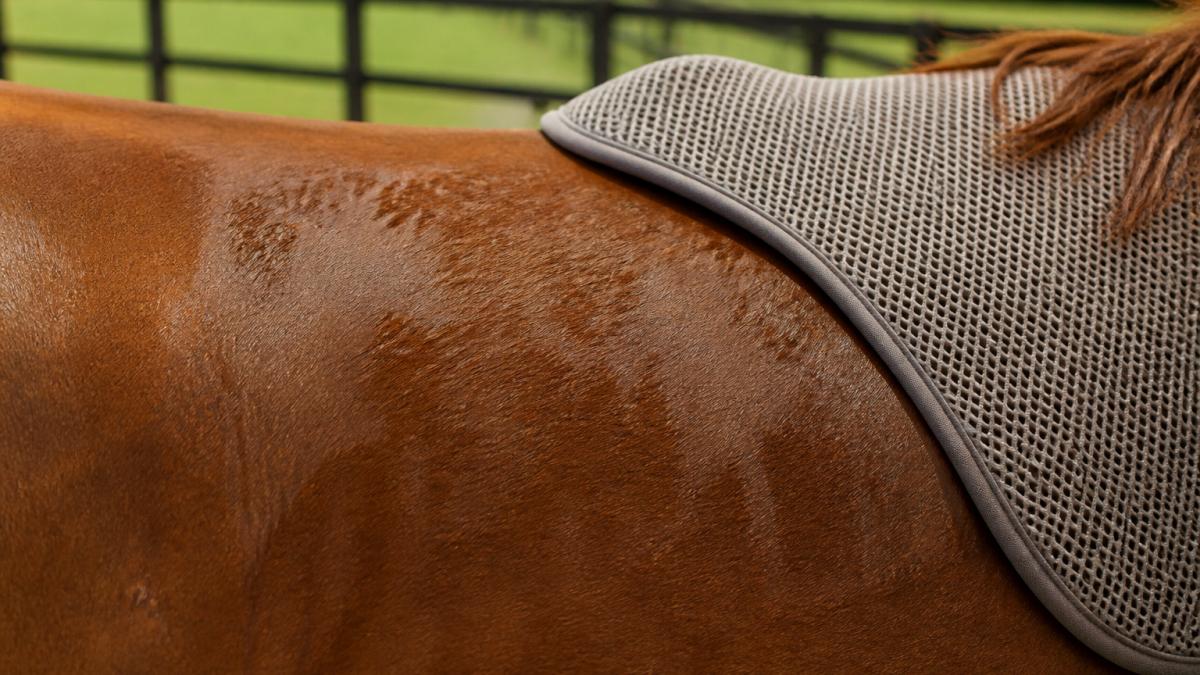
The LeMieux General Purpose Cotton Square Saddle Pad is listed at $181.99. You can also explore the LeMieux Dressage Carbon Mesh Square Saddle Pad at $164.99 or the Equinavia NordicAir All-Purpose Saddle Pad at $99.99.


| Pad Type | Breathability | Moisture Wicking | Durability | Maintenance | Price Range |
|---|---|---|---|---|---|
| Wool | Good | Excellent | High | Moderate | Higher |
| Synthetic | Excellent | Good | Very High | Minimal | Lower |
| Mesh | Excellent | Excellent | Good | Minimal | Moderate |
| Cotton | Good | Very Good | Moderate | Minimal | Moderate |
| Felt | Good | Good | High | Moderate | Moderate |
How to Choose a Saddle Pad for Your Horse and Riding Style
Choosing a saddle pad can start with considering your horse and your riding patterns.
The HORZE Adepto Quilted All-Purpose Saddle Pad is listed at $42.99. The Professional Equine Quilted Dressage Saddle Pad is listed at $79.99. The Equinavia NordicAir is also available.
LeMieux Dressage Carbon Mesh Square Saddle Pad →

Your barn setup can also be a consideration when choosing a saddle pad.
Saddle Pad Fit and Pressure Distribution: Getting the Right Match
Finally, recheck fit when anything changes: a new saddle, a seasonal shift in the horse's condition, a change in workload, or a pad that has compressed with age. Pads lose loft and thickness over time, and a pad that fit in spring may be too thin by fall. Fit is a maintenance task, not a one-time purchase decision.
Finding Your Ideal Saddle Pad at Horsey Horse Store
Your choice of alternatives to traditional wool saddle pads can reflect your horse, your riding, and your maintenance preferences. Horsey Horse Store offers a curated selection of practical horse tack, saddles, and essential barn accessories.
Browse our selection with confidence. Our products include 30-day returns on clean, unused items, and free shipping over $25. When you find a pad that suits your setup, it can help refresh your riding setup.
Frequently Asked Questions
What are the best alternatives to wool saddle pads?
The alternatives to wool saddle pads available in the catalog include mesh and cotton options. Consider your horse, riding conditions, and the available product details when choosing.
How do wool vs synthetic saddle pads compare for everyday riding?
The catalog includes mesh and cotton saddle pad options. Check each product listing for the details provided about that item.
Are felt saddle pads a good choice compared to other materials?
The catalog does not list a felt saddle pad. Check the product listings for details about the available saddle pads.
How do I know if a saddle pad fits my horse correctly?
Check the product listing and available options to match a saddle pad to your horse and tack setup. The catalog advises matching the selected option to your horse, tack setup, or barn use.
Which saddle pad material is easiest to clean and maintain?
The catalog identifies mesh for some saddle pads and cotton for one listed pad, but does not provide washing or care instructions. Check the product listing and available options for details.
Finding the right saddle pad takes more than picking a material. It requires matching construction, fit, and maintenance to your horse's actual needs and your riding life. Horsey Horse Store helps you navigate that choice with products designed for everyday riders who value both performance and practicality. Start with your horse's primary need, select from our proven alternatives, and experience how the right pad transforms your riding.
