

Table of Contents
- What Triggers Horse Shedding Season
- How to Help a Horse Shed Its Winter Coat
- Best Brushes for Shedding Horses
- How Often to Groom a Horse During Shedding Season
- Understanding Excessive Shedding in Horses
- Temperature Regulation and Coat Health
- Seasonal Timing and What to Expect
- Frequently Asked Questions
Last Updated: October 10, 2026
What Triggers Horse Shedding Season
Your horse sheds because daylight length signals the body to grow a different coat. This is the core reason why horse shedding season matters. The change isn't about temperature alone, it's about how your horse's body reads the seasons through light exposure.

Horses evolved to shed heavy winter coats when days get longer. They grow thicker coats when days get shorter. This photoperiod response is hardwired into their physiology. Understanding this helps you manage shedding more effectively and support your horse's health during coat transitions.
Daylight Length and the Photoperiod
Daylight length, or photoperiod, is the primary trigger for seasonal coat change in horses. As days lengthen in late winter and spring, your horse's body receives a signal to shed the winter coat. This happens even if temperatures stay cold.
The pineal gland in your horse's brain detects changes in light exposure (Influence of Photoperiod on Hormones, Behavior, and Immune Function). This gland produces melatonin, a hormone that regulates many seasonal functions. When melatonin levels drop as days lengthen, the shedding cycle begins.
Most horses start shedding in mid-February through March as daylight increases. The timing varies by individual horse and geographic location, but the trigger remains consistent: more light equals time to shed.
Melatonin and Hormonal Signals
Melatonin acts as your horse's internal seasonal clock. When nights are long, melatonin levels stay high. This signals the body to maintain or grow a thick winter coat. When nights shorten, melatonin drops, and the shedding process kicks in.
This hormonal signal is powerful. It overrides temperature changes. A horse can shed during a cold spring because the light signal is stronger than the temperature signal. This is why some horses shed heavily even when snow is still on the ground.
The hormone prolactin also plays a role during shedding season. These hormonal changes work together to loosen the winter coat and prepare new hair growth. Supporting your horse through this process means understanding these natural cycles.
How to Help a Horse Shed Its Winter Coat
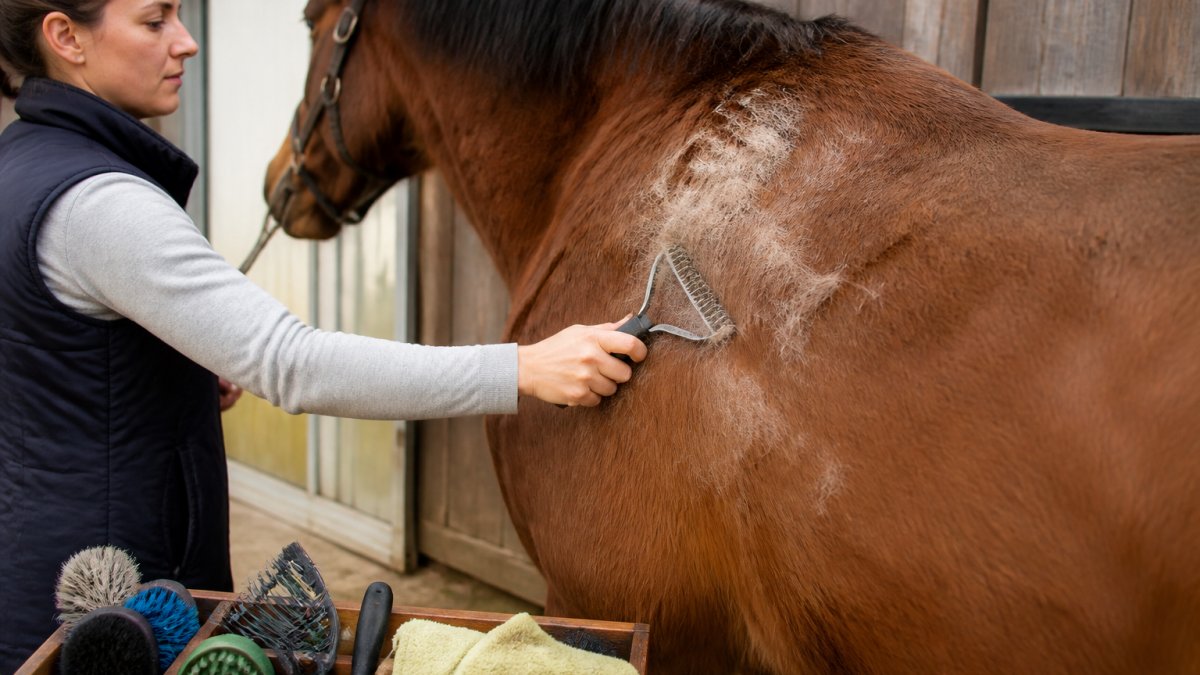
The best way to support your horse during shedding season is consistent grooming. Regular brushing removes loose hair, speeds up the shedding process, and keeps your horse comfortable. A proper grooming routine during coat transition prevents matting and promotes healthy new hair growth.
Grooming Routine During Coat Transition
Start grooming daily during peak shedding season. Use a curry comb or shedding rake to loosen and remove dead hair. Work in circular motions across the horse's body, focusing on areas where shedding is heaviest: the neck, shoulders, and hindquarters.
Follow up with a stiff brush to pull out loosened hair. Then use a softer brush for finishing. This three-step approach removes the most hair efficiently and keeps your horse's skin healthy. Many owners find that daily grooming cuts the shedding timeline by several weeks.
Grooming also gives you a chance to check your horse's skin condition. Look for any signs of irritation, fungal issues, or other problems that can emerge during shedding season. Catching these early prevents larger issues later.
Best Brushes for Shedding Horses
The right tools make grooming faster and more effective. A shedding rake removes dead hair quickly and works well on thick winter coats. The Horse Shedding Rake is designed specifically for this job and handles heavy shedding without damaging new hair growth.
A curry comb with rubber or plastic teeth works well for loosening hair on sensitive areas. Metal curry combs can be too harsh during shedding season. The Gracefur Sheepskin Grooming Gloves offer a gentler option that many horses prefer. They work well for desensitized areas and give you better control.

For manes and tails, use a detangler brush designed to remove shed hair without breaking strands. The Harrison Howard Mane and Tail Brush handles tangles and loose hair effectively. A complete grooming kit like the 10-Piece Horse Grooming Kit gives you all the tools needed for a full shedding season routine.

| Brush Type | Best For | When to Use |
|---|---|---|
| Shedding rake | Heavy dead hair removal | Daily during peak shedding |
| Curry comb | Loosening and massage | Initial grooming pass |
| Stiff brush | Pulling out loosened hair | After curry comb |
| Soft brush | Finishing and polish | Final pass for shine |
| Mane/tail brush | Detangling and shed removal | As needed throughout season |
How Often to Groom a Horse During Shedding Season
Daily grooming during peak shedding season is ideal. Peak shedding typically lasts 4-6 weeks, depending on your horse's individual cycle and the weather. During this time, spend 15-30 minutes grooming each day.
If daily grooming isn't possible, aim for at least 4-5 times per week. Even this frequency removes significant amounts of loose hair and keeps your horse comfortable. Horses appreciate the grooming attention and the relief from itchy, shedding skin.
As shedding slows, you can reduce grooming to 3-4 times per week. By late spring, most horses have shed their winter coats and need less frequent grooming. Watch your horse's coat and adjust your routine based on how much loose hair you're removing.
Understanding Excessive Shedding in Horses
Some horses shed more heavily than others. Individual variation is normal and depends on genetics, age, health status, and environmental factors. A thick-coated horse will always shed more than a thin-coated horse.
Nutrition affects shedding too. Horses with poor nutrition may shed later or less completely. A diet lacking essential fatty acids and protein can result in a dull coat that doesn't shed cleanly. Quality hay, grain, and supplements support healthy coat cycles.
Stress and illness can delay shedding. A horse recovering from illness or dealing with significant stress may hold onto its winter coat longer. Once the stressor resolves, shedding usually catches up quickly.
When Slow or Delayed Shedding Warrants Veterinary Attention
If your horse is still holding a heavy winter coat by late May or early June, something needs attention. Delayed shedding beyond normal timing suggests a metabolic issue or other health concern. Contact your veterinarian if shedding is significantly later than previous years.
Horses with Equine Metabolic Syndrome (EMS) often shed poorly. They may hold thick coats well into summer or shed unevenly. A vet can test for metabolic issues and recommend appropriate management.
Clipping a horse that won't shed naturally can help during summer heat. However, clipping is a management tool, not a solution to the underlying problem. If your horse needs clipping every year, discuss metabolic testing with your veterinarian.
Temperature Regulation and Coat Health
The winter coat insulates your horse against cold. A thick coat traps air close to the skin, creating an insulating layer. The summer coat is shorter and allows heat to dissipate more easily.
This coat change is essential for your horse's comfort and health. A horse stuck in a heavy winter coat during hot weather struggles to cool down. It may sweat excessively, lose condition, and become stressed. Shedding that winter coat allows normal temperature regulation.
Blanketing decisions affect the shedding timeline. A heavily blanketed horse may shed more slowly because the blanket provides artificial warmth. In spring, removing blankets gradually encourages normal shedding. Horsey Horse Store carries grooming supplies that support this natural process and keep your horse comfortable during transitions.
Seasonal Timing and What to Expect
While daylight length is the primary trigger for shedding, the actual timing varies significantly by geography, individual horse factors, and environmental conditions.
Typical spring shedding timeline:
Late January to early February: Early shedding may begin in horses with very thick winter coats or in those exposed to artificial lighting (such as horses in heated barns or under lights for training).
Mid-February through March: This is the most common start window for spring shedding across most regions. The pineal gland responds to increasing daylight, and melatonin levels drop.
March through April: Peak shedding occurs when the coat is actively loosening and new hair is growing in.
Late April through May: Shedding continues but typically slows. Many horses have transitioned most of their coat by late April, though the process may extend into May depending on individual factors.
Late May through early June: By this point, most horses have completed the transition to their summer coat.
Regional and climate variation:
Geographic location affects timing. Horses in northern regions (such as the upper Midwest or Northeast) typically shed 2-4 weeks later than horses in southern regions. This reflects the actual daylight changes in those latitudes.
Unusually cold springs can delay shedding slightly, even though temperature is not the primary trigger.
Conversely, an early warm spring does not accelerate shedding significantly. Daylight length remains the dominant signal, so an unusually warm March will not trigger earlier shedding than normal.
Individual factors that shift timing:
Age: Young horses (under 5 years) often shed later and less completely than mature horses. Expect shedding to extend into June for young stock.
Breed and genetics: Thick-coated breeds (such as draft crosses or horses with heavy winter coats) naturally shed more slowly than fine-coated breeds.
Body condition: Horses in poor body condition may shed later or incompletely. A horse that is underfed or recovering from illness may hold its winter coat longer.
Artificial lighting: Horses kept under artificial lights (in barns with extended lighting for training or other purposes) may shed earlier than those in natural light.
Prior year patterns: Track your horse's shedding timeline each year. Most horses follow a consistent pattern year to year. If your horse typically finishes shedding by May 1st, that is its normal rhythm.
Fall shedding timeline:
As daylight decreases in late summer and early fall, horses begin growing their winter coats. This process usually begins in late July or August and progresses through September and October.
Planning ahead:
Track when shedding starts and peaks for your horse each year. Note the weather, your horse's age and condition, and any changes in management (such as blanket use or lighting).
Frequently Asked Questions
Why do horses shed their coats in the spring?
Horses shed their winter coat in spring primarily in response to increasing daylight hours, not temperature alone. The pineal gland detects longer days and reduces melatonin production, triggering hormonal signals that initiate the shedding cycle. This seasonal coat transition allows horses to shed their thick winter coat and grow a shorter summer coat suited for warm weather. The process typically begins in mid-February and continues through late spring as daylight lengthens.
How often should I groom a horse during shedding season?
During heavy shedding, groom your horse at least 4-5 times per week, ideally daily if possible. Frequent grooming removes loose hair, prevents matting, and supports the natural shedding process. Use tools like a shedding rake or curry comb to pull out dead winter hair efficiently. Daily grooming also helps you monitor coat condition and spot any skin issues early. The more consistently you groom, the faster the transition completes.
What brushes work best for a horse that is shedding?
Shedding rakes and curry combs are most effective for removing loose winter hair. A quality horse shedding rake like the one available at Horsey Horse Store ($20.99) is designed specifically for this task. Follow with a mane and tail brush to detangle and remove loose hair from the mane and tail. A 10-piece grooming kit ($58.99) provides multiple tools for different stages of the shedding process. Grooming gloves made of rubber can also help during the transition.
When is excessive shedding in horses a cause for concern?
Excessive shedding beyond late spring or shedding that occurs in winter warrants veterinary attention. Delayed or slow shedding can indicate metabolic issues like equine metabolic syndrome (EMS) or thyroid problems. If your horse has a dull coat, poor body condition, or fatigue alongside abnormal shedding, consult your veterinarian. Nutrition also affects shedding; ensure your horse receives adequate protein and micronutrients to support healthy coat transition.
Shedding season is a natural and necessary process for your horse's health and comfort. Supporting this cycle with consistent grooming and proper tools makes the transition smoother for both you and your horse. At Horsey Horse Store, we provide the grooming supplies you need to manage shedding effectively. Our brushes, rakes, and grooming kits are designed for real barn work and daily use. Get started with the right tools today and make shedding season easier for your horse.