

Table of Contents
- Why Daily Horse Grooming Matters
- Building Your Daily Horse Grooming Routine
- How to Groom a Horse Step by Step
- Horse Grooming Tools and Brushes You'll Need
- How Often to Groom a Horse: Frequency and Schedules
- Health Benefits: Spotting Problems Early
- Building Trust Through Grooming
- Frequently Asked Questions
Last Updated: October 9, 2026
Why Daily Horse Grooming Matters
Daily horse grooming is one of the most important routines you can establish with your horse. It strengthens your bond, improves coat and skin health, and lets you spot problems before they become serious.

When you groom your horse every day, you're also checking for cuts, bumps, and skin issues, inspecting hooves, and monitoring overall health, catching lameness, infections, or injuries before they require expensive veterinary care.
Building Your Daily Horse Grooming Routine
A solid daily grooming routine doesn't need to be complicated, the key is consistency. Set aside a specific time, morning before riding or evening after work, and your horse will adapt quickly.
Morning Grooming Tasks
Morning grooming prepares your horse for the day ahead, checking for overnight injuries and removing dried sweat or dirt. Run your hands over the body for heat, swelling, or cuts, check eyes, nostrils, and ears for discharge, pick out all four hooves, and brush the coat. If your horse will be ridden, spend extra time where tack sits, a clean back and girth area prevents saddle sores.
Evening Grooming Tasks
Evening grooming is more thorough, removing sweat, dirt, and debris from the day. Curry in circular motions, follow with a body brush (especially the face, legs, and mane), check for new cuts, scrapes, or swelling, run your hands down each leg for heat or sensitivity, and pick out hooves again. Allow 20-30 minutes.
How to Groom a Horse Step by Step
A systematic approach ensures you don't miss anything. Follow these steps in order.
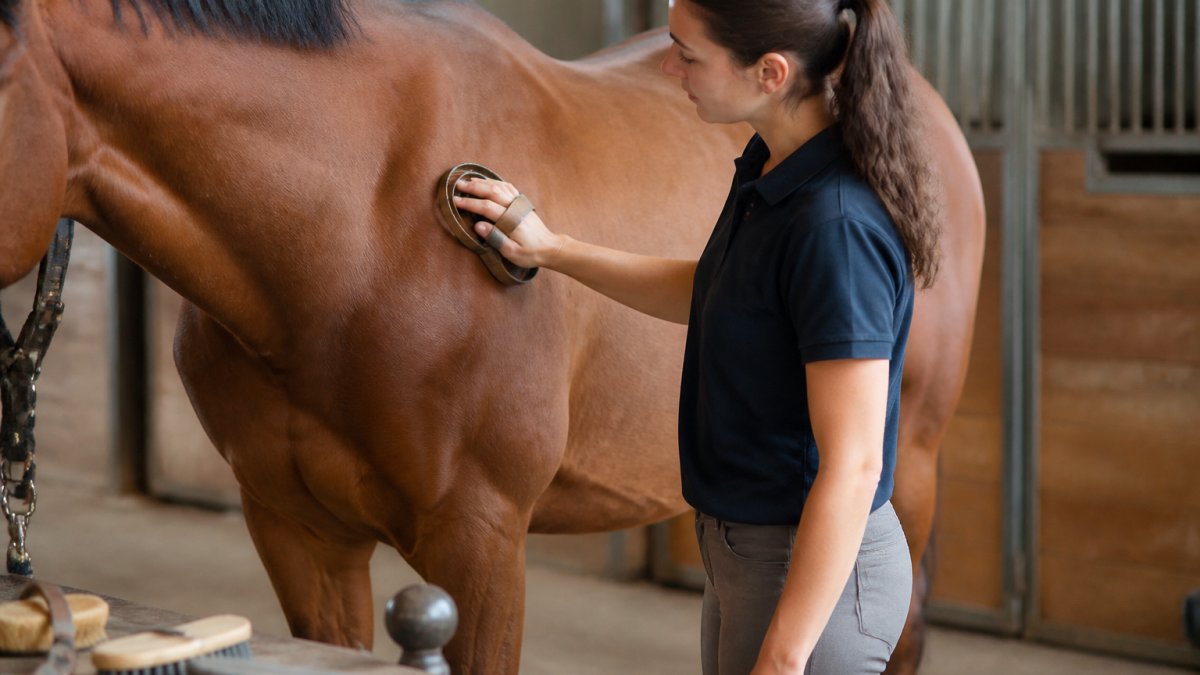
Starting with the Curry Comb
The curry comb is your first tool, loosening dried sweat, dirt, and loose hair. Use firm, circular motions from the neck through the shoulders, chest, barrel, and hindquarters, avoiding bony areas like the legs, spine, and face. Spend extra time where sweat accumulates: under the saddle, around the girth, and on the chest.
Body Brushing and Hair Removal
After currying, use a body brush with medium-length bristles to remove loosened hair and dust. Brush in the direction the hair grows, with smooth strokes from front to back starting at the neck. Thorough brushing removes loose hair that would otherwise fall out during riding and creates a smooth, clean coat. Pay special attention to the legs and lower body, and use lighter pressure on the face.
Hoof Picking and Inspection
Clean hooves are critical for hoof health. Use a hoof pick to remove packed dirt, rocks, and debris from the sole and frog of each hoof, starting at the heel and working toward the toe. Pick out the grooves on either side of the frog, check the sole for embedded rocks, and look for thrush, a dark, foul-smelling condition that requires treatment.
Mane and Tail Care
A clean mane and tail improve your horse's appearance and health. Use a mane and tail brush with wider spacing than regular brushes so it won't break the hair. Start at the bottom of the mane and work upward, detangling gently; for the tail, hold it at the base and work from the bottom up.
Horse Grooming Tools and Brushes You'll Need
The right tools make grooming easier, you don't need expensive equipment, just quality basics. A curry comb with medium-length rubber teeth loosens sweat and dirt; a body brush with stiff bristles removes loosened hair and dust; a soft finishing brush creates shine and works on sensitive areas.
Horsey Horse Store offers complete grooming kits. The 10-Piece Horse Grooming Kit includes a curry comb, body brushes, hoof pick, sweat scraper, and mane and tail brush in a tote bag, everything needed for daily grooming.

How Often to Groom a Horse: Frequency and Schedules
Most competitors answer this question with a single sentence: groom daily, bathe occasionally. The schedule below breaks grooming into tasks by frequency, a routine that survives a busy week and a muddy paddock.
Daily, Weekly, and Monthly Task Calendar
Use this as a baseline and adjust for your horse's workload and living conditions.
Every day (10-30 minutes total)
- Run hands over the body, legs, and neck to check for heat, swelling, or new cuts.
- Pick out all four hooves and inspect the sole, frog, and hoof wall.
- Curry and body-brush the coat, focusing on girth, saddle, and chest areas.
Every week
- Deep-clean the mane and tail: detangle from the ends upward, then brush through.
- Scrub the water and feed buckets.
- Wash or rotate saddle pads and girth covers.
Every two to four weeks
- Full bath if needed (see bathing guidance below).
- Clip bridle path, muzzle whiskers, or fetlocks if you show or if the horse runs hot.
- Review the grooming kit: replace worn brushes, disinfect hoof picks, restock detangler.
Every six to eight weeks
- Schedule farrier visits. Most horses need trimming or shoeing on this interval; some go four weeks, some go eight. Your farrier sets the rhythm.
- Review dental and vaccination schedule with your veterinarian.
Adapting the Schedule to Your Horse
A single calendar does not fit every horse. Use these adjustments.
- Stabled horses need daily hoof picking because bedding and manure pack the feet, and more frequent currying since they cannot roll to shed hair naturally.
- Pasture-kept horses need more mud management in wet months and fly protection in summer, but shed coat naturally and may need less currying.
- Clipped horses in winter need daily blanketing checks and less brushing on clipped areas, since the coat no longer insulates and skin dries faster.
When You Miss a Day
Missing a day is normal. Prioritize in this order:
8-Piece Horse Grooming Box Kit →
- Hoof picking and a quick leg check. Feet are the least forgiving if something is packed or brewing.
- Saddle and girth area. Sweat and dirt left under tack cause sores fast.
- Full-body hands-on check for heat, swelling, or new wounds.
- Curry and brush, the part you can shorten without harm.
Skip the mane and tail, the bath, and cosmetic touches. Those can wait.
Bathing and Washing Frequency
Bathing is not the same as daily grooming, and over-bathing strips the natural oils that waterproof the coat and protect the skin.
- Show horses: bath the day before a show, then spot-clean with a damp cloth and finishing brush between classes.
- Horses in heavy work: rinse sweat off with plain water and a sweat scraper after each ride rather than bathing. Reserve full baths for when the horse is truly dirty.
- Horses in light work or on pasture: a full bath every four to six weeks is usually plenty; many do fine with less.
A sweat scraper removes water and sweat quickly after work. Use it to squeeze water from the coat, then finish with a clean towel. This prevents chilling and speeds drying time.
A Simple Grooming Log
A one-page log kept in the barn makes this schedule stick. Track four columns: date, tasks completed, hoof and skin observations, and upcoming farrier or vet dates. Even a spiral notebook works. The point is to spot patterns, like a hoof that keeps packing with dirt or a patch of skin that keeps flaring, before they become expensive problems.
Health Benefits: Spotting Problems Early
Daily grooming is the cheapest diagnostic tool you own. Fifteen minutes with your hands on the horse gives you a baseline for what is normal, and that baseline makes any abnormality obvious.
What You Are Actually Checking For
Run through the same list every session.
- Skin: look for scabs, crusting, bald patches, hives, or areas of heat. Rain rot, scratches (pastern dermatitis), and ringworm all start small and spread.
- Legs: feel each leg from knee or hock down to the hoof. Compare left to right. Heat, filling, or a pulse you can feel in the digital arteries is a flag.
- Hooves: check for a strong odor, black tarry discharge, or a deep crack in the sole or frog. Those point to thrush or an abscess brewing.
- Eyes and nose: clear discharge is normal. Thick, yellow, or green discharge is not.
Normal vs. Worth a Call
Use this as a rough guide. It is not a substitute for your veterinarian's judgment.
Monitor at home and recheck in 24 hours
- A small, clean scrape with no swelling.
- A tiny area of dry skin or a single scab.
- Slight mud fever scabbing on the heels in wet weather, if the horse is sound.
- A loose shoe that is still attached.
Call your veterinarian or farrier the same day
- Any lameness, even mild, that does not resolve after a few minutes of movement.
- Heat, swelling, or a bounding digital pulse in a leg.
- A hoof that is hot to the touch, or a horse that is reluctant to bear weight on one foot.
- A wound near a joint, tendon, or the eye.
Call your farrier
- A loose or shifted shoe.
- A crack in the hoof wall that is growing or has a red or pink line.
- A hoof that has been packed with mud or manure for more than a day and now smells.
Why Early Detection Pays
A small abscess caught at the first sign of heat and a digital pulse is usually a farrier visit and a few days of soaking; left for a week, it can mean a vet call, radiographs, and a longer layup.
The mechanism is simple: grooming puts your hands on the horse every day, and hands find what eyes miss, a swelling not yet visible, a hoof warmer than the other three, a patch of skin that feels different under the brush.
If you are unsure whether something is serious, call. A veterinarian would rather answer a quick question than treat an advanced problem. Do not wait for a horse to go three-legged lame before picking up the phone.
Building Trust Through Grooming
Grooming is bonding time. Your horse learns to trust you through consistent, gentle handling, and that trust translates to better behavior under saddle and easier handling overall.
Daily horse grooming is one of the simplest ways to improve your horse's health and strengthen your partnership. A consistent routine takes just 15-30 minutes daily but prevents health problems, catches issues early, and deepens your connection.
Frequently Asked Questions
What are the main benefits of grooming a horse every day?
Daily horse grooming improves coat health by removing dirt, sweat, and loose hair while distributing natural oils. It strengthens the bond between you and your horse through consistent handling and touch. Most importantly, grooming lets you spot early signs of injury, skin irritation, or infection before they become serious problems. Horses that receive daily grooming also tend to have better overall body condition and lower stress levels.
How long should you groom a horse each day?
A basic daily grooming routine typically takes 15-30 minutes, depending on your horse's coat condition and workload. After exercise, plan for 20-30 minutes to remove sweat, dirt, and loose hair. On rest days, a quick 10-15 minute grooming session focusing on coat check and hoof inspection is usually sufficient. Horses in heavy work or those shedding may need closer to 30-45 minutes to maintain coat health.
Does daily grooming really improve a horse's coat?
Yes. Daily grooming removes dead skin cells, dirt, and sweat that can trap moisture and cause irritation. It stimulates blood flow to the skin and distributes natural oils throughout the coat, resulting in a shinier, healthier appearance. Horses groomed daily also shed more evenly during seasonal transitions, which means fewer loose hairs and a cleaner coat overall. Consistent brushing also prevents matting and tangling, especially in the mane and tail.
What grooming tools do you actually need for daily horse grooming?
Start with a curry comb to remove dried sweat and mud, a medium-bristled body brush for general cleaning, a hard-bristled brush for fine finishing, a hoof pick for debris removal, and a mane and tail brush for detangling. A 10-piece grooming kit like the one available at Horsey Horse Store includes most of these essentials, making it easy to keep everything organized in your tack room. A sweat scraper is also useful after exercise to remove excess water and sweat.