

Table of Contents
- What Makes Ergonomic Stirrup Leathers Different
- How Wide Stirrup Leathers Affect Leg Stability and Position
- Stability Stirrup Leathers: Construction, Materials, and Durability
- Stirrup Leather Price Comparison: Standard vs. Ergonomic Options
- Finding the Best Stirrup Leathers for Your Needs
- Common Mistakes When Upgrading Your Stirrup Leathers
- Is the Investment Worth It? A Practical Verdict
- Frequently Asked Questions
Last Updated: October 15, 2026
What Makes Ergonomic Stirrup Leathers Different
Ergonomic stirrup leather distributes pressure more evenly across your leg while reducing the bulk of traditional leather beneath the saddle. Standard stirrup leathers measure around 1 inch wide; wide stirrup leathers extend to 1.25 inches or more.
Construction matters too. Many ergonomic options use thinner, more pliable leather that conforms to your leg rather than forming a rigid band, and some add nylon webbing reinforcement on the underside for durability without bulk on the surface that contacts your leg. We help everyday riders upgrade their tack with practical improvements for schooling and trail riding.
Ergonomic stirrup leathers typically use softer calfskin or supple leather that breaks in quickly, so the leather adapts to your leg position instead of forcing your leg to adapt to it. Riders often notice the difference within the first few rides.
How Wide Stirrup Leathers Affect Leg Stability and Position
Wide stirrup leathers improve leg stability by anchoring your leg more securely against the saddle. With pressure spread across a wider surface, your leg stays put more consistently, especially during transitions or on uneven terrain.
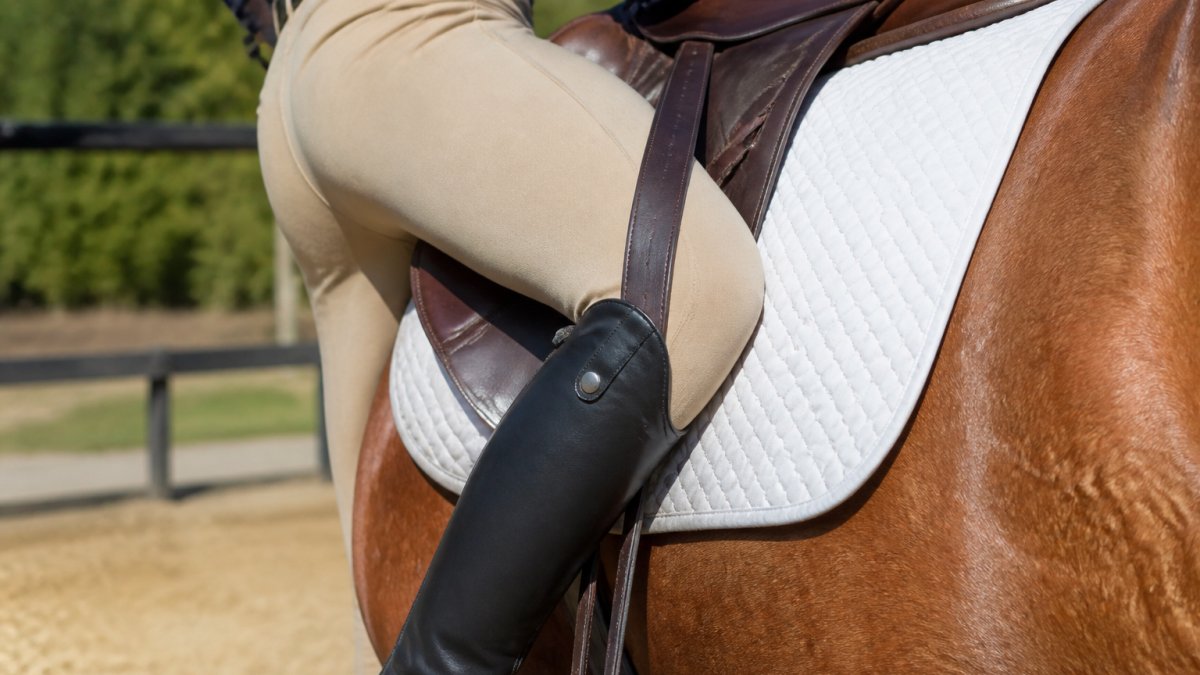
The benefit extends to your seat: a more secure leg lets your seat bones sit deeper, improving balance and control. Many riders report gripping less with the lower leg and focusing more on overall position, which reduces fatigue on longer rides.
Stability stirrup leathers aren't a magic fix for poor position, though. They work best alongside correct riding fundamentals.
Stability Stirrup Leathers: Construction, Materials, and Durability
Construction quality determines how long stability stirrup leathers last and how well they perform. Premium options use full-grain calfskin that softens and develops patina over time, typically at 3.5 to 4 millimeters thick for durability without excess weight.
Reinforcement is where construction becomes critical.
Stitching matters too: double stitching at stress points, especially the stirrup bar attachment and the holes, extends lifespan significantly. Well-constructed leathers last 8-10 years with regular use and basic maintenance; lower-quality options may thin or crack within 3-5 years.
Durability also depends on maintenance. Regular conditioning with leather oil or cream keeps the material supple and prevents drying and cracking; neglected leathers deteriorate faster regardless of initial quality, while well-maintained ones often outlast expectations.
Stirrup Leather Price Comparison: Standard vs. Ergonomic Options
Sticker price alone doesn't answer whether the upgrade pays off.
What you are actually paying for breaks down into four cost drivers:
- Hide quality. Economy leathers are often split-grain or heavily corrected. Ergonomic options typically use full-grain or calfskin, which is more supple and resists cracking at the holes.
- Reinforcement. Nylon webbing stitched to the underside is the single biggest durability upgrade. It is also one of the main reasons ergonomic leathers cost more than a plain strap.
- Stitching labor. Double stitching at the stirrup bar and around the hole line takes more machine time and more inspection.
- Width and shaping. Cutting and finishing a wider, tapered, or contoured strap uses more material and more hand work than a straight 1-inch strap.
Cost per year of use
The more useful comparison is cost per year, not cost per pair.
| Option | Typical price | Typical lifespan | Cost per year |
|---|---|---|---|
| Economy standard leathers | $25-$40 | 3-5 years | $6-$13 |
| Mid-tier standard leathers | $40-$60 | 5-7 years | $6-$12 |
| Entry ergonomic / wide leathers | $60-$90 | 5-7 years | $9-$18 |
| Premium ergonomic leathers | $100-$150+ | 8-10+ years | $10-$19 |
Two things stand out. First, the annual cost of a well-made ergonomic pair is often close to that of a cheap standard pair, since the higher price spreads over more years. Second, the cheapest option is rarely cheapest per year once you factor in replacement frequency, re-threading time, and riding on stretched or cracked straps in their final year.
What actually drives the price up (and when it is not worth it)
A $100 pair isn't automatically twice as good as a $50 pair. The premium shows up in how the leather feels against your calf on day one, how slowly the holes stretch, and how the strap looks after two seasons of sweat and rain. Ride two or three times a month and those advantages spread thin; ride four or more times a week and they compound quickly.
Hidden costs riders forget
- Conditioning supplies. A tin of quality leather conditioner runs $10-$20 and lasts a season or more. Skipping it is the fastest way to shorten the life of any leather.
- Replacement stirrup irons. Wider leathers may still fit your existing irons, but some riders upgrade treads or widths at the same time. Budget separately.
- Fit mistakes. A pair that doesn't sit correctly on your stirrup bars is money wasted regardless of price. Measure before you buy.
A practical rule of thumb
If your current leathers are structurally sound and you ride fewer than three hours a week, the upgrade is optional. If you're already replacing worn leathers, ride long sessions regularly, or notice pressure points and leg fatigue on longer rides, the ergonomic tier is usually the better long-term buy, the cost per year is competitive and the comfort gain is felt on every ride.
Finding the Best Stirrup Leathers for Your Needs
Most guides stop at "it depends on your discipline." Here is a more concrete way to match stirrup leathers to you, your saddle, and your riding.
Step 1: Measure your current leathers
Before buying, measure what you already ride in. Two numbers matter:
- Width. Lay the strap flat and measure across the widest point. Standard is roughly 1 inch; wide or ergonomic options are typically 1.25 inches or more.
- Length. Measure from the top of the stirrup bar loop to the hole you actually use, so your stirrup lands where you expect.
If you're between sizes on length, order the longer option. It's easy to punch an extra hole; it's not easy to add length.
Black Matte Flexi Safety Stirrups →
Step 2: Check saddle and stirrup bar compatibility
Not every saddle plays nicely with every strap width. Before ordering:
- Confirm the stirrup bar is a standard fixed or safety bar that accepts a 1-inch to 1.25-inch strap.
- Check that the bar's opening is wide enough that a thicker reinforced leather won't bind.
- On some dressage and close-contact saddles, the flap sits tight against the bar and a very wide leather can rub it. Test the fit with the saddle on a rack before you ride.
Step 3: Match width to your leg and discipline
There is no universal "best" width. A reasonable starting framework:
- Thin or average leg build, dressage or hunter/jumper: standard width or a lightly tapered ergonomic strap often feels best; very wide leathers can feel bulky against a slim calf.
- Average to larger leg build, trail, endurance, or long schooling sessions: wide or ergonomic leathers tend to reduce pressure points and leg fatigue.
- Riders working on leg position: ergonomic leathers add surface contact, but they support good position, they don't create it.
- Western or endurance saddles with fenders: stirrup leathers aren't the right product; look at fender systems instead.
Step 4: Install and break in correctly
Installation is straightforward but easy to get wrong:
- Run the strap up through the stirrup bar from the outside, then down through the loop.
- Thread the buckle or billet end through the stirrup iron and back up to the buckle.
- Set both sides to the same hole count and check in a mirror or with a helper before mounting.
- Ride a short session first; new leather stretches slightly, so re-check hole position after two or three rides.
Break-in is usually quick with quality leather. If a strap feels stiff after a week of regular use, it likely needs conditioning rather than more time.
Step 5: Care and inspection
A simple routine keeps leathers safe and extends their life:
- Wipe after every ride. Sweat and grit are leather's two biggest enemies.
- Condition every 4-8 weeks depending on climate and riding frequency. Dry climates and winter indoor heat dry leather out faster.
- Inspect the holes monthly for stretching, cracking, or thinning around the hole you use most, the first place leathers fail.
- Check the stitching at the stirrup bar every few months. Loose or frayed stitching means replace, not repair.
Common Mistakes When Upgrading Your Stirrup Leathers
The biggest mistake is assuming wider automatically means better. Comfort is personal: a leather that feels perfect for one rider may feel awkward for another based on leg size, riding style, and saddle fit. Before investing in premium ergonomic leathers, borrow a pair or buy with a return option to confirm they suit you.
Another common error is neglecting maintenance after upgrading. Riders invest in quality leathers, then skip regular conditioning, which accelerates wear and defeats the purpose of the upgrade. Quality leathers only deliver their promised lifespan with proper care.
Riders also buy leathers without confirming they fit their saddle's stirrup bars, creating frustration and wasted money. Always verify measurements and design before buying.
Finally, many riders expect ergonomic leathers to fix position problems that require actual riding work. Leathers support good position; they don't create it. They'll help an inconsistent position, but they won't substitute for focused practice and instruction.
Is the Investment Worth It? A Practical Verdict
Ergonomic stirrup leather is worth the price if you ride regularly and prioritize comfort and stability.
For casual riders logging a few hours a month, standard-quality leathers may be sufficient, the cost-per-ride difference is smaller and comfort gains matter less when riding time is limited.
The deciding factor is often durability combined with feel.
Consider upgrading when you're already replacing worn leathers or have identified specific discomfort during rides, that's the practical moment to invest. At Horsey Horse Store, we help everyday riders refresh their tack setup with products that simplify daily barn routines and support your riding goals.
Upgrading your stirrup leathers is one of the most underrated improvements you can make to your riding setup. Whether you choose ergonomic wide leathers or standard options depends on your riding frequency, comfort needs, and budget.
Frequently Asked Questions
Are stability stirrup leathers worth it?
Stability stirrup leathers are worth the investment if you struggle with leg position, ride multiple horses, or spend significant time in the saddle. The wider design reduces bulk beneath your leg, improves contact with the saddle, and can enhance your overall position stability. However, if you already have solid leg position and your current leathers work well, the upgrade may not be necessary. The real value depends on your individual riding needs and budget constraints.
How do ergonomic stirrup leathers differ from standard stirrup leathers?
Ergonomic stirrup leathers are wider and often thinner than standard-width leathers, designed to minimize bulk under the rider's leg while maintaining strength and durability. Standard leathers tend to fold and bunch beneath the calf, which can interfere with your leg position and contact with the saddle. Ergonomic options may also feature reinforced construction around stress points, better pliability in quality calfskin, and improved weight distribution. The trade-off is typically a higher price point.
What should I look for when buying stirrup leathers?
Check the width (wider designs offer more stability), material quality, and construction reinforcement around the stirrup bar attachment and holes. Verify compatibility with your saddle's stirrup bars and your preferred stirrup size. Consider thickness and pliability, softer materials break in faster but may wear sooner, while stiff materials require a break-in period. Finally, review the expected lifespan and replacement cost to assess long-term value for money.
Can wide stirrup leathers improve my leg stability?
Wide stirrup leathers can improve leg stability by reducing the bulk that typically forms under the calf when using standard leathers. This allows your leg to sit closer to the saddle, improving contact and proprioceptive feedback. However, stability also depends on your riding position, core strength, and saddle fit. Wide leathers support better position but are not a substitute for correct riding technique. Many riders report feeling more secure and balanced after switching, particularly during schooling and trail riding.