

Table of Contents
- Understanding Riding Breeches vs. Other Options
- How Riding Breeches Should Fit
- Full Seat vs. Knee Patch Breeches: Which Is Best for Beginners
- Best Fabric for Riding Breeches
- Choosing the Correct Size and Rise
- Beginner Rider Buying Checklist
- Care, Durability, and Cost Per Wear
- Trying Breeches in Riding Positions
- Frequently Asked Questions
Last Updated: October 12, 2026
Understanding Riding Breeches vs. Other Options
Learning how to choose comfortable riding breeches for beginners starts with understanding that riding breeches are pants cut snugly through the seat, thigh, and calf for freedom of movement in the saddle, with reinforced grip areas and a cut that keeps fabric from bunching under your legs when mounted.
The main difference between breeches and riding tights is coverage and durability. Tights reach your ankles and cost less; breeches stop at the calf or just below the knee and pair with tall boots or half chaps.

At Horsey Horse Store, we carry both options so you can choose what fits your riding style and budget.
How Riding Breeches Should Fit
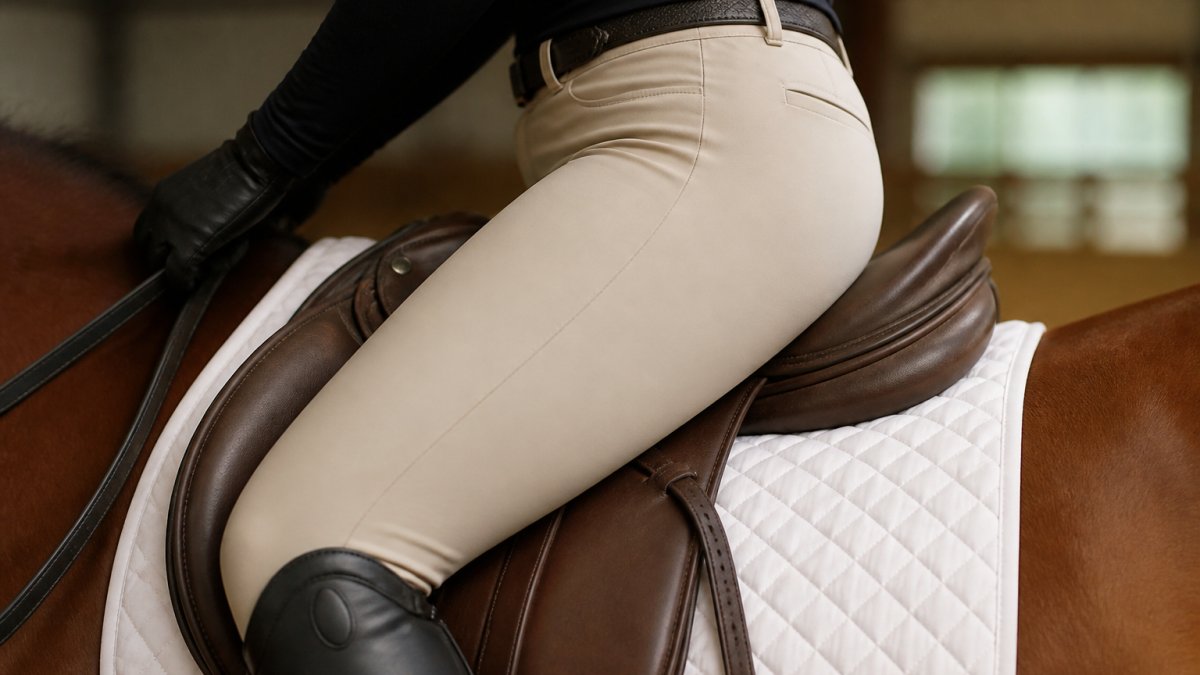
Proper fit prevents chafing, lets your legs move naturally, and keeps you stable in the saddle. Fabric should sit snug without bunching, rolling, or creating pressure points.
Waist, Seat, and Thigh Fit
Your waist should feel secure but not tight. The waistband should sit at your natural waist without digging in or slipping down when you bend forward in two-point.
The seat is where fit matters most. Breeches should hug it smoothly without pulling, wrinkling, or excess fabric, which can bunch under your legs and chafe on longer rides.
Through the thigh, breeches should be snug but not restrictive. Press your thigh against the saddle; if they bunch or fold, they're too loose.
Calf, Ankle, and Inseam
At the calf, breeches should taper smoothly without pulling or gapping. A gap means your inseam is too short or the rise is wrong.
Your inseam determines where breeches end. Measure from your crotch to the inside of your ankle bone while standing barefoot. Breeches should land just above or at the top of the boot; too long and they bunch, too short and they pull up when you sit.
Full Seat vs. Knee Patch Breeches: Which Is Best for Beginners
For beginners, full seat breeches are the better choice: more grip and stability while you learn to balance and develop a secure seat.
Knee patch breeches suit experienced riders with a stable seat who need less contact. They're cheaper and offer more freedom of movement for jumping at higher levels.
Start with full seat. You can always upgrade to knee patch breeches later if you find you prefer the lighter feel.
Best Fabric for Riding Breeches
Fabric is where comfort is won or lost. A breech can fit perfectly and still feel miserable after thirty minutes if the material traps heat, loses stretch, or rubs at the seams. Choose a fabric that moves with you, breathes, and holds its shape through repeated washing.
Stretch Fiber and Recovery
Most schooling breeches blend a base fiber with stretch fiber: cotton with spandex or elastane, or synthetic knits with elastane. A typical blend is roughly 85-90% base and 10-15% stretch, though four-way stretch knits move better than two-way.
The percentage matters less than recovery. Good recovery snaps back after you dismount; poor recovery sags at the knee and seat. Bend your knee deeply, hold, then straighten; if the fabric stays bagged out, it will only worsen with wear.
Fabric Weight and Breathability
Weight is usually described in grams per square meter (GSM), though many brands simply label breeches as lightweight, midweight, or heavyweight. As a rough guide:
- Lightweight (roughly 200-260 GSM): Best for summer schooling and hot climates. Thinner, cooler, and faster-drying, but less durable against rub and barn abrasion.
- Midweight (roughly 260-320 GSM): The most versatile choice for beginners riding year-round in a temperate climate. Balances breathability with enough substance to resist wear.
- Heavyweight (roughly 320+ GSM): Warmer and more durable, suited to cold-weather riding or daily barn work. Can feel hot in summer and takes longer to dry.
Breathability comes from knit structure and fiber type, not just weight. Synthetic knits wick moisture faster than cotton, which absorbs sweat and stays damp. In hot, humid climates, a lightweight synthetic blend feels cooler than a heavier cotton blend.
Seams, Panels, and Chafing
Check where the seams sit. Flatlock construction lies smooth against the skin and reduces chafing; raised, bulky seams at the inner thigh or seat are a common source of rub.
Grip panels affect comfort too. Silicone print grips are lighter and more breathable than suede seats, which feel warmer and stiffer. If you overheat easily, a silicone knee patch or lighter silicone full seat may suit you better.
Care and Longevity by Fabric Type
Care instructions vary by fabric and should drive your decision as much as feel:
- Cotton blends: Comfortable and breathable, but slower to dry and more prone to shrinking if washed hot. Usually machine washable cold, air dry.
- Synthetic blends: Faster drying, more durable, and often more colorfast. Generally machine washable cold, but heat degrades elastane, so avoid the dryer.
- Suede or synthetic suede seats: Require gentler washing and can stiffen if washed hot or dried. Brush or wipe debris rather than scrubbing aggressively.
Across all fabric types, turn breeches inside out, wash cold with mild detergent, skip fabric softener (it coats the stretch fibers and reduces recovery), and air dry. Heat is the single biggest enemy of stretch and grip.
Choosing the Correct Size and Rise
Sizing is the biggest reason beginners end up with uncomfortable breeches. Unlike jeans, breeches fit snugly, so a half-size error becomes a pressure point or a gap in the saddle. Measure properly, understand how rise changes fit, and plan for ordering when you can't try before you buy.
FitsT4 Sports Women's Full Seat Riding Tights →
How to Measure Yourself
Use a soft measuring tape over thin clothing:
- Waist: Measure at your natural waist, the narrowest point above your hip bones, not where your jeans sit.
- Hip: Measure around the fullest part of your seat.
- Inseam: Standing barefoot, measure from your crotch to the inside of your ankle bone. This tells you where breeches should end relative to your boots.
Write these numbers down before you shop; brand size charts use body measurements, not your size in other pants.
Understanding Waist Rise Options
Rise determines where the waistband sits and how breeches behave when mounted.
- High-rise: Sits at or just above the natural waist. Good coverage, stays put in two-point, and suits longer torsos. Can feel restrictive if you prefer a looser waistband.
- Mid-rise: Sits slightly below the natural waist. The most common choice for beginners because it balances coverage with freedom of movement and works across most body types.
- Low-rise: Sits well below the waist. Can feel unstable in the saddle, especially if your hip-to-waist ratio is small, and tends to gap at the back when you lean forward.
Rise interacts with fit in the saddle: too high pulls at the back of your legs, too low slips or gaps. If you're between rises, mid-rise is the safest starting point.
Sizing Across Brands
There is no universal breech size: a small in one brand can fit like a medium in another. Two habits prevent most sizing mistakes:
- Always use the specific brand's size chart, not a general conversion table. If the chart lists waist and hip ranges, match your measurements to those ranges rather than to a letter size.
- Read the fit notes. Some brands cut for a curvier seat, others for a straighter frame. Reviews that mention "runs small" or "true to size" are useful signals, but treat them as directional, not definitive.
If you're between sizes, size up. Breeches should feel snug, but a too-tight pair won't break in like leather; it will simply stay uncomfortable.
Ordering Online and Handling Returns
When you cannot try breeches on in person, build a return-friendly plan:
- Order from a retailer with a clear, generous return window and confirm whether returns must be unworn with tags attached.
- Consider ordering two sizes of the same style if the brand's chart is ambiguous, then return the one that does not fit.
- Try the breeches on indoors, over thin clothing, and do not remove tags until you have tested them in riding positions (see the section below).
- Return promptly. Do not keep a pair hoping it will stretch into comfort; stretch recovers, it does not expand.
A Quick Sizing Checklist
- Waist, hip, inseam, and thigh measured and written down
- Brand-specific size chart checked against those measurements
- Rise chosen for your torso and riding position
- Return window and condition requirements confirmed before ordering
Beginner Rider Buying Checklist
Use this checklist before making your purchase:
- I've measured my waist and inseam accurately
- I've checked the brand's size chart and ordered the right size
- I've chosen full seat breeches for stability and grip
- The fabric has at least 10% stretch for movement
Care, Durability, and Cost Per Wear
Riding breeches are an investment: a quality pair lasts years with proper care.
Wash after every few rides, especially if you've been sweating.
Check seams regularly, especially at the inner thigh where grip meets regular fabric; a tailor can repair small tears before they become big problems.
With proper care, breeches worn 3-4 times a week can last 2-3 years, roughly 300-400 rides, or 25-50 cents per wear.
Trying Breeches in Riding Positions
The best way to know if breeches fit is to try them in riding position.
Sit on the edge of a sturdy chair and lean forward into two-point.
Stand and do a few lunges, breeches should move with you without pulling or bunching.
If you have a mounting block or fence rail, sit on it like a saddle, the most accurate test.
If they fail any test, use your 30-day return window; uncomfortable breeches distract you every ride.
Understanding how to choose comfortable riding breeches for beginners comes down to understanding fit, knowing your measurements, and testing before you commit. At Horsey Horse Store, we stock quality options like the FitsT4 Sports Women's Full Seat Riding Tights with active silicon grip for beginners who want stability and comfort.
Frequently Asked Questions
How should riding breeches fit on a beginner rider?
Riding breeches should fit snugly through the waist, seat, and thigh without restricting movement or causing pressure points. The waistband should sit comfortably without gaps or pinching. Your seat should feel secure against the saddle with no bunching fabric, and the thigh should have enough stretch to allow your leg to move freely. The calf should be snug enough that the breeches don't slip down during riding, and the inseam should reach your ankle without excess fabric pooling at your boot.
Are full-seat or knee-patch breeches better for beginners?
Full-seat breeches are typically better for beginners because they offer silicone grip across the entire seat and inner thigh, providing maximum stability and contact with the saddle. This extra grip helps you develop a secure position and build confidence. Knee-patch breeches, which have grip only at the knee, are better suited to experienced riders who already have an established seat. For your first pair, full-seat breeches give you the security and feedback you need to learn proper positioning.
What fabric is most comfortable for riding breeches?
Look for stretch fabrics that combine breathability with flexibility. Fabrics that include elastane or spandex provide freedom of movement and conform to your body without restricting circulation. Moisture-wicking materials help keep you dry during active riding. Avoid heavy, rigid fabrics that limit your range of motion or cause chafing. The best fabric for riding breeches balances durability with comfort, so the material holds up through regular washing and riding while staying soft against your skin.
Should I choose high-rise, mid-rise, or low-rise riding breeches as a beginner?
Mid-rise breeches are the most versatile choice for beginners. They sit at a natural waistline, offer comfort for most body types, and work well with standard riding shirts. High-rise breeches provide extra coverage and security for riders who prefer a higher waistband, while low-rise breeches sit lower on the hip and may require a longer shirt to avoid gaps. Start with mid-rise unless you have a specific preference based on your body type or comfort needs.