

Table of Contents
- What Makes Durable Leather Horse Bridles Worth the Investment
- Types of Horse Bridles and Which Styles Last Longest
- Leather Quality and Durability: What to Look For
- How to Measure a Horse for a Bridle
- How to Clean Leather Horse Tack and Extend Its Life
- Best Leather Conditioner for Horse Bridles and Care Routine
- Fitting Your Horse Bridle Correctly for Safety and Comfort
- Repairability vs. Replacement: Building Long-Term Value
- Frequently Asked Questions
Last Updated: August 31, 2026
What Makes Durable Leather Horse Bridles Worth the Investment
A quality bridle touches your horse's head every ride and becomes more supple and reliable with proper care. At Horsey Horse Store, we provide a curated selection of practical horse tack designed to simplify your daily routine. The real cost of a cheap bridle isn't the initial price, it's the replacement cost, broken hardware mid-ride, and repeated shopping trips. A durable leather horse bridle eliminates years of tack-shopping stress.

Types of Horse Bridles and Which Styles Last Longest
Not all bridles are built the same, and longevity varies significantly by style.
English vs. Western Bridle Styles
English bridles often rely on delicate stitching and thinner leather, with a monocrown design where a single break can compromise the entire structure. Western bridles typically use thicker leather and broader hardware with split crown designs, so damage to one component doesn't necessarily destroy the whole bridle.
For everyday riders, English styles may demand more attentive care because thinner leather can be vulnerable to cracking in dry climates. Western bridles can tolerate neglect better, but a well-maintained English bridle will generally outlast a neglected Western bridle.
Competition vs. Everyday Use Bridles
Competition bridles are often optimized for appearance over longevity, using thinner leather and plated hardware that can corrode under sweat and moisture. Everyday use bridles prioritize durability with thicker leather, sturdier stitching, and hardware designed to withstand repeated use.
If you ride multiple times per week without a dedicated grooming routine, an everyday use bridle is generally the better choice. Competition bridles are often chosen for showing and may require more frequent maintenance.
Leather Quality and Durability: What to Look For
Full-grain leather is the most durable option. It retains the complete surface of the hide and is more resistant to cracking, developing a beautiful patina over years of use. Top-grain leather has the outer surface sanded smooth, making manufacturing easier but removing the protective layer that makes full-grain so durable. Split leather or bonded leather should generally be avoided, they can delaminate quickly once moisture penetrates the coating.
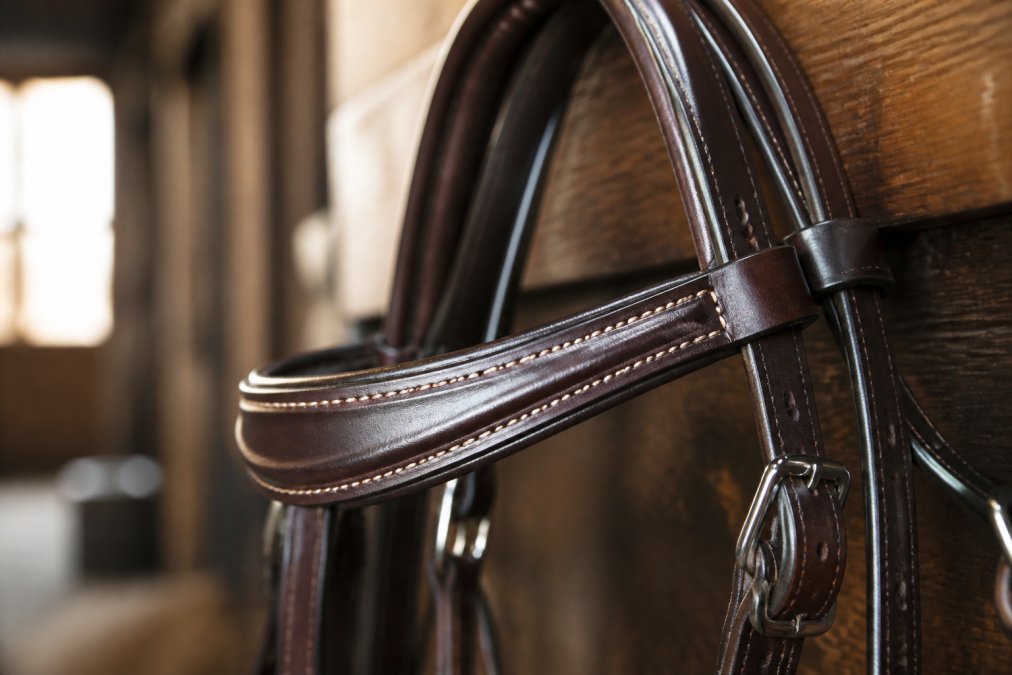
Hand-stitched bridles use thread that locks each stitch individually, so one broken stitch doesn't unravel the seam (peer-reviewed research). Machine-stitched bridles use continuous thread, where one break can compromise an entire seam. Hand-stitched bridles often cost more but can last substantially longer.
Hardware should be stainless steel or solid brass (aafco.org). Plated hardware can corrode under sweat and moisture; stainless steel generally resists corrosion. Brass develops a patina but doesn't corrode.
How to Measure a Horse for a Bridle
Measure the distance across your horse's forehead from one cheekbone to the other to determine browband width. Measure the headstall length from bit ring to bit ring over the top of the head to determine full-size, cob-size, or pony bridle. The noseband should sit approximately two fingers' width below the cheekbone. When fastened, you should fit one hand's width of space between the throatlatch and your horse's jaw.
How to Clean Leather Horse Tack and Extend Its Life
Clean your bridle at least every two weeks if riding regularly. Remove surface dirt with a soft brush or cloth. Use a damp cloth with lukewarm water for stubborn dirt, never hot water. Dry thoroughly before storing.
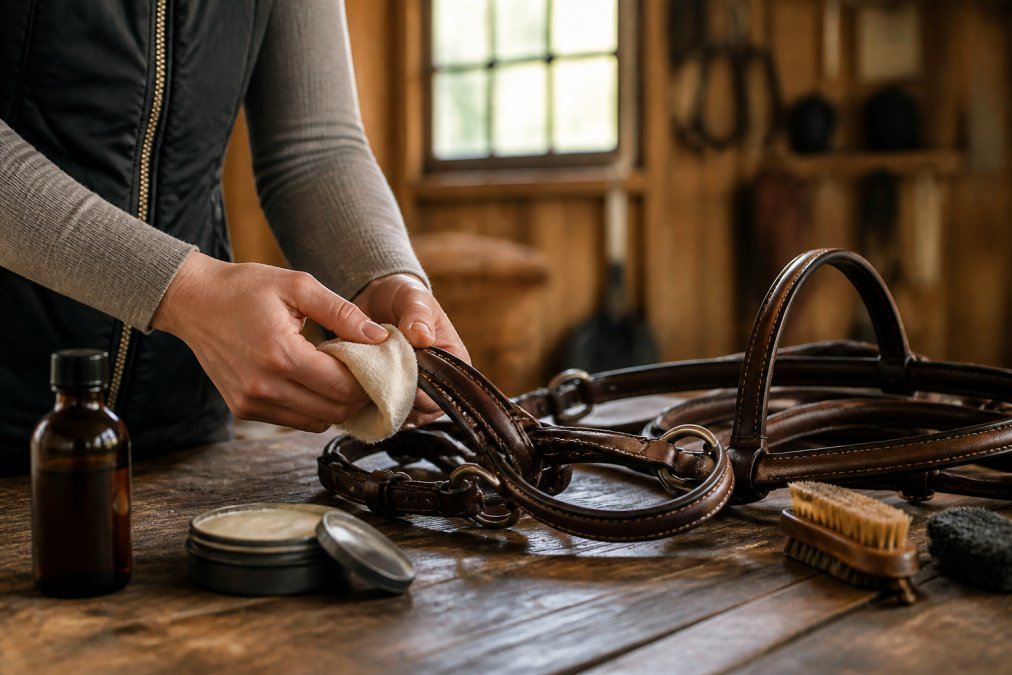
Once monthly, use a leather conditioner to restore moisture and suppleness. This is an important step in extending bridle life. Never store a bridle while wet, moisture promotes mold growth and permanent staining. Store in a cool, dry location away from direct sunlight. A bridle rack designed to hold the headstall shape is ideal. The Intrepid International 4-Hook Bridle Rack at Horsey Horse Store provides compact storage that keeps bridles organized and properly shaped.

Best Leather Conditioner for Horse Bridles and Care Routine
The best conditioner for horse bridles is one specifically formulated for equestrian leather, typically containing lanolin or neatsfoot oil (peer-reviewed research). These penetrate leather fibers and restore suppleness without creating waxy buildup. Apply with a soft cloth using gentle circular motions, use a light hand for a thin, even coat.
Perform a basic routine monthly during riding season: clean with a soft brush, clean with a damp cloth, apply conditioner with circular motions, and buff away excess. In dry climates or during winter, increase frequency to every three weeks.
Fitting Your Horse Bridle Correctly for Safety and Comfort
The noseband should sit approximately two fingers' width below the cheekbone, with one finger fitting between the noseband and your horse's face when fastened. The browband should sit flat across the forehead without pinching ears. The headstall should be snug enough not to slip, but loose enough to fit one finger between it and your horse's face on either side.
Check bit fit, it should sit in the corners of the mouth without wrinkles bunching up or pulling the mouth open excessively. Adjust your bridle regularly as your horse changes seasonally or develops muscle from consistent riding.
Repairability vs. Replacement: Building Long-Term Value
The true cost of a bridle is total cost of ownership over the years you use it. A bridle that costs more upfront but lasts twice as long is often a better investment than a cheaper bridle you'll replace every few years.
Repairability is a key factor separating bridles worth buying from those destined for replacement. Hand-stitched bridles can often be repaired by a skilled leather worker if a seam breaks. Hardware can be replaced on quality bridles. Leather itself can be repaired if damage is caught early. When evaluating bridles, consider if something breaks, can this bridle be repaired? Quality bridles are often repairable, meaning they can be maintained indefinitely.
Horsey Horse Store carries reins and bridle storage solutions designed to support your long-term tack investment. The Outdoor Horse Reins and HILASON Braided Cotton Barrel Reins are engineered for durability and everyday use. Pair them with proper storage like the bridle rack, and you've built a tack setup that will serve you reliably for years.
| Bridle Type | Leather Grade | Stitching | Hardware | Best For | Expected Lifespan |
|---|---|---|---|---|---|
| Full-grain English | Full-grain | Hand-stitched | Stainless steel | Everyday riding, shows | 10-15 years |
| Top-grain English | Top-grain | Machine-stitched | Brass or plated | Budget-conscious riders | 3-5 years |
| Western work bridle | Full-grain | Hand-stitched | Stainless steel | Daily ranch use, trail riding | 10-15 years |
| Competition bridle | Top-grain | Hand-stitched | Plated | Showing, short-term use | 3-7 years |
A durable leather horse bridle is one of the few purchases where spending more upfront can actually save you money over time. The difference between a bridle that lasts three years and one that lasts fifteen often comes down to leather quality, stitching construction, and consistent conditioning. Start with proper fit, maintain a monthly conditioning routine, and choose bridles built from full-grain leather with hand-stitched seams. Your horse will be more comfortable, and you'll spend less time shopping for replacements.
Frequently Asked Questions
How can you tell if a durable leather horse bridle is high quality?
High-quality bridles often feature consistent, even stitching with tight spacing (typically 6-8 stitches per inch), supple leather that flexes without cracking, and solid hardware that doesn't tarnish. Examine the grain pattern, premium leather shows natural variation rather than uniform appearance. Check that seams are reinforced, especially at stress points like the headstall attachment. A quality bridle also often has balanced padding in the noseband and browband, and the leather should smell earthy and pleasant, not chemical or musty. Reputable sellers provide detailed product photos and specifications so you can assess these details before purchase.
What is the most durable type of leather for horse tack?
Full-grain leather is generally considered the most durable option for horse bridles and tack. It retains the natural hide surface, making it stronger and more resistant to wear than split or bonded leather. Full-grain leather also develops a protective patina over time, which can improve its water resistance. Vegetable-tanned leather is often noted for its longevity because it's tanned using natural plant compounds rather than chemicals, which can make it more supple and easier to condition. Double-layer construction in critical areas like the cheekpieces and noseband can significantly extend bridle life by distributing stress across more material. Handcrafted bridles using full-grain, vegetable-tanned leather typically outlast mass-produced alternatives.
How often should you oil or condition a leather horse bridle?
Condition your leather bridle every 3-6 months during regular use, or more frequently if exposed to harsh weather or heavy riding. After each use, wipe the bridle with a dry cloth to remove sweat and dirt. Use a quality leather balm or conditioner designed for equine tack, these products restore suppleness and prevent cracking without over-softening the leather. During wet seasons or after exposure to rain, condition more often to counteract moisture damage. Store the bridle in a cool, dry location away from direct sunlight. Proper conditioning maintains the leather's flexibility, prevents brittleness, and can extend a bridle's usable life compared to neglected tack.
What is the difference between English and Western leather bridles?
English bridles are typically lighter and more refined, designed for dressage, hunter, and jumping disciplines. They often feature a monocrown or split-crown design with a crank noseband, browband, and cheekpieces that attach to a single headstall. Western bridles are generally heavier-duty and often feature a one-ear or two-ear design without a browband, built for ranch work and Western riding. English bridles emphasize ergonomic design and precise control, while Western bridles prioritize durability under working conditions. Both styles use quality leather, but Western bridles typically have thicker leather and more substantial hardware to handle the demands of ranch and trail work. Your choice depends on your riding discipline and the performance requirements of your horse.
Why should I choose Horsey Horse Store for durable leather bridles over other retailers?
Horsey Horse Store focuses on practical, high-quality tack curated for everyday riders and barn managers. We offer free shipping on orders over $25, a 30-day return policy on clean, unused items, and secure checkout to protect your purchase. Our selection emphasizes durability and functionality. We provide detailed product specifications and fit guidance so you can make confident choices without handling tack in person. For customers managing multiple horses or barn operations, our straightforward pricing and reliable inventory make it easy to stock quality gear. We're committed to customer satisfaction and stand behind every product we sell.
This article was written using GrandRanker