

Table of Contents
- Understanding Standard Horse Bridle Sizes
- How to Measure a Horse for a Bridle
- Signs of an Ill-Fitting Horse Bridle
- Adjusting Horse Bridle Cheek Pieces and Other Components
- English vs. Western Bridle Sizing and Fit Differences
- The Role of Bridle Adjustability and Quality in Long-Term Comfort
- Conclusion
Last Updated: August 23, 2026
Understanding Standard Horse Bridle Sizes
A horse bridle size refers to the measured dimensions of the headstall, noseband, and cheekpieces that determine whether the bridle fits your horse's head correctly. Selecting the right size is fundamental to your horse's comfort, performance, and soundness. Ill-fitting bridles cause pressure points, resistance, and behavioral issues that riders often misattribute to training problems.

Standard horse bridle sizes follow a predictable scale: Pony (under 13.2 hands), Cob (13.2 to 15 hands), Full (15 to 16.2 hands), and X-Full (16.2 hands and taller). A bridle that's too small creates poll pressure and restricts the noseband, while an oversized bridle slides around the head and fails to position the bit correctly.
At Horsey Horse Store, we understand that choosing the right bridle size requires understanding your horse's unique conformation. A 15.2-hand warmblood might need a Full bridle, while a finer-boned Thoroughbred at the same height could require a Cob. The key distinction between sizes lies in headstall length, cheekpiece dimensions, and noseband width. A Pony bridle has a shorter poll-to-bit measurement, narrower cheekpieces, and a thinner noseband. A Cob bridle increases these proportions moderately. A Full bridle adds another inch or so to key measurements, and an X-Full accommodates the largest horses. Different manufacturers use slightly different specifications within the same size category, so avoid buying based on brand sizing alone.
How to Measure a Horse for a Bridle
Measuring your horse accurately is the single most reliable way to determine the right bridle size before you buy. You'll need a soft measuring tape, a helper to hold your horse still, and about ten minutes in good lighting. Capture three key measurements: the poll-to-bit distance, the noseband circumference, and the cheekpiece length.
Start by measuring from the poll (the top of your horse's head, just behind the ears) straight down to the corner of the mouth where the bit sits. A typical Pony bridle measures around 19 inches from poll to bit, a Cob runs 20-21 inches, a Full bridle sits at 21-22 inches, and an X-Full exceeds 22 inches (peer-reviewed research). If your horse measures 20.5 inches, you're in the Cob-to-Full range and may need to test both sizes or look for adjustable options.
Next, measure around the thickest part of the noseband area, roughly two inches below the cheekbones. A Pony noseband typically measures 18-19 inches in circumference, a Cob 19-20 inches, a Full 20-21 inches, and an X-Full 21-22 inches or larger (peer-reviewed research).
Finally, measure the cheekpiece length by running your tape from the top of the bridle down to where the cheekpiece connects to the bit ring. This ensures the bit sits at the correct height in your horse's mouth. Cheekpiece length typically increases by a quarter-inch between size categories.

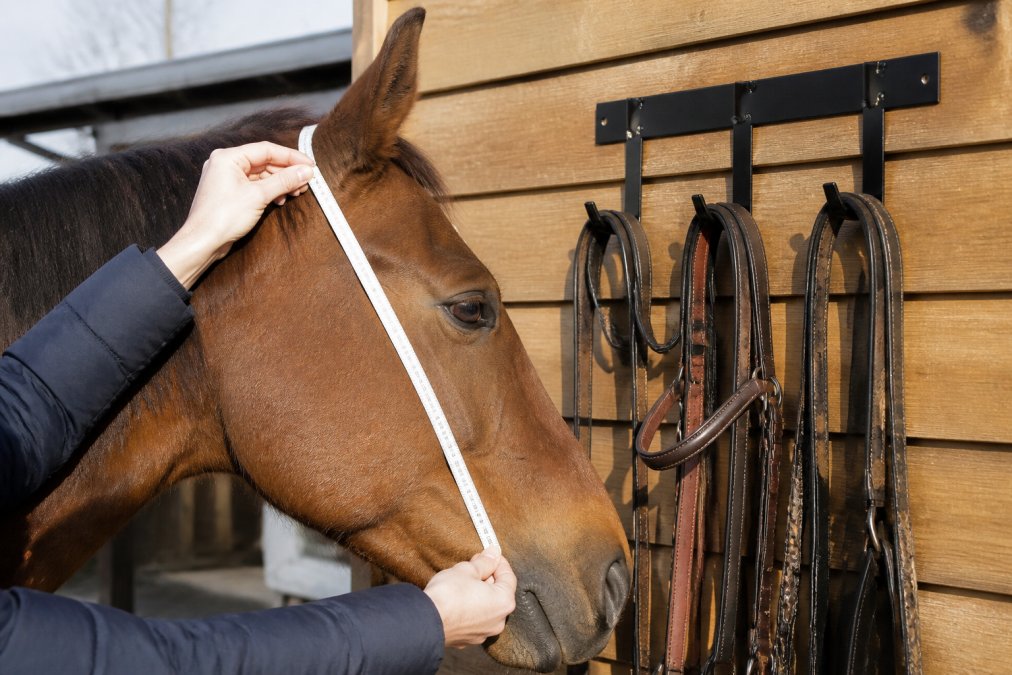
Measuring Key Points: Poll, Noseband, and Cheekpiece Length
The poll measurement is your starting point because it's the most consistent predictor of bridle size. Place your measuring tape at the very top of your horse's head where the bridle will sit, directly between and slightly behind the ears. Run the tape down the face to the corner of the mouth, keeping it snug but not tight.
The noseband measurement requires precision because this is where many fit problems occur. Measure around the horse's muzzle at the point where a cavesson or flash noseband would sit, typically two to three inches below the cheekbones. A noseband that's too loose allows the bridle to rotate, destabilizing bit position. A noseband that's too tight restricts jaw movement and creates discomfort.
The cheekpiece length is often overlooked but critically important for bit placement. Measure from the top attachment point on the headstall down to the bit ring. If the cheekpiece is too long, the bit hangs lower than intended. If it's too short, the bit pulls upward, creating poll pressure.
Accounting for Breed-Specific and In-Between Sizing
Not every horse fits neatly into standard size categories. Warmbloods, draft crosses, and horses with particularly fine or heavy bone structure often fall between sizes.
Warmbloods present a specific challenge because they often have larger, more substantial heads than Thoroughbreds of the same height. A 16-hand warmblood might need a Full bridle where a 16-hand Thoroughbred fits comfortably in a Cob. When measuring a warmblood, pay special attention to noseband circumference.
When your measurements fall between two standard sizes, prioritize the poll-to-bit measurement. An incorrectly positioned bridle causes more problems than a slightly loose or snug noseband, which can often be adjusted with different buckle holes. Some riders solve in-between sizing by purchasing a bridle with maximum adjustability, such as adjustable cheekpieces and noseband straps with multiple buckle holes. This approach costs more upfront but provides insurance against sizing mistakes.
Signs of an Ill-Fitting Horse Bridle
An ill-fitting bridle creates behavioral issues, head tossing, bit resistance, ear pinning, or refusal to accept contact, that riders often interpret as training gaps rather than equipment problems. Learning to recognize the physical and behavioral signs prevents months of frustration.
The most obvious sign is visible rubbing or hair loss on the poll, cheeks, or where the noseband sits. If you see raw spots, white hair, or swelling in these areas, the bridle is too tight or positioned incorrectly. Check these areas daily after riding sessions.
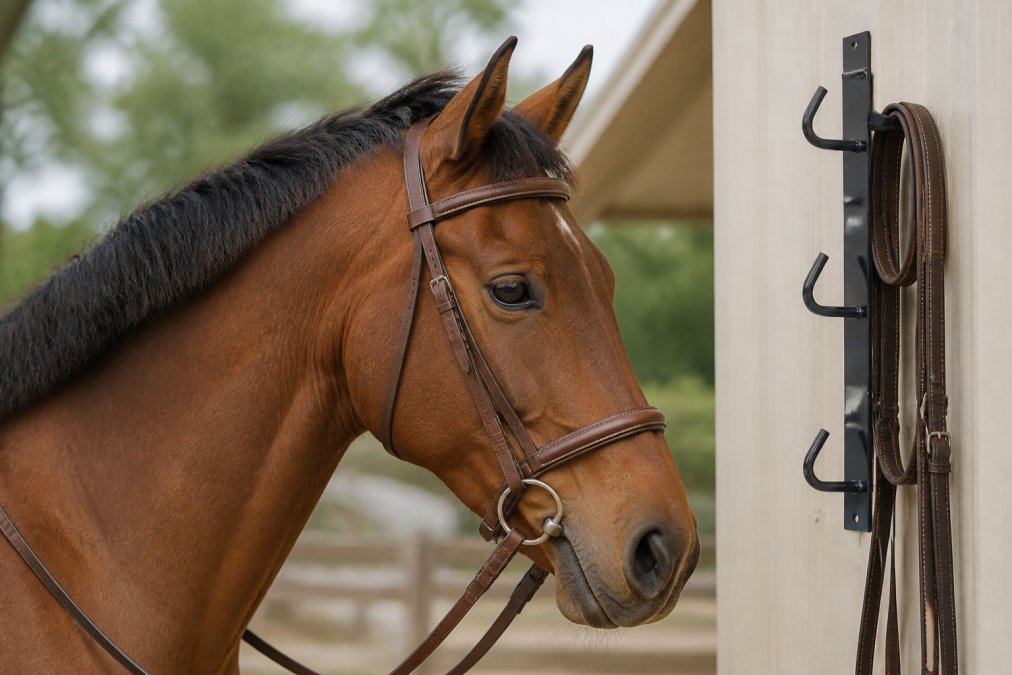
Pressure points around the throatlatch indicate a bridle that's too tight in the headstall. The throatlatch should allow two fingers to fit comfortably between the leather and the horse's throat. If you can't fit two fingers, the bridle restricts the horse's ability to flex at the poll.
Bit position problems reveal themselves through behavior. If the bit sits too high (creating wrinkles in the corners of the mouth), the horse experiences constant pressure. If the bit hangs too low, it can interfere with the molars. A correctly fitted bit should create one small wrinkle at the corner of the mouth.
Head tossing, especially during transitions or when asking for contact, often indicates poll pressure from a bridle that's too tight or positioned too far back. This behavior frequently gets misinterpreted as "he's being difficult" rather than "the equipment is causing pain."
Browband pressure is another common issue. The browband should sit flat against the forehead without creating creases. If the browband is too tight, it creates a pressure band across the top of the head and can contribute to headshaking. A browband that's too loose allows the entire bridle to shift forward, destabilizing bit position.
Adjusting Horse Bridle Cheek Pieces and Other Components
Once you've selected the correct bridle size, proper adjustment ensures optimal fit and comfort. Most modern bridles include multiple adjustment points that many riders underutilize.
Start with the cheekpiece adjustment. The cheekpiece buckles should position the bit so it creates one small wrinkle at the corner of the mouth. If you see multiple wrinkles, the bit is too high. If there's no wrinkle at all, the bit hangs too low. This is the most critical adjustment because it directly affects bit function and comfort.
The noseband adjustment comes next. For a cavesson-style noseband, the leather should sit two finger-widths below the cheekbone. Fasten the noseband buckle so you can fit two fingers comfortably between the leather and the horse's face. This allows the horse to chew and move his jaw while providing enough contact to keep the bridle stable.
Browband, Throatlatch, and Noseband Adjustments
The browband should sit flat against the forehead without creating creases or pulling the bridle. If your horse has a particularly high or low forehead, you may need a browband with different proportions. Some bridles offer adjustable browbands with buckles on either side for more precise customization.
The throatlatch prevents the bridle from sliding forward over the ears. It should allow two fingers to fit comfortably between the leather and the horse's throat when fastened. If the throatlatch is too tight, it restricts the horse's ability to flex at the poll. If it's too loose, the bridle shifts during riding and destabilizes bit position.
For horses with narrow heads or fine features, a standard throatlatch may be too loose even when adjusted as tightly as possible. Consider a bridle with a narrower throatlatch or one with additional adjustment holes. Conversely, horses with thicker heads may need a longer throatlatch or one with extra holes for a tighter fit.
Flash noseband adjustments require special attention because the flash strap adds a second point of contact. Fasten the main noseband first (two fingers below the cheekbone), then adjust the flash strap so it sits in the groove between the horse's upper and lower lips without pulling downward.
English vs. Western Bridle Sizing and Fit Differences
English and Western bridles follow different design philosophies and sizing conventions, so a bridle size that works in English tack won't necessarily translate to Western equipment.
English bridles prioritize a refined, close-fitting aesthetic and emphasize precise bit placement and poll contact. An English Full bridle typically measures 21-22 inches from poll to bit, with relatively narrow cheekpieces and a slim noseband. The bridle sits high on the head, positioning the bit consistently in the mouth.
Western bridles sit lower on the head and accommodate a wider range of head shapes within each size category. A Western Full bridle might measure 22-24 inches from poll to bit, with wider cheekpieces and a thicker noseband. Western bridles are designed for comfort during long hours of riding and work better with the typical Western riding position.
If you're transitioning from English to Western riding (or vice versa), don't assume your horse's English bridle size will work for Western tack. Measure your horse specifically for the bridle style you're purchasing. Western bridles also tend to offer more adjustability than English bridles, with multiple buckle holes on the cheekpieces and noseband straps that accommodate a broader range of head shapes.
The Role of Bridle Adjustability and Quality in Long-Term Comfort
A bridle's ability to adjust determines how well it accommodates your individual horse's anatomy. Bridles with multiple adjustment points, adjustable cheekpieces, noseband straps with extra buckle holes, and flexible browbands provide insurance against sizing mistakes and allow for fine-tuning.
Quality leather affects both comfort and longevity. Premium leather is more supple and conforms to the horse's head shape more quickly than stiff, lower-grade leather. A high-quality bridle that fits well initially will feel even better after a few weeks of use as the leather softens.
The stitching and hardware also matter. Bridles with reinforced stitching at stress points last longer and maintain their fit better over time. Quality buckles and bit rings don't bend or break under normal use, keeping the bridle's geometry stable.
When shopping at Horsey Horse Store or elsewhere, examine the bridle's construction before purchasing. Look for even stitching, smooth leather edges, and hardware that feels substantial. A well-fitted, quality bridle costs more upfront but eliminates the expense and frustration of multiple purchases and adjustments.
Conclusion
Choosing the right horse bridle size requires accurate measurement, understanding your horse's individual conformation, and recognizing how different bridle components interact with anatomy. The standard size categories provide a starting framework, but your horse's specific measurements and breed characteristics determine the best fit.
Start by measuring your horse's poll-to-bit distance, noseband circumference, and cheekpiece length. Use these measurements to guide your selection, then adjust the bridle carefully once it arrives. Pay attention to fit details: bit position, noseband placement, browband flatness, and throatlatch comfort. A well-fitted bridle eliminates the behavioral and performance problems that riders often misattribute to training gaps.
At Horsey Horse Store, we understand that finding the right bridle is foundational to your riding success. Our selection of quality tack and practical storage solutions, including the Intrepid International 4-Hook Bridle Rack, helps you maintain your equipment. With our 30-day return policy and free shipping over $25, you can shop with confidence knowing that if a bridle doesn't fit your horse perfectly, we make returns simple. Get started with Horsey Horse Store and discover how the right equipment transforms your riding experience.
Frequently Asked Questions
How do you know what size bridle to get for your horse?
Measure your horse's head at three key points: the poll (top of the head), the noseband area, and the cheekpiece length from the bit seat to the top of the head. Compare these measurements to your bridle size chart. Most horses fall into Cob, Full, or X-Full categories. If measurements fall between sizes, choose the larger option to avoid pressure points. Always verify fit by checking that the browband sits flat without pinching, the noseband allows one finger underneath, and the cheekpieces don't create wrinkles or gaps.
What size bridle is typically needed for a 15.2-hand horse?
A 15.2-hand horse typically wears a Full or X-Full bridle, depending on head shape and conformation. Warmblood-type horses at this height often need X-Full sizing due to broader heads. Measure your specific horse rather than relying on hand height alone, as head size varies significantly by breed and individual anatomy. Many 15.2-hand horses with refined Arabian or Thoroughbred traits fit a Full bridle comfortably, while stockier types need X-Full. When in doubt, measure first and order accordingly.
What are the main signs of an ill-fitting bridle?
An ill-fitting bridle causes visible pressure marks, excessive wrinkles at the cheekpieces, ears pinched or folded forward, or a noseband sitting too high on the face. Your horse may shake its head, resist the bit, or show tension in the jaw and poll. The browband should sit flat without pulling the bridle forward. If you cannot fit one finger under the noseband, it's too tight. Pressure points develop where the headstall crosses the poll or where the cavesson sits. These signs indicate discomfort that affects performance and willingness.
How should you adjust bridle cheek pieces for proper fit?
Cheekpiece length controls bit height and poll pressure distribution. Adjust the buckles on both sides equally to maintain symmetry. The bit should sit in the corners of the mouth without wrinkles above or gaps below. If the bit sits too high, lower the cheekpieces; if it sags, raise them. Check that the bit seat (where cheekpiece connects to headstall) aligns with the horse's anatomical bit seat. Proper adjustment reduces poll pressure and ensures the noseband and cavesson sit at the correct height relative to the bit.
Does bit size affect overall bridle size?
Bit size does not change bridle size category, but it influences how the bridle fits relative to the bit seat and cheekpiece adjustment. A wider bit may require slight cheekpiece adjustments to maintain proper bit height. The bridle size (Cob, Full, X-Full) is determined by head circumference and length, while bit size (typically 4.5 to 5.5 inches) is chosen based on mouth width. Always measure your horse's head for bridle size independently, then select an appropriately sized bit for comfort and safety.
What's the difference between Pony, Cob, Full, and X-Full bridle sizes?
Pony bridles fit horses under 13 hands with smaller heads and narrower poll areas. Cob sizes suit horses 13 to 14.2 hands with moderate head proportions. Full bridles fit horses 14.2 to 16 hands with standard head size. X-Full sizes accommodate horses over 16 hands or those with exceptionally broad heads, such as warmblood types. Each size adjusts the overall circumference of the headstall, browband width, and cheekpiece length. Choosing the correct size ensures proper pressure distribution and comfort across the poll, noseband, and bit seat.
How do breed-specific traits affect bridle sizing?
Warmblood and draft-type horses typically have broader heads and larger poll areas, often requiring X-Full sizing even if under 16 hands. Arabians, Thoroughbreds, and other refined breeds have narrower heads and may fit Cob or Full sizes despite standing 15+ hands. Ponies with stocky builds may need larger sizing than their height suggests. Individual conformation matters more than breed alone. Measure your horse's actual head dimensions rather than assuming size based on breed or height. This prevents pressure points and ensures the anatomical bridle fits your horse's unique shape.
This article was written using GrandRanker