

Table of Contents
- Understanding High Wither Anatomy and Saddle Pad Fit
- How to Fit a Saddle Correctly for High Withered Horses
- Signs of Poor Saddle Fit and Preventing Saddle Pressure Points
- Quick Comparison: Top Schooling Saddle Pads for High Withered Horses
- 1. HORZE Adepto Quilted All-Purpose Saddle Pad: Best Budget Pick
- 2. Professional Equine Quilted Dressage Saddle Pad: Best Contour Design
- 3. Equinavia NordicAir All-Purpose Saddle Pad: Best Breathable Material
- 4. Harrison Howard Dressage Saddle Pad: Best for Dressage Schooling
- Frequently Asked Questions
Last Updated: September 24, 2026
Understanding High Wither Anatomy and Saddle Pad Fit
A horse with high withers requires specialized saddle pad design to prevent pressure points and maintain spine clearance during schooling. The wither is the ridge of bone between a horse's shoulder blades, and when it's pronounced, standard pads create gaps that allow the saddle to shift or rock, putting uneven pressure on the horse's back.
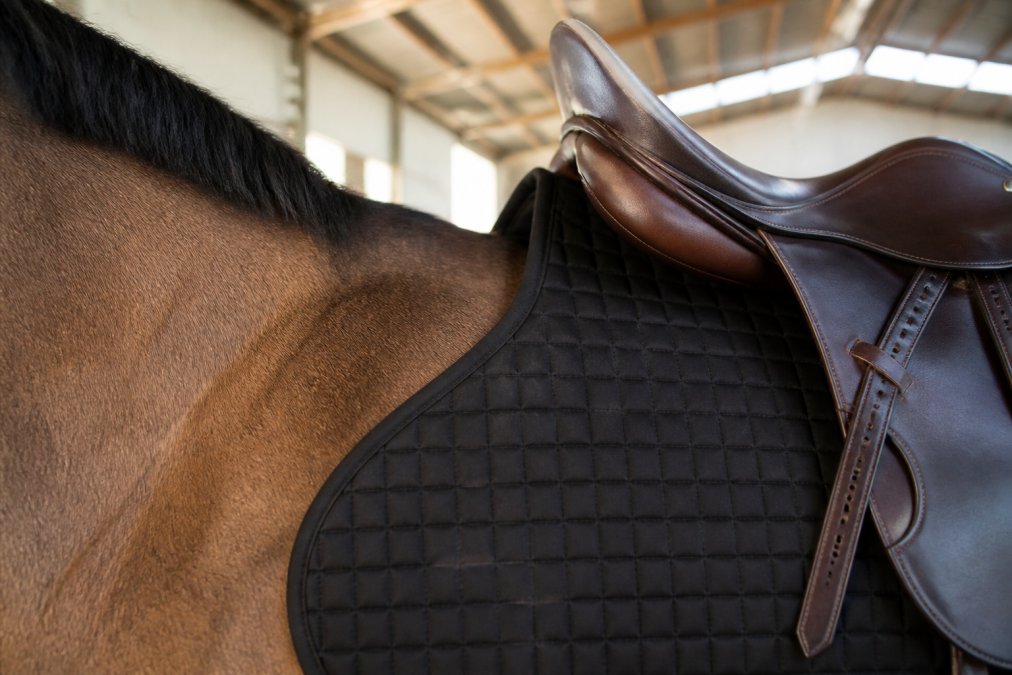
High withers demand pads with contour design and wither relief channels. These features distribute weight evenly while allowing the saddle to sit stably without bridging, a common problem where the saddle makes contact only at the front and back, leaving the middle section unsupported. When a saddle bridges, the horse's back bears concentrated pressure instead of distributed load, leading to soreness, resistance, and long-term damage to muscle tissue.
The 7 best schooling saddle pads for high withered horses combine anatomical shape with shock absorption. Materials matter too. Breathable fabrics prevent moisture buildup during extended schooling sessions. A proper pad should stay in place without slipping and offer enough flexibility to follow the horse's movement.
How to Fit a Saddle Correctly for High Withered Horses
Fitting starts with understanding your horse's unique anatomy. Run your hand along the spine from the withers back to the saddle area. You should feel two distinct bony ridges on either side of the spine, these are where pressure points develop if your pad doesn't provide proper wither relief.
Place the saddle on your horse's bare back without a pad. There should be clear daylight between the saddle and the horse's spine from the withers back at least 4 to 6 inches. If the saddle sits too far forward or rocks side to side, the pad alone won't fix the problem, the saddle itself may be the wrong tree size or angle.
Once you've confirmed saddle fit, add your pad and check again. The pad should fill any gaps without adding bulk where it's not needed. High-wither horses benefit from pads with graduated thickness, thicker at the front where the wither is most prominent, tapering toward the back. This design prevents the saddle from sitting too high at the front while maintaining contact at the back.
Lead your horse in hand and watch the saddle from behind. It should sit level, not tilted to one side. Have someone lunge you or ride while you observe from the ground. The pad should stay centered and not shift forward, backward, or sideways. Movement that reveals slipping means either the pad isn't gripping well or the saddle isn't stable.
Signs of Poor Saddle Fit and Preventing Saddle Pressure Points
Poor saddle fit shows up in behavior first. A horse that resists mounting, pins ears during schooling, or has a shortened stride may be experiencing pressure points rather than behavioral issues. Some horses develop white hairs or calluses on the wither and back, these are permanent markers of chronic pressure.
Physical signs include muscle atrophy along the back, especially in the areas where the saddle sits. A high-wither horse with a poorly fitting pad will lose muscle definition on either side of the spine. Swelling or heat in the back after riding is another red flag. If your horse is warm and puffy along the saddle area within 30 minutes of riding, pressure is building.
Check for saddle pressure by running your hand under the pad after riding. If you find sweat marks that don't cover the entire pad area, the saddle is making contact in some spots but not others. Uneven contact creates pressure points. The pad should show consistent moisture across its surface.
Prevention starts with regular saddle checks. Every 3 to 6 months, have a professional saddle fitter evaluate your setup. As horses age or change fitness level, their shape shifts. A pad that fit perfectly last year may not work this year. High-wither horses are especially sensitive to these changes because their anatomy leaves less margin for error.
Quick Comparison: Top Schooling Saddle Pads for High Withered Horses
Choosing among the 7 best schooling saddle pads for high withered horses depends on your discipline, budget, and horse's specific needs. At Horsey Horse Store, we've selected schooling pads that address the unique demands of high-wither horses across different price points and material preferences.
Harrison Howard Dressage Saddle Pad →
| Pad Model | Price | Best For | Key Feature | Material |
|---|---|---|---|---|
| HORZE Adepto Quilted | $42.99 | Budget-conscious riders | Quilted design | Cotton blend |
| Professional Equine Quilted Dressage | $79.99 | Dressage schooling | Contoured shape | Quilted cotton |
| Equinavia NordicAir | $99.99 | Hot weather riding | Breathable mesh | Micromesh |
| Harrison Howard Dressage | $77.99 | Daily schooling | Durable construction | Cotton |
Budget-Friendly Options
The HORZE Adepto and Harrison Howard pads offer reliable performance without premium pricing. These pads work well for riders who school regularly but aren't competing at high levels. Budget-friendly doesn't mean poor quality, both options provide adequate wither relief and shock absorption for daily flatwork.

The HORZE Adepto starts at $42.99, making it one of the most accessible options for high-wither horses. The quilted construction, and the pad's shape accommodates higher withers better than flat, generic pads. It's an entry point for riders testing different pad styles before investing in premium options.
Premium Wither Relief Solutions
Premium pads like the Equinavia NordicAir ($99.99) and LeMieux options offer advanced materials and engineering. The Equinavia features breathable micromesh technology, ideal for horses that sweat heavily or ride in warm climates. Micromesh prevents moisture from trapping between the pad and the horse's back, reducing the risk of fungal issues and discomfort.
The LeMieux Dressage Carbon Mesh ($164.99) represents the highest-end option, combining mesh construction for maximum breathability and durability. This pad is built for serious dressage riders who school multiple times per week and demand professional-grade equipment.
1. HORZE Adepto Quilted All-Purpose Saddle Pad: Best Budget Pick
The HORZE Adepto delivers solid performance at $42.99, making it the top choice for budget-conscious riders managing high-wither horses. This quilted pad provides adequate wither relief without the price tag of premium options. The two-tone trim adds visual appeal while the quilted cotton construction holds up through regular schooling.
What makes this pad stand out for the price: the contoured design actually addresses high-wither anatomy rather than using a flat, one-size-fits-all approach.
2. Professional Equine Quilted Dressage Saddle Pad: Best Contour Design
The Professional Equine Quilted Dressage Pad ($79.99) is engineered specifically for dressage schooling with a contoured shape that accommodates high withers. Unlike generic pads, this design tapers toward the front to provide wither relief while maintaining contact at the saddle bridge. The contour shape prevents bridging, one of the most common problems with high-wither horses.

3. Equinavia NordicAir All-Purpose Saddle Pad: Best Breathable Material
The Equinavia NordicAir ($99.99) stands out for its micromesh construction, which solves a real problem for high-wither horses: moisture management. Horses with pronounced withers often sweat more in that area due to increased pressure concentration. The breathable micromesh prevents sweat from pooling between the pad and the horse's back, reducing friction and the risk of skin irritation.
4. Harrison Howard Dressage Saddle Pad: Best for Dressage Schooling
The Harrison Howard Dressage Pad ($77.99) offers a middle ground between budget and premium options. This pad combines durability with dressage-specific design at a price point that makes sense for serious amateurs. The construction is built to handle frequent schooling without accelerated wear.

Frequently Asked Questions
What is the best schooling saddle pad for a high-withered horse?
The best pad depends on your discipline and budget. For dressage, the Professional Equine Quilted Dressage Saddle Pad ($79.99) offers contoured design that accommodates high withers. For all-purpose schooling, the Equinavia NordicAir ($99.99) combines breathable micromesh with anatomical shaping. If budget matters, the HORZE Adepto ($42.99) delivers solid quilted support for daily work. All prioritize wither relief and spine clearance to prevent pressure points during regular training.
How do you prevent saddle pressure points on high-withered horses?
Preventing saddle pressure points requires three steps: first, ensure your saddle's gullet width matches your horse's wither height with adequate clearance; second, use a pad with contoured design and wither relief channels that distribute weight evenly; third, check fit regularly by running your hand under the pad after riding to detect heat spots or sweat marks. Pads like the HORZE Fur Half Pad ($49.99) offer correction capabilities to address minor fit issues. Replace or adjust pads immediately if you notice sensitivity or swelling.
What is a wither relief saddle pad and how does it work?
A wither relief pad features channels, cutouts, or contoured shaping designed to lift pressure away from the horse's spine and wither bone. These designs reduce direct contact at sensitive areas while maintaining support across the saddle bridge and shoulder. The Woolous Dressage Sheepskin Pad ($238.99) combines natural shock absorption with a contoured shape, while the Professional Equine pad uses quilted construction to create relief zones without expensive materials.
Can a saddle pad fix a saddle that doesn't fit a high-withered horse?
A quality pad can improve comfort and reduce pressure, but it cannot fully correct a fundamentally poor fit. If your saddle's gullet is too wide or the tree bridges your horse's withers, no pad will solve the structural problem. Pads work best when the saddle itself fits reasonably well. Use pads with wither relief and bridge support (like the HORZE Fur Half Pad) to fine-tune fit, but prioritize getting saddle fit assessed by a professional if your horse shows signs of discomfort or resistance.