

Table of Contents
- Waterproof Jackets vs Windbreakers: Quick Comparison
- Understanding Waterproof vs Water-Resistant Jackets
- Fabric Weight, Stretch, and Breathability in Riding Jackets
- What to Wear Trail Riding in the Rain
- Fit, Comfort, and Freedom of Movement in the Saddle
- Best Waterproof Jacket for Horse Riding: Key Features
- Durability, Care, and Long-Term Value
- Conclusion: Which One Should You Choose?
- Frequently Asked Questions
Last Updated: October 17, 2026
Waterproof Jackets vs Windbreakers: Quick Comparison
When you're heading out for a trail ride and the weather forecast shows rain, choosing between waterproof jackets windbreakers trail riding gear matters more than you might think. The difference between a waterproof jacket and a windbreaker isn't just about staying dry, it affects your comfort, your horse's responsiveness to your aids, and how long your gear lasts. At Horsey Horse Store, we help riders make gear decisions that actually work in the saddle, not just in theory.
A waterproof jacket seals out water completely, while a windbreaker focuses on blocking wind and offers water resistance rather than full waterproofing. Both have their place, but they serve different riding conditions and priorities. Understanding when to use each one is the key to staying comfortable on the trail year-round.
| Feature | Waterproof Jacket | Windbreaker |
|---|---|---|
| Water Protection | Complete waterproofing | Water-resistant only |
| Breathability | Varies by construction | Generally more breathable |
| Weight | Heavier, more structured | Lighter, packable |
| Best For | Heavy rain, cold weather | Light rain, wind, cool days |
| Movement in Saddle | Can restrict flexibility | Allows full range of motion |
| Price Range | Higher investment | More affordable |
| Durability | Lasts many seasons | Good longevity with care |
Understanding Waterproof vs Water-Resistant Jackets
The terminology matters because it changes how the jacket performs. A waterproof jacket uses sealed seams and impermeable membranes that prevent water from penetrating the fabric, no matter how hard the rain falls. A water-resistant jacket has a coating or treatment that repels water for a time, but eventually moisture will seep through if you're in sustained rain.
For trail riding, this distinction affects your experience directly. Waterproof jackets keep you completely dry during downpours, which matters when you're miles from the barn. Water-resistant windbreakers work fine for light rain or brief showers, but they'll soak through if you're caught in heavy weather for more than 30 minutes.
The tradeoff is that full waterproofing usually means a stiffer, less flexible fabric. Some riders find waterproof jackets restrict their movement in the saddle because the material doesn't bend as easily as a lighter windbreaker. Others accept that slight limitation for the security of staying truly dry.
Fabric Weight, Stretch, and Breathability in Riding Jackets
The weight of the fabric directly affects how much freedom of movement you have while mounted. A heavier waterproof jacket provides more structure and insulation but can feel stiff, especially in the shoulders and arms where you need full range of motion for rein handling and balance.
Breathability matters more than many riders realize. When you're working hard on a horse, even at a walk uphill, you generate heat and moisture from exertion. A jacket that traps sweat inside becomes uncomfortable quickly, and the moisture can actually make you feel colder over time. Windbreakers typically offer better breathability because they're designed with more air circulation in mind.
Stretch fabric in the sleeves and back makes a huge difference in how a jacket feels while riding. Look for jackets with panels of stretchy material or articulated sleeves that allow your arms to move freely without pulling the whole jacket up. The best riding jackets combine waterproof or water-resistant protection with strategic stretch zones.

Weight also affects packability. If you're heading out on a long trail ride and might need to remove your jacket later, a lightweight windbreaker is easier to tie to your saddle or stuff in a saddlebag. A heavier waterproof jacket takes up more space, which matters if you're carrying other gear.
What to Wear Trail Riding in the Rain
Your choice depends on the specific conditions you're riding in and how long you'll be out. For a short ride on a trail where you can turn back quickly if the weather worsens, a water-resistant windbreaker is often the practical choice. It's lighter, moves with you better, and handles light rain without issue.
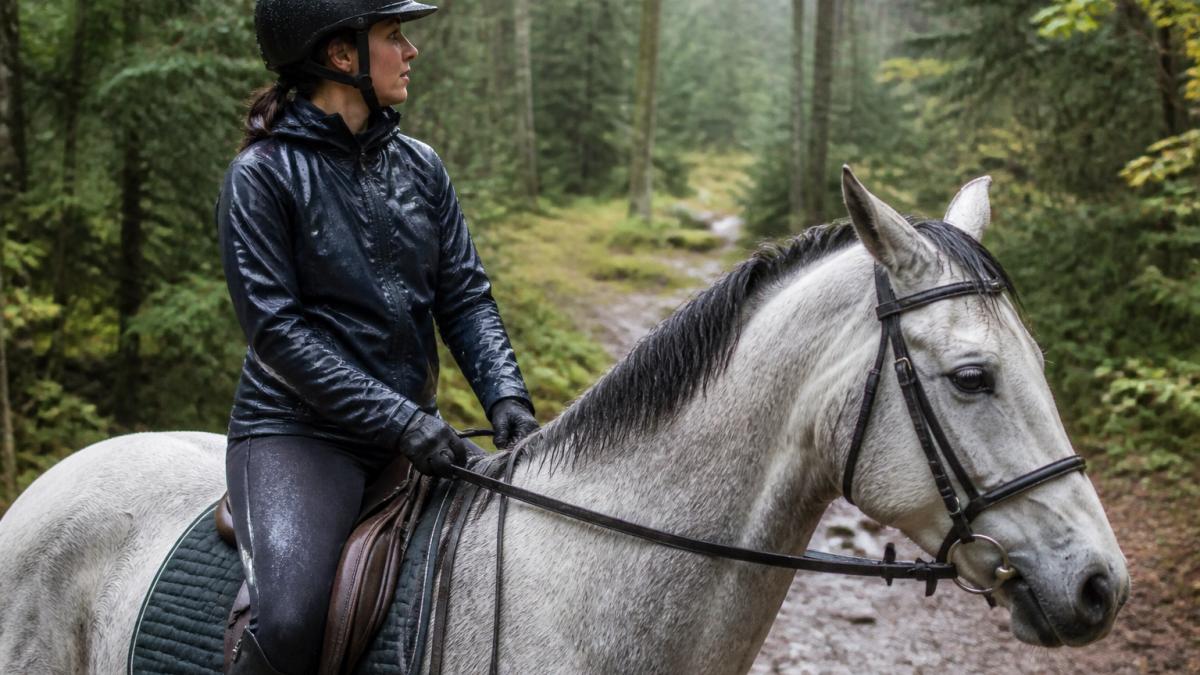
For longer trail rides, especially in areas where you're committed to being out for hours, waterproof jackets windbreakers trail riding options like a true waterproof jacket provide peace of mind.
Many experienced trail riders carry both. They wear a windbreaker for fair-weather rides and pack a lightweight waterproof jacket in their trailer or saddlebag as backup. This approach gives you protection without the weight of always riding in a heavy jacket.
Consider the time of year too. In spring and fall when temperatures are cool and rain is likely, a waterproof jacket with insulation makes sense. In summer, even if rain is forecast, a breathable windbreaker might be enough because you won't get cold from moisture.
Fit, Comfort, and Freedom of Movement in the Saddle
The fit of a riding jacket is different from the fit of a casual jacket. You need room across the back and shoulders to accommodate your riding position, where your arms are extended forward and slightly out. A jacket that fits perfectly while standing will often feel tight or restrictive once you're mounted.
Look for jackets with a longer back panel that covers you when you're in the saddle. The hem should reach at least to your hip when mounted, not just when standing. Many riding jackets have articulated or shaped sleeves that follow the natural bend of your arm rather than hanging straight down.

The waistband or drawstring should be adjustable so you can cinch the jacket snugly without it riding up. A jacket that shifts or bunches while you're riding becomes uncomfortable and can interfere with your saddle fit.
Waterproof jackets often have more structure to maintain their shape and seal, which can sometimes feel less forgiving than a windbreaker. High-quality waterproof riding jackets are designed with this in mind and include stretch panels specifically for riding. Lower-cost waterproof jackets may feel more like rain slickers than riding wear.
A windbreaker's lighter construction usually means it conforms to your body more naturally, which many riders find more comfortable for extended wear. The tradeoff is that you lose the complete weather protection.
Best Waterproof Jacket for Horse Riding: Key Features
When you're shopping for a waterproof jacket for trail riding, look for these specific features that make the difference between a good choice and a frustrating purchase.
Sealed seams are non-negotiable. Without them, water will seep through the stitching, defeating the purpose of waterproofing. Check the product description explicitly, if it doesn't mention sealed seams, it's not truly waterproof.
HORZE Adult 3-Finger Winter Riding Mittens →
Breathable membrane or ventilation options keep moisture from building up inside. This matters more than many riders expect.
Articulated sleeves or stretch panels let you move freely in the saddle without the jacket restricting your arms. This is specific to riding jackets and separates them from general outdoor rain jackets.

Adjustable waistband and hem let you customize the fit so the jacket stays in place while you're mounted. Drawstrings or side adjusters work better than fixed hems.
Pockets with secure closures keep your phone, keys, or small items safe while you're riding. Look for zippered pockets rather than open pockets where things can fall out.
Reflective details improve visibility if you're riding at dawn or dusk, which is common on trail rides.
Lightweight construction matters if you plan to pack the jacket or wear it for extended periods. A waterproof jacket doesn't have to weigh five pounds to do its job.
At Horsey Horse Store, we stock riding gear chosen for everyday use by riders like you.
Durability, Care, and Long-Term Value
A waterproof jacket is a bigger investment than a windbreaker, so understanding how to care for it extends its life and protects your investment. Most waterproof riding jackets will last several seasons with proper maintenance, making them cost-effective over time.
After riding in rain, rinse the outside of the jacket with clean water to remove dirt and salt residue that can break down the waterproof coating. Avoid throwing it directly into the washing machine, which can damage seams and the membrane.
Dry the jacket flat or on a hanger away from direct heat. A dryer can damage the waterproof coating and seams. Once dry, store it in a cool, dry place. Some riders apply a waterproof re-coating spray annually to maintain protection, especially if the jacket gets heavy use.
Windbreakers are generally easier to care for. Most can handle machine washing on a gentle cycle and air drying. The DWR coating may fade over time, but it's not as critical to maintain as a full waterproof membrane. Many windbreakers can be re-treated with a DWR spray if needed.
The real value question is how often you ride in rain and how long you plan to keep the jacket. If you ride year-round and encounter rain regularly, a waterproof jacket pays for itself through years of use.
Conclusion: Which One Should You Choose?
The choice between a waterproof jacket and a windbreaker for trail riding comes down to three factors: how often you ride in rain, how long you're typically out on the trail, and your budget.
Choose a waterproof jacket if you ride regularly in wet conditions, spend hours on the trail, or need the security of complete weather protection. The initial investment is higher, but the durability and performance justify it for serious riders. Look for sealed seams, breathable membranes, and articulated sleeves that allow full range of motion in the saddle.
Choose a windbreaker if you ride casually, live in a climate with light or infrequent rain, or want a lighter option for fair-weather riding. A quality windbreaker handles light rain and wind effectively while offering better breathability and freedom of movement. Many riders keep one in their trailer as a backup option.
At Horsey Horse Store, we understand that gear choices affect your riding experience directly. Our selection of riding apparel is chosen for real-world use by everyday riders managing their own horses and planning their own trail adventures. We offer free shipping on orders over $25, a 30-day return policy on clean, unused items, and secure checkout so you can shop with confidence.
Frequently Asked Questions
Is a waterproof jacket or a windbreaker better for trail riding?
A waterproof jacket is better for trail riding in rain because it blocks water completely, while windbreakers only resist light moisture. Windbreakers work well for dry, cool conditions or wind protection on mild days. Choose waterproof if you ride in unpredictable weather or frequent rain; choose a windbreaker for dry seasons or quick schooling sessions. Your decision depends on your local climate and how often you encounter wet conditions.
What features should a trail riding rain jacket have?
A good trail riding rain jacket needs waterproof fabric (not just water-resistant), breathability to prevent sweat buildup, stretch for freedom of movement in the saddle, and a tailored fit that doesn't restrict your arms or legs. Look for reinforced seams, a secure waistband, and pockets for essentials. Collar design matters too; a high collar or hood keeps rain off your neck. Avoid heavy, stiff fabrics that limit your connection with your horse.
Are waterproof riding jackets breathable enough for riding?
Quality waterproof riding jackets are designed with breathable membranes that let moisture escape while blocking rain. This prevents the clammy feeling of sweating inside a sealed jacket. Look for jackets with ventilation panels or mesh lining. Not all waterproof jackets breathe equally; cheaper options trap heat and moisture. Investing in a riding-specific waterproof jacket with breathable technology keeps you dry from both rain and sweat during active trail rides.
Ready to upgrade your trail riding gear? Browse our selection of riding apparel and accessories at Horsey Horse Store. We carry practical, durable equipment designed for everyday riders who spend real time in the saddle. With free shipping over $25 and a 30-day return guarantee, you can shop with confidence knowing you're getting reliable gear backed by our commitment to your satisfaction. Find the right jacket for your riding conditions and get trail-ready this season.