

Table of Contents
- Why Online Saddle Fitting Requires a Different Approach
- How to Measure Your Horse for Saddle Fit
- Understanding Saddle Gullet Width Guide Essentials
- Recognizing Signs of a Poorly Fitted Saddle
- Step-by-Step Process for Fitting Horse Saddles Online
- Common Mistakes When Fitting Saddles Without Professional Help
- Maintaining Your Saddle and Re-Fitting Over Time
- Conclusion
Last Updated: August 19, 2026
Why Online Saddle Fitting Requires a Different Approach
Fitting horse saddles online presents a unique challenge: you can't throw a saddle on your horse and watch how it settles. You can't feel leather quality or test weight distribution firsthand. At Horsey Horse Store, we understand that remote fitting demands precise measurements, clear communication, and knowledge of what to look for when a saddle arrives at your barn.
A saddle that looks fine in a photo might create pressure points you won't notice until your horse tells you through behavior changes. That's why fitting horse saddles online requires you to become your own fit specialist, knowing exactly what measurements matter, how to interpret them, and what red flags to watch for during evaluation.
Online fitting isn't inherently inferior to in-person fitting. Many experienced riders prefer it because it forces methodical assessment rather than rushed decisions. The difference is preparation: you'll need to gather specific information about your horse's conformation, understand how saddle components work together, and know how to troubleshoot when something doesn't feel right.
How to Measure Your Horse for Saddle Fit
Taking accurate measurements is the foundation of successful online saddle fitting. Begin with your horse standing on level ground, uneven terrain skews measurements and gives you false data.
Taking Wither Clearance and Gullet Width Measurements
Wither clearance is the vertical space between the top of your horse's withers and the saddle's gullet when positioned correctly. You need a minimum of two fingers' clearance, roughly half an inch, between the horse's wither and the saddle tree. This prevents the saddle from bearing down on the withers, which causes pain and behavioral problems.
To measure wither clearance, place a flexible measuring tape across the highest point of the withers and mark where it sits. Then imagine where the saddle's gullet will rest and measure the vertical distance. Most saddle descriptions include gullet width measurements, cross-reference your horse's wither height with the saddle's gullet depth to ensure adequate clearance.
Gullet width is the interior width of the saddle tree at its opening. A gullet that's too narrow pinches the withers; one that's too wide allows the saddle to shift and create pressure points. Standard gullet widths range from narrow to extra-wide, and most manufacturers provide this information in product specifications.
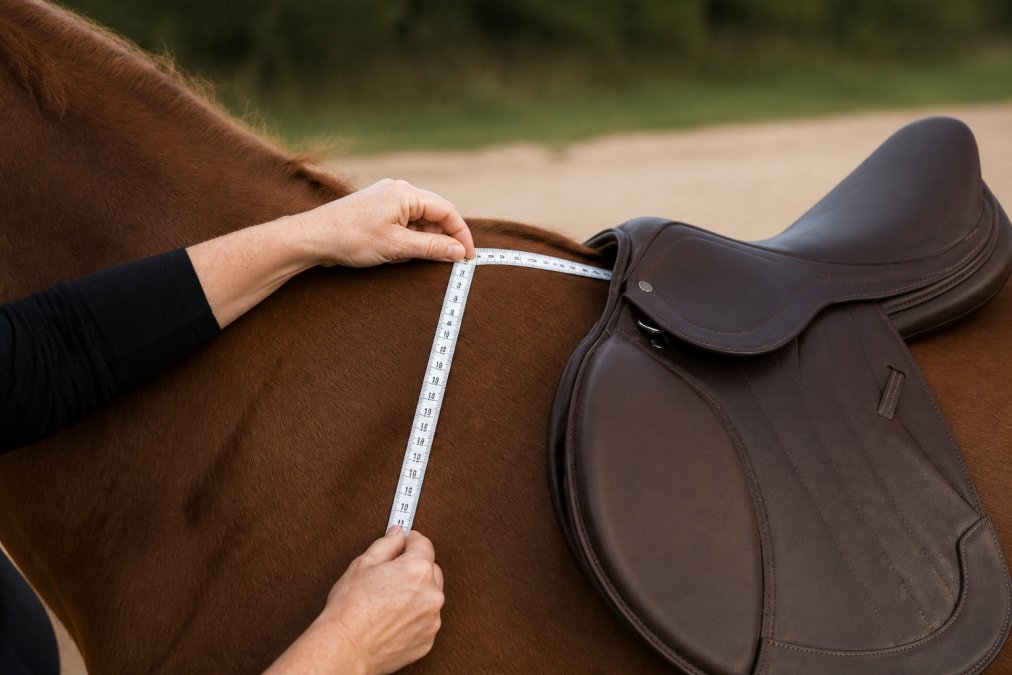
Measure your horse's wither width at the point where the saddle tree will make contact by placing your measuring tape horizontally across the widest part of the withers. This measurement helps you match saddle tree angles and widths. Narrow withers need a narrow tree; broad withers need a wider tree to avoid bridging.
Assessing Shoulder Freedom and Spinal Channel Width
Shoulder rotation is critical for movement. A saddle that restricts the shoulder creates a choppy gait and builds tension in the neck and back. Watch your horse move without a saddle to assess how far forward the shoulder blade moves.
Measure the spinal channel width by running a flexible tape down the center of your horse's spine from the withers back toward the loins. The spinal channel should be at least two fingers' width, roughly one inch, on either side of the spine. This prevents the saddle tree from bearing directly on the vertebrae, which causes pain and long-term damage.
When ordering online, look for saddle descriptions that specify spinal channel width. A narrow channel suits horses with prominent spines; a wider channel suits horses with less defined spinal anatomy.
Understanding Saddle Gullet Width Guide Essentials
The gullet width is one of the most misunderstood measurements in saddle fitting. Many riders focus on seat size and overlook gullet width entirely, then wonder why their saddle causes problems.
Gullet width directly affects how the saddle tree sits on your horse's back. A tree that's too narrow concentrates pressure on the withers and spinal area. A tree that's too wide creates gaps where the saddle rocks side to side, generating pressure points along the panels.
Most saddle manufacturers categorize gullet widths as narrow, medium, wide, and extra-wide. A practical approach is to measure your horse's wither width, then add half an inch for clearance. If your horse measures 4.5 inches across the withers, aim for a saddle with a 5-inch gullet.
The Pro Fit Horse Saddle from Horsey Horse Store offers multiple gullet width options, allowing you to select the exact fit your horse needs. This flexibility eliminates the guesswork that comes with one-size-fits-all saddles and ensures the tree sits correctly on your horse's back.

Recognizing Signs of a Poorly Fitted Saddle
A poorly fitted saddle creates behavioral and physical changes that develop over days or weeks. The earlier you recognize these signs, the sooner you can adjust or replace the saddle.
Behavioral and Physical Indicators of Poor Fit
Behavioral changes are often the first signal that something's wrong. A horse that was moving freely may develop resistance when you mount, shortened stride, or unusual stiffness in transitions. Some horses buck or rear when a saddle pinches; others simply refuse to move.
Watch for tail clamping, where your horse holds the tail tightly against the body, this indicates pain or tension in the back. Ear pinning and facial tension are also red flags.
Physical indicators include swelling or sensitivity along the horse's back, particularly around the withers and spinal area. Run your hands along your horse's back after removing the saddle. If the horse flinches or shows muscle tension, poor fit is likely the cause.
Hair loss in saddle-shaped patterns indicates prolonged pressure. Uneven sweat marks suggest the saddle isn't distributing weight evenly. An even sweat pattern shows the saddle is making consistent contact across the back.
Step-by-Step Process for Fitting Horse Saddles Online
Online saddle fitting follows a logical sequence: gather data, evaluate options, order, assess fit, and adjust as needed. This methodical approach removes emotion from the decision and ensures you're making choices based on actual measurements.
Gathering Your Measurements and Horse Information
Start by creating a detailed profile of your horse. Document wither width, spinal channel width, back length, and overall conformation notes. Take photos of your horse from the side, showing the full back and saddle area.
Measure your horse's back length from the withers to the point of the hip. A saddle that's too long extends past the horse's lumbar region and creates pressure on the loins. Most saddles range from 16 to 18 inches in tree length.
Document your riding discipline and style. Western saddles, English saddles, and specialized saddles for dressage, jumping, or trail riding have different tree angles and weight distribution. Also note your own weight and riding style, as these affect saddle selection.
Evaluating Saddle Balance and Weight Distribution
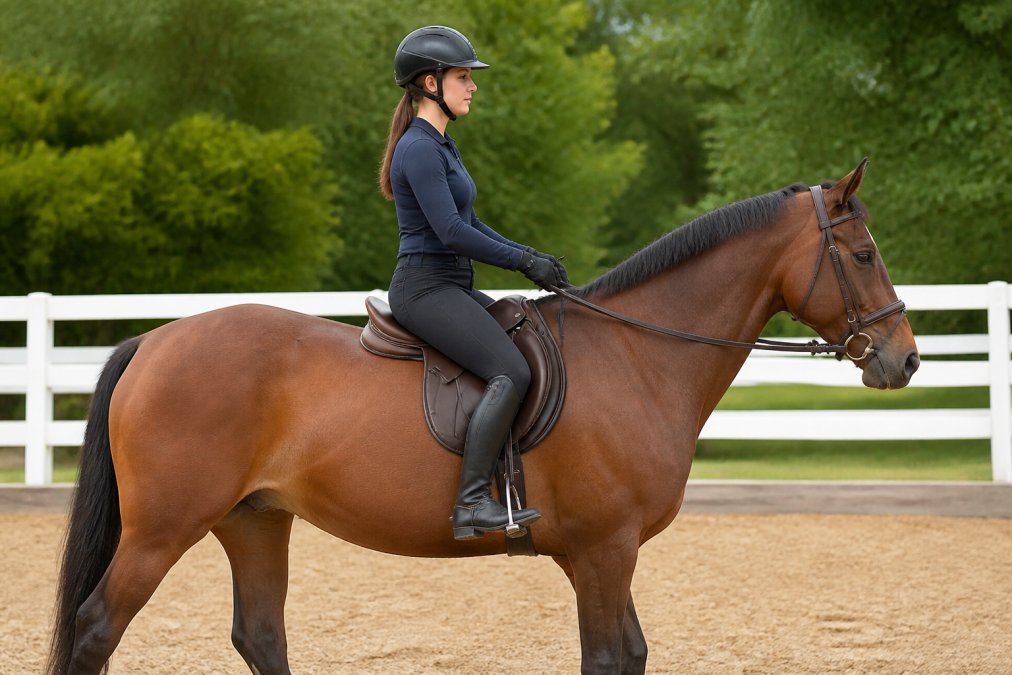
Saddle balance refers to how the saddle distributes your weight across your horse's back. A balanced saddle places weight evenly from the withers to the lumbar region.
When you receive a saddle, place it on your horse without a pad and observe how it sits. The saddle should make contact across the entire panel area without rocking forward or backward. Rock the saddle gently side to side, a well-balanced saddle sits stable without shifting.
Check that the saddle tree angle matches your horse's shoulder angle. If the tree is too upright, it will bear down on the withers. If too sloped, it will shift backward and concentrate weight on the loins. The tree angle should complement your horse's conformation.
Weight distribution is affected by panel flocking, the material inside the saddle panels that makes contact with the horse's back. Flocking can be adjusted by a saddle fitter to improve weight distribution.
Using Saddle Pads and Shims for Fine-Tuning Fit
Saddle pads and shims are tools for improving fit without replacing the saddle. A quality saddle pad adds cushioning and can help even out minor pressure inconsistencies. Shims are wedges placed under the saddle pad to adjust the saddle's angle or fill gaps.
A half-inch pad provides basic cushioning; a full-inch pad offers more support. Gel pads distribute pressure more evenly than traditional materials and are particularly useful for horses with sensitive backs.
Shims can be placed under the pad to raise the front, back, or sides of the saddle. However, shims and pads are adjustments, not solutions. They can improve an already-decent saddle but cannot fix a fundamentally poorly fitted one.
The Ace rugs Synthetic Cordura Western Saddle Set from Horsey Horse Store includes a coordinated pad, giving you a complete system designed to work together. This integrated approach simplifies the fitting process and ensures all components support proper weight distribution.

Common Mistakes When Fitting Saddles Without Professional Help
The first common mistake is ignoring wither clearance. Riders often focus on seat size and gullet width but assume wither clearance will be adequate. Always verify that the saddle tree provides at least two fingers' clearance above the withers.
Another frequent error is choosing saddle size based on rider weight rather than horse conformation. Tree size is determined by the horse's back, not the rider's weight.
Many riders also neglect spinal channel width. They measure gullet width but don't verify that the spinal channel is wide enough to clear the spine. Always check both measurements independently.
Bridging occurs when the saddle makes contact only at the front and back, leaving a gap in the middle. This often happens when the tree angle doesn't match the horse's shoulder angle. If your saddle bridges, the tree angle is likely incompatible with your horse's conformation.
Maintaining Your Saddle and Re-Fitting Over Time
A saddle that fits today may not fit six months from now. Horses change through conditioning, seasonal weight fluctuations, and aging.
Clean your saddle regularly with appropriate leather care products. Dirt and sweat accumulation can create pressure points and affect how the saddle sits.
Store your saddle on a proper rack to maintain tree shape. The Wood Saddle Rack Stand from Horsey Horse Store supports the saddle correctly and prevents warping or stress on the tree.
Re-evaluate your horse's fit quarterly, particularly during seasons when your horse gains or loses weight. Muscle development from consistent training also changes back conformation.
As your horse ages, back shape often changes. A saddle that worked perfectly for a five-year-old may need adjustment for the same horse at fifteen.
Panel flocking deteriorates over time. If your saddle is several years old and fit was previously good, professional re-flocking is often more cost-effective than purchasing a new saddle.
Fitting horse saddles online is achievable when you approach it systematically. You'll need accurate measurements, clear understanding of how saddle components work, and willingness to observe your horse carefully for fit feedback.
Start with the Horsey Horse Store saddle collection, which offers multiple options at different price points with clear specifications for gullet width, tree angle, and spinal channel measurements. Their 30-day return policy gives you time to evaluate fit thoroughly, and free shipping over $25 makes testing different options accessible. When you add a quality saddle pad from their inventory, you're building a complete system designed to support proper weight distribution and long-term horse health.
Frequently Asked Questions
How do I check if my saddle fits correctly when ordering online?
Start by measuring your horse's wither clearance, gullet width, and spinal channel on level ground. Take photos from multiple angles showing saddle placement on the horse's back. Once the saddle arrives, check that you can fit two fingers between the saddle and withers, the saddle doesn't bridge across the horse's back, and your horse moves freely without resistance. If fit issues arise, Horsey Horse Store's 30-day return policy allows you to try alternatives risk-free.
What measurements do I need to buy a saddle online?
You need your horse's wither clearance (distance from ground to highest point of withers), gullet width (the channel width at the saddle tree), spinal channel width, and back length from shoulder to hip. Measure on level ground using a flexible measuring tape. Document your horse's conformation type, any back muscling asymmetries, and girth placement preferences. Include your own weight and riding discipline, as these affect saddle tree angle and seat size requirements.
What are the signs of a poorly fitted saddle?
A poorly fitted saddle causes bridging (only touching at front and back), pressure points along the spine, restricted shoulder rotation, or uneven weight distribution. Behavioral signs include resistance at mounting, reluctance to move forward, bucking, or head tossing. Physical signs include white hairs or sweat marks in irregular patterns, muscle soreness, or girth-related rubbing. If you notice these after ordering online, use the 30-day return window to try a different fit or consult the product return process at Horsey Horse Store.
Can I fit a saddle accurately without a professional present?
Yes, with careful measurement and attention to detail. Take photos from the side, front, and rear showing saddle placement relative to the withers and spine. Measure wither clearance, gullet width, and spinal channel on level ground. Check for bridging by running your hand under the saddle panels. Ride your horse to assess movement and comfort. If uncertain, many retailers offer guidance, and Horsey Horse Store's return policy gives you confidence to test fit at home before committing to purchase.
What saddle gullet width should I choose for my horse?
Gullet width depends on your horse's wither height and shoulder width. Narrow gullets fit horses with high, prominent withers; medium gullets suit average conformation; wide gullets accommodate horses with low, broad withers. Measure the distance across your horse's withers at the highest point and compare to saddle tree specifications. Most saddles come in gullet widths of 5.5 to 7 inches. Your horse should have two fingers of clearance between the gullet and withers when you're mounted.
How often should I re-fit my saddle as my horse changes?
Re-fit your saddle annually or whenever your horse gains or loses significant weight, develops new muscle, or ages. Young horses change conformation rapidly and may need re-fitting every 6 months. Check fit before each season and after any extended time off. Back muscling changes with training intensity, and saddle pads or shims may need adjustment. Horsey Horse Store carries saddle pad shims and replacement flocking options to help you maintain fit between saddle purchases.
What's the difference between fitting for English versus Western saddles online?
English saddles require closer attention to spinal clearance and scapular movement because of the flatter profile and closer contact. Western saddles distribute weight over a larger area but demand precise gullet width to prevent withers pressure. Both require wither clearance and level ground assessment. Measure shoulder rotation range for English disciplines; assess girth placement and tree angle for Western. Horsey Horse Store stocks both types, and the Pro Fit Horse Saddle and Ace rugs Synthetic Cordura Western Saddle Set offer options for different disciplines.
This article was written using GrandRanker