

Last Updated: October 28, 2026
Quick Summary
Rider weight saddle fit depends on how the saddle spreads the rider's load across the horse's back. A heavier rider increases pressure under the panels, which can make the saddle sit lower, tilt, or rock, so fit should be checked with the rider mounted.
- Check saddle fit with the rider mounted, since static checks miss how the saddle behaves under load.
- Watch for panel bridging, rocking, or pressure points that appear once the rider sits and walks.
- Check wither clearance with the rider aboard, aiming for roughly two fingers.
- Treat a rider-to-horse weight ratio as a rough screen, not a verdict on fit.
- Recheck saddle fit after any major change in rider weight, and replace pads that no longer spring back.
Table of Contents
- How Rider Weight Affects Saddle Fit and Balance
- Saddle Fit With Rider Mounted: Why Static Checks Fall Short
- Signs of Poor Saddle Fit Under Load
- Understanding the Rider-to-Horse Weight Ratio
- Step-by-Step Saddle Fit Check for Different Rider Weights
- Saddle Fitting After Weight Loss or Gain
- Choosing Your Next Saddle or Pad at Horsey Horse Store
- Frequently Asked Questions
How Rider Weight Affects Saddle Fit and Balance
Rider weight is one of the most overlooked factors in rider weight saddle fit, and it shapes how a saddle performs over time.
The core issue is load. More rider weight means more pressure on the horse's back, and the saddle has to spread that pressure across a wider area.
Here is what changes as rider weight goes up:
- Pressure under the panels increases, especially at the front and back edges
- The saddle may sit lower and tilt forward or back
- Balance shifts, which can make the rider feel less secure
- Padding compresses faster, reducing its shock absorption
Many riders assume a heavier person simply needs a bigger saddle. That is only part of the answer.
Saddle Fit With Rider Mounted: Why Static Checks Fall Short
A saddle that looks right on a rack or on the horse with no one aboard can change once a rider is in it, which is why rider weight saddle fit should always be checked with the rider mounted.
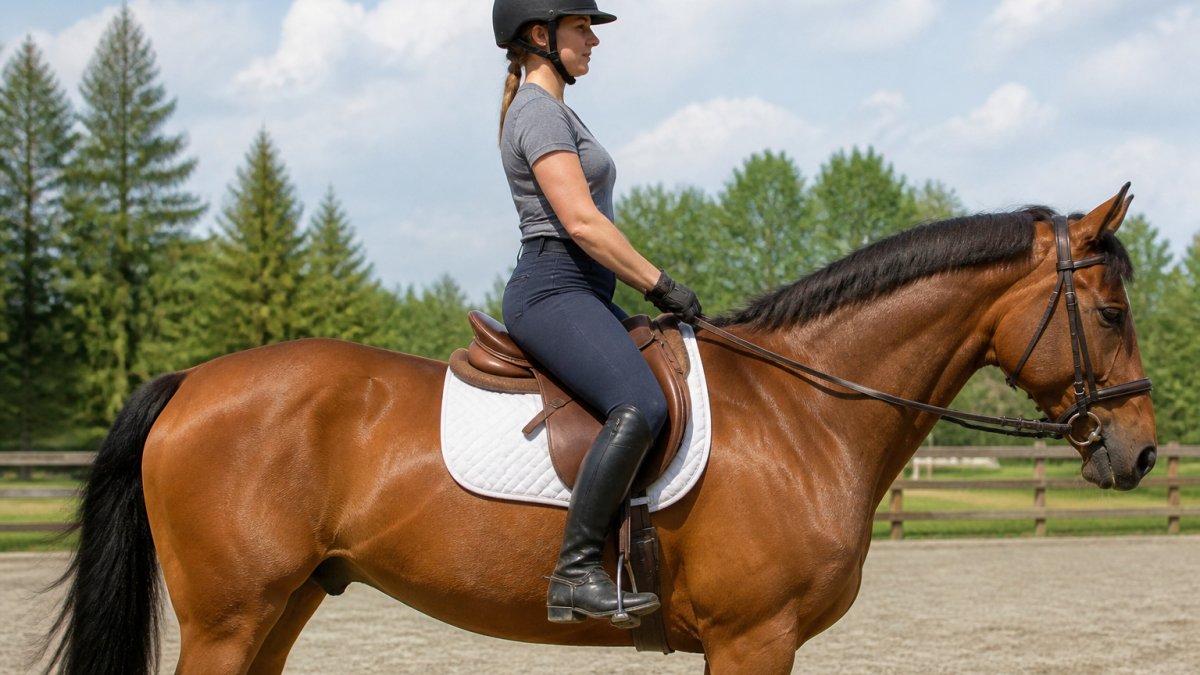
Why the rider changes the picture:
- The horse's back flexes and lowers under weight
- Panels can contact the back at points that stay hidden until someone rides
- Movement at the trot or canter exposes rocking and bridging
For a more accurate check, have a helper stand at the horse's side and watch the panels while the rider sits and walks. Then repeat the check after a short trot.
Padding compression and pressure distribution
Padding is meant to share pressure, but it wears down. A pad that has compressed under years of use or under a heavier rider may leave dry spots or bridging. Look for flattened areas, uneven wear, and sweat marks that show where the load concentrates.
If you use a pad, check it regularly. Replace it when it no longer springs back. The Harrison Howard Dyna-Sorb Half Saddle Pad ($79.99) is one option for a saddle-pad setup.
Saddle fit versus saddle weight
Saddle weight and saddle fit are not the same thing. A lightweight saddle can fit poorly, and a heavier saddle can fit well. Riders sometimes switch to a lighter saddle to reduce total carried weight, but that does not fix fit problems.
Total carried weight matters for horse welfare, but the fit of the tree and panels matters more for pressure distribution. Choose a saddle for fit first and weight second.
Signs of Poor Saddle Fit Under Load
The horse usually shows discomfort before the rider notices a problem. Watch for these signs during and after rides:
- Resistance when tacking up or when the saddle is placed
- Tail swishing, head tossing, or a tense back during work
- Short, choppy strides or reluctance to move forward
- Dry patches or white hair under the panels
- Soreness, heat, or swelling along the back after riding
Watch out: Do not treat a single sign as proof of a fit problem. Pain can come from the teeth, feet, or a workload change. If signs persist, have a qualified saddle fitter or veterinarian check the horse.
Also check the rider's side. A rider who sits off-center or drops to one side can create uneven pressure that looks like a fit problem.
Understanding the Rider-to-Horse Weight Ratio
Many riders look for a simple rule, such as a maximum rider-to-horse bodyweight ratio. You will see figures like 20 percent quoted often, and some sources cite a 15 to 20 percent range. These ratios can be a starting point, but they do not account for horse conformation, back shape, age, or conditioning. Treat any single percentage as a screening tool, not a verdict.
Why simple ratios fall short:
- They ignore where the weight sits. A rider who sits quietly and centered loads the back differently than a rider who braces or perches.
- They ignore the horse's back length and muscling. A short-backed horse with a strong topline may carry more load comfortably than a long-backed horse with weak muscling.
- They ignore duration and discipline. A ratio that works for a 30-minute schooling ride may not work for a full day on the trail.
- They ignore saddle fit. A poorly fitting saddle concentrates pressure regardless of the ratio.
A more useful way to interpret the ratio:
- Use the ratio as a rough screen. If the rider is well above a commonly cited range, plan a careful fit and workload review.
- Check the horse's body condition score. A thin horse and an overweight horse can both struggle, though for different reasons.
- Assess the horse's back shape and muscling under saddle, not just at rest.
- Review how the horse moves under the saddle at the walk, trot, and canter.
- Match workload to condition. Endurance riding, long trail days, and heavy schooling all add demand.
What research and practitioners generally agree on: The horse's comfort depends on total load, how that load is distributed, and the horse's condition and conformation. A ratio can help you start the conversation, but the saddle fit check and the horse's response under saddle are the real tests.
Step-by-Step Saddle Fit Check for Different Rider Weights
Use this check whenever the rider's weight changes, you buy a new saddle, or the horse starts showing signs of discomfort. The goal is to replace subjective impressions with repeatable observations before, during, and after riding.
Before riding (static check):
- Clean the back and saddle area. Remove debris and check for sore spots, heat, or swelling.
- Place the saddle with a pad. Set it where it normally sits, behind the withers.
- Check wither clearance. You want room for two to three fingers at the front. Note the clearance with no rider aboard.
- Check panel contact. Run a hand under each panel. Look for even contact along the length of each panel and no bridging (a gap in the middle) or rocking (contact only at the ends).
With the rider mounted (dynamic check): 5. Have the rider sit and walk. Watch for rocking, sliding, or tilting. Recheck wither clearance with the rider mounted, it should still allow roughly two fingers. 6. Check panel contact under load. Have a helper watch the panels while the rider sits and walks. Look for points where the panel lifts away or presses harder. 7. Repeat after a short trot. Look for bridging or movement at the back edge, and listen for changes in the horse's rhythm.
After riding (outcome check): 8. Review the horse after the ride. Check for dry spots, white hair, swelling, or soreness along the back. Dry patches or white hair under the panels can indicate pressure points. 9. Check the pad. Look for compressed areas, uneven wear, and sweat marks that show where the load concentrates.
Objective indicators to record:
- Wither clearance in fingers, with and without the rider
- Panel contact pattern (even, bridged, or rocking)
- Dry spots or sweat patterns after the ride
- Any change in the horse's way of going at the walk and trot
If the saddle fails a check:
- Minor clearance or padding issue: Try a different pad or a shim pad, then repeat the check. Do not use padding to mask a tree or panel problem.
- Persistent bridging, rocking, or pressure points: Stop riding and have a qualified saddle fitter assess the saddle and the horse's back.
- Soreness, heat, swelling, or white hair: Have a veterinarian examine the horse before continuing.
Expected result: The saddle sits level, the panels touch evenly, the wither clearance remains adequate with the rider mounted, and the horse moves freely with no signs of pain.
The steps below summarise the check, with how long each stage takes and when to repeat it.
| Stage | What to check | When |
|---|---|---|
| Static check | Wither clearance and panel contact with no rider aboard | Before riding |
| Dynamic check | Clearance and panel contact with rider mounted, walking | With rider mounted |
| Trot check | Bridging or rocking after a short trot | After walking |
| Outcome check | Dry spots, white hair, swelling or soreness along the back | After riding |
| Pad check | Compressed areas, uneven wear, sweat marks | After each ride |
Saddle Fitting After Weight Loss or Gain
Rider weight changes can happen gradually or suddenly. Either way, the saddle may need attention. Weight loss can leave the saddle loose and shifting. Weight gain can increase pressure and reduce comfort.
Common changes to watch for:
- The saddle slides forward or back after weight loss
- The rider sits deeper and the panels press harder after weight gain
- The pad compresses faster under a heavier load
- Balance feels different, even if the saddle seems unchanged
Recheck the fit at each major change. Many riders also clean and restore pads after a shift, since compressed or stained pads can hide fit problems.
Do not assume the horse's weight or the season is the cause. Track the change over several weeks before you decide the saddle is wrong.
Choosing Your Next Saddle or Pad at Horsey Horse Store
When the current setup no longer works for your rider, look at the alternatives before buying.
- Pro Fit Horse Saddle ($975.77): Available in Light Brown and Black.
- Harrison Howard Dressage Saddle Pad ($71.99): Available in Navy.
- Woolous Dressage Sheepskin Saddle Pad ($238.99): A White/Ivory pad made with wool and cotton.
- Harrison Howard Dyna-Sorb Half Saddle Pad ($79.99): Available in Aegean Blue with White Print.
Every order ships free over $25, and we offer 30-day returns on clean, unused items. Before buying a saddle, measure your horse's back and check the fit using the steps above. If you are unsure, reach out to a qualified saddle fitter.


Frequently Asked Questions
How does rider weight affect saddle fit?
Rider weight changes how load spreads across the saddle tree, panels and pad. A heavier rider compresses the padding more and concentrates pressure toward the front and center of the panels, which can shift the saddle and reduce clearance over the withers. Fit should be checked with the rider mounted, because a saddle that looks correct on a rack can sit differently under a seated load. If the saddle rocks, pinches or leaves a gap, a qualified saddle fitter should assess it.
Does a heavier rider need a different saddle?
Not always. Many riders can stay in their current saddle if it fits the horse and the padding still supports the load evenly. Consider a different saddle or a fitter's reassessment when the saddle consistently slips, the panels show uneven contact, or the horse shows discomfort under load. Total carried weight, including tack, also matters, so compare the saddle weight with the horse's condition and workload before deciding.
How can you tell if a saddle is uncomfortable for your horse?
Watch for resistance during tacking, tail swishing or back-end tension when mounting, dips or hollowing of the back, reluctance to take the bit, and sore spots or white hairs where the saddle sits. Check the saddle after a ride for dry patches or sweat marks that show pressure points. Changes in movement quality or a sudden change in behavior should prompt a fit check before continuing the work.
How often should saddle fit be checked after a rider's weight changes?
Recheck saddle fit within a few weeks of a meaningful change in rider weight, and again after the horse's condition shifts with season, workload or conditioning. A simple routine is a mounted check at the start of each riding season and whenever you notice new signs of pressure. Keep notes on pad marks and how the saddle sits so you can spot gradual changes before they affect the horse.
