

Table of Contents
- Does Horse Coat Conditioner Actually Work?
- Key Benefits of Using Horse Coat Conditioner
- Best Horse Coat Shine Spray and Ingredients to Look For
- How to Apply Coat Conditioner for Maximum Results
- DIY Horse Coat Conditioner Recipe vs. Store-Bought Options
- Building a Horse Grooming Routine for Healthy Coats
- The Real Cost: Is It Worth Your Money?
- Frequently Asked Questions
Last Updated: September 27, 2026
Does Horse Coat Conditioner Actually Work?
Horse coat conditioner works, but results depend on your horse's condition and grooming commitment. Quality conditioners address specific problems, dryness, dandruff, tangles, and static, when used consistently as part of a grooming routine, not as a one-time fix.
The real question is whether your horse needs one. Horses with quality pasture, consistent grooming, and proper nutrition may have naturally healthy coats needing minimal supplementation. Horses in dry climates, with blanket rubs, or sensitive skin will see noticeable improvement within weeks.
Key Benefits of Using Horse Coat Conditioner
A quality horse coat conditioner addresses multiple challenges, shine, detangling, and skin health, in a single application.
Coat Shine and Luster
Coat shine signals healthy skin and hair. A conditioner enhances natural shine by smoothing the hair shaft and reducing static that makes coats look dull.
Leave-in conditioners work particularly well, staying on the coat longer and continuing to work between grooming sessions. A shinier coat sheds dust and mud more readily than a dull one.
Managing Dry Skin and Dandruff
Dry skin and dandruff plague horses in low-humidity climates or winter months. A conditioner with moisturizing ingredients penetrates the skin barrier and reduces flaking, preventing itching, hair loss, and secondary skin infections.
The best conditioners hydrate without leaving greasy residue and restore the natural pH balance that dry conditions disrupt.
Mane and Tail Detangling
Mane and tail hair tangles more easily than body coat hair because it's longer and gets caught on blankets, fencing, and the horse's own movement. A detangling conditioner reduces breakage when you brush these areas, which means fuller, longer manes and tails over time. The Harrison Howard Mane and Tail Brush works best when paired with a leave-in conditioner that keeps these areas soft and manageable between grooming sessions.
Horses with white or light-colored manes benefit especially, as tangles in light hair are more visible and harder to remove without damage.
Best Horse Coat Shine Spray and Ingredients to Look For
The ingredient list determines whether a product improves coat health or just creates temporary shine.
Natural Ingredients Versus Silicone-Based Formulas
Natural ingredient conditioners with coconut oil, lemongrass, and plant-based moisturizers absorb into hair and skin, providing lasting hydration. Horses with sensitive skin respond better to natural formulas as they're less likely to trigger irritation.
Silicone-based conditioners create immediate shine by coating the hair shaft, ideal for show preparation. However, silicone builds up over time and can trap dirt and moisture against the skin if used regularly without deep cleaning.
Silicone conditioners are ideal for occasional use before shows, but not for daily grooming routines.
pH Balance and Skin Sensitivity
Horse skin is naturally more acidic than human skin. A conditioner formulated for equine skin maintains the natural pH balance that protects against bacterial overgrowth. Products labeled "pH balanced" or "dermatologically tested for horses" are safest for horses with skin sensitivity or fungal issues.
Check the ingredient label for harsh chemicals like sulfates, which strip natural oils and can trigger dryness and dandruff even in horses with normally healthy skin. Products with essential oils should list them by name, lemongrass and lavender are common choices that provide mild antimicrobial benefits without irritation.
How to Apply Coat Conditioner for Maximum Results
Application technique matters more than product choice. A conditioner applied haphazardly won't penetrate evenly, and you'll waste product while getting poor results.
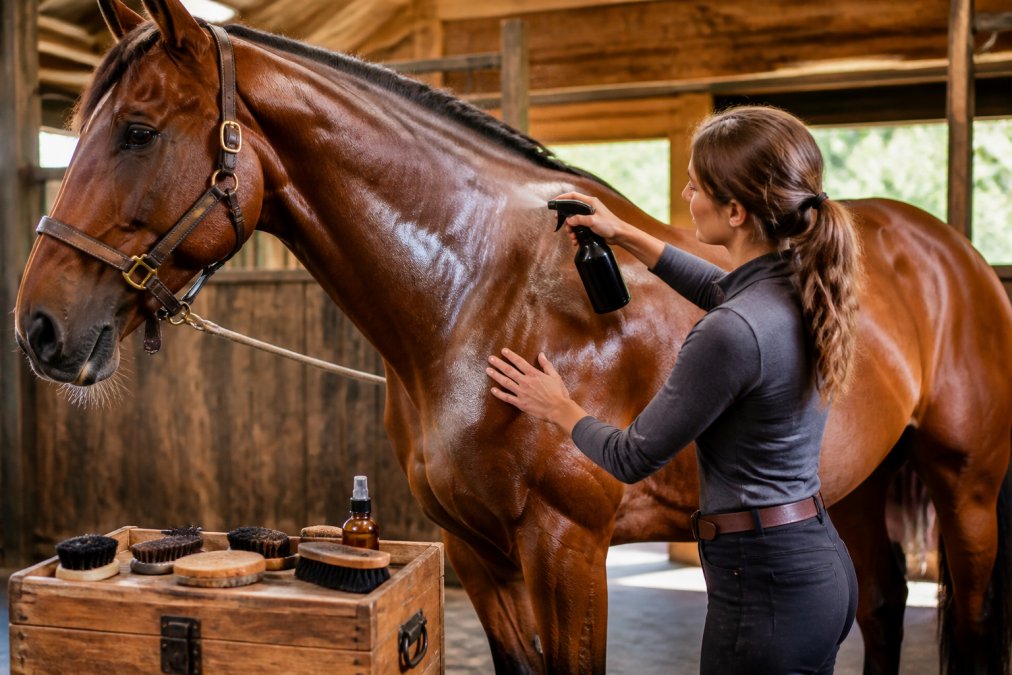
Start with a clean, brushed coat. Dirt and dust create a barrier that prevents conditioner from reaching the skin and hair shaft. Use a curry comb or body brush to remove dried sweat, dirt, and loose hair. For best results, bathe your horse first if the coat is heavily soiled, then allow it to dry completely before applying conditioner.
Divide the conditioner application into sections: neck, shoulders, barrel, hindquarters, and legs. Apply the product to the skin and hair at the root, then work it through to the ends using your fingers or a grooming glove. Don't just spray it on the surface, massage it in so it penetrates. This takes 10-15 minutes per horse, but the results are noticeably better than quick surface applications.
8-Piece Horse Grooming Box Kit →
For mane and tail, apply conditioner from the roots outward, working through tangles gently with your fingers before brushing. Leave-in conditioners can stay in the mane and tail indefinitely, but rinse-out formulas should be rinsed thoroughly to prevent product buildup.

Allow the conditioner to sit for at least 15 minutes before rinsing (if using a rinse-out formula). The longer it sits, the more it penetrates. Some owners apply conditioner in the evening and rinse it out the next morning for maximum absorption.
DIY Horse Coat Conditioner Recipe vs. Store-Bought Options
When Homemade Makes Sense
For horses with severe sensitivities or owners committed to natural grooming, homemade conditioners are worth the effort.
A basic recipe combines coconut oil, sweet almond oil, and a few drops of lemongrass or lavender essential oil. Mix equal parts oils (start with 1 cup of each), add 10-15 drops of essential oil, and store in a dark glass bottle. Shake before each use.
The drawback: homemade conditioners are thicker and greasier than commercial formulas. They require thorough rinsing and can leave residue if not applied carefully.
Store-bought conditioners from Horsey Horse Store offer convenience and consistency. The 10-Piece Horse Grooming Kit includes grooming tools that work well alongside a quality conditioner, and having everything in one place simplifies your routine. Commercial products are formulated to rinse cleanly, absorb evenly, and last longer in storage.

Long-Term Effects of Conditioner Use
Consistent conditioner use over months shows cumulative benefits. Horses conditioned regularly develop noticeably thicker, shinier coats with fewer tangles and less dryness.
Most horses thrive on a conditioner schedule of 2-3 times per week during dry seasons and once weekly during humid months. Show horses in heavy training may benefit from more frequent conditioning, while horses with naturally oily coats need less frequent applications.
| Application Frequency | Best For | Expected Results |
|---|---|---|
| Once weekly | Horses with normal coats | Maintenance of shine and health |
| 2-3 times weekly | Dry coats, winter months | Noticeable improvement in texture |
| Daily | Show preparation only | Temporary dramatic shine |
| As-needed | Specific problem areas | Targeted treatment of tangles or dryness |
Building a Horse Grooming Routine for Healthy Coats
A conditioner is most effective as part of a complete grooming routine, not as a standalone product. Horses with the healthiest, shiniest coats have owners who combine conditioning with proper nutrition, consistent grooming, and seasonal adjustments.
Nutrition and Coat Health
Coat quality reflects what's happening inside the horse. Horses lacking adequate protein, omega fatty acids, and trace minerals develop dull, brittle coats that no conditioner can fix. A diet with quality forage, grain appropriate to the horse's workload, and a balanced mineral supplement provides the building blocks for healthy hair growth.
Omega fatty acids deserve special attention. Horses consuming primarily hay and grain often lack sufficient omega-3s, which support skin health and coat shine. Adding flaxseed, fish oil, or a commercial omega supplement to daily feed produces noticeable coat improvement within 4-6 weeks. This dietary approach works synergistically with conditioner use, the nutrients support healthy skin while the conditioner addresses surface-level dryness and tangles.
Daily Maintenance and Seasonal Adjustments
A basic daily grooming routine takes 15-20 minutes and requires minimal equipment. Use a curry comb to remove dried sweat and dirt, a body brush to smooth the coat, and a mane and tail brush for detangling. This removes dust and stimulates natural oil production, which is why groomed horses have shinier coats than ungroomed ones regardless of conditioner use.
Seasonal adjustments matter significantly.
The Real Cost: Is It Worth Your Money?
The financial question depends on how you calculate value. A bottle of quality conditioner costs between $15-40 and lasts 4-8 weeks depending on application frequency and coat size. That's roughly $2-10 per week in conditioner costs for a single horse.
Frequently Asked Questions
Does horse coat conditioner actually improve hair health?
Yes, quality horse coat conditioner addresses specific coat issues by adding moisture, reducing static, and protecting against environmental damage like sun bleaching and dirt accumulation. Results depend on the horse's baseline coat condition, the product's ingredients, and consistent application. Horses with naturally dry coats or those exposed to harsh weather show the most noticeable improvement in coat texture and shine within 2-3 weeks of regular use.
How often should you use coat conditioner on a horse?
Most horses benefit from conditioning 1-3 times weekly as part of their grooming routine for healthy coats. Horses in heavy work, those with dry or damaged coats, or those competing in shows may need more frequent application. Adjust frequency based on your horse's coat condition and the season; reduce applications in winter if using leave-in formulas to avoid product buildup.
What's the difference between mane and tail detangler and coat conditioner?
Mane and tail detangler is formulated specifically for long hair and focuses on reducing tangles and static, often with lighter formulas. Horse coat conditioner targets the entire body, providing deeper moisture and skin hydration. Many grooming routines use both: detangler for mane and tail work, conditioner for the body coat. Some products serve dual purposes, but specialized options deliver better results for each area.
Can you make your own DIY horse coat conditioner recipe?
Yes, simple recipes using coconut oil, essential oils like lemongrass, and water can work for basic conditioning. However, DIY formulas may not rinse cleanly and can attract dirt. Store-bought conditioners are formulated for equine skin sensitivity and deliver more consistent results. DIY options suit occasional maintenance but aren't ideal for horses with sensitive skin or those in regular training.