

Table of Contents
- Plan Your Feed Room Layout and Working Zones
- Choose and Set Up Horse Feed Storage Bins
- How to Store Horse Grain and Maintain Feed Freshness
- Organize Supplements and Medications by Horse
- Create a Feeding Schedule and Inventory System
- Small Feed Room Organization Tips for Limited Space
- Maintain a Clean, Safe, and Tidy Feed Room
- Frequently Asked Questions
Last Updated: October 13, 2026
Plan Your Feed Room Layout and Working Zones
To organize horse feed room effectively, start with a solid layout. Before you buy a single bin or label, measure your space and plan how you'll move through it daily.

The goal: feeding becomes faster and safer, with less time searching and more time with your horses.
Measure Your Space and Identify Traffic Flow
Measure your feed room's length, width, and height, and write the numbers down.
This path is your traffic flow. Keep it clear. Obstacles slow you down and create safety hazards.
Items you reach for most often belong in the easiest-to-access spots; weekly items can go higher or deeper.
Create Dedicated Zones for Feed, Supplements, and Tools
When you organize horse feed room, divide it into three main zones:
- Main feed zone: Where you store grain and hay. This should be the largest area.
- Supplement and medication zone: A smaller, organized section with clear labels for each horse.
- Tool zone: Hooks, shelves, and containers for scoops, baskets, brushes, and small supplies.
Each zone keeps related items together, so you grab what you need without hunting.
Choose and Set Up Horse Feed Storage Bins
The right containers make or break an efficient feed room: bins must protect grain, stay organized, and fit your space.
Select the Right Container Size and Material
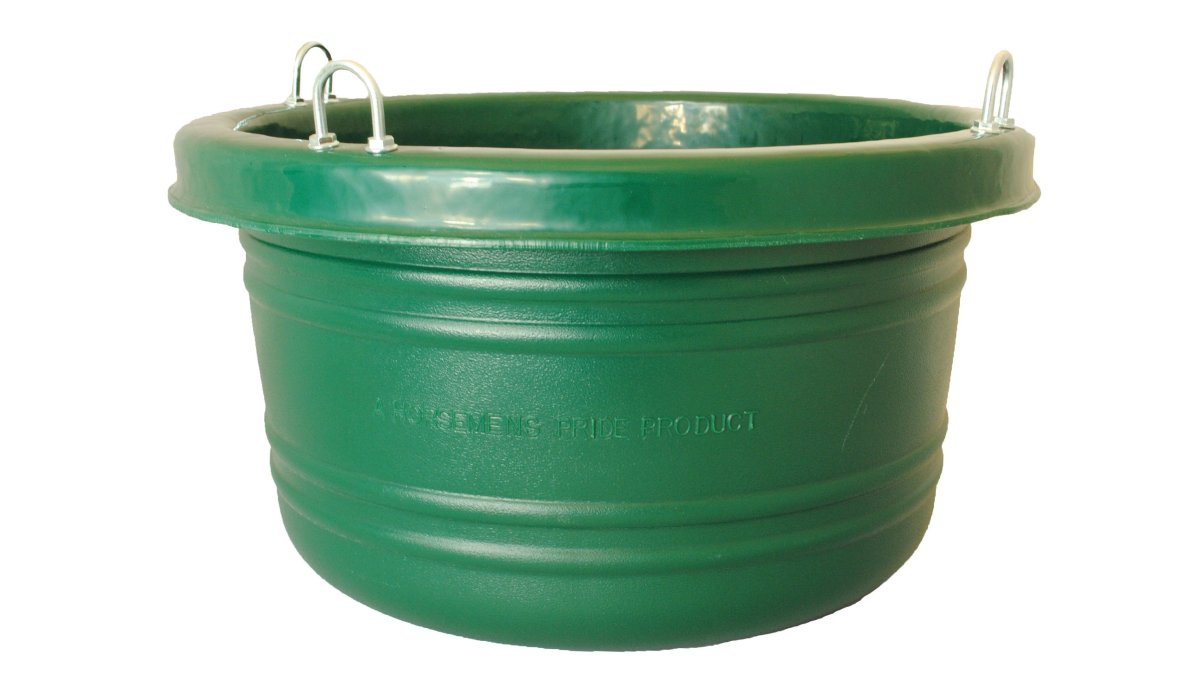
Feed bins come in many sizes. A 30-quart bin suits smaller operations or works as a working bin filled from larger storage; the Horsemens Pride Horse Feed Tub Large 30 Quarts Green is a solid daily-feeding choice because it's easy to handle.
Larger bins (50+ quarts) suit main storage if you have floor space; smaller bins (20 quarts or less) suit individual supplements or pre-portioned meals.
Pick containers with lids to keep grain fresh, block pests, and stop dust. Look for bins that stack safely so you don't waste vertical space.
Keep Feed Bags Off the Floor
Never store feed bags directly on concrete, rising moisture makes them mold quickly.
Use pallets, shelves, or low racks to lift bags at least a few inches off the ground; this extends feed freshness by weeks.
If you're stacking bags, don't stack more than three high. Heavy stacks crush the bags below and waste space.
How to Store Horse Grain and Maintain Feed Freshness
Grain and supplements lose nutritional value over time, and poor storage can turn healthy feed into a hazard. Here are the storage conditions, rotation system, and spoilage checks that keep feed safe.
Target the Right Storage Conditions
Aim for a feed room that stays cool, dry, and dark. Heat degrades vitamins and turns fats rancid; moisture drives mold and mycotoxins.
Use a thermometer and hygrometer (a few dollars at most hardware stores) so you manage conditions instead of guessing.
Store by Container Type, Not Just by Convenience
Shelf life depends heavily on the container:
- Original woven bags: Short-term holding only. Once opened, use within a few weeks and keep the bag off the floor on a pallet or shelf.
- Airtight plastic or metal bins with gaskets: Best for bulk grain used within a month or two. Seal fully between feedings.
- Small working bins (20-30 quarts): Fill from bulk storage and refill weekly so the main supply stays sealed.
Label every container with the product name and open date, masking tape and a marker suffice.
Use First-In, First-Out Rotation
FIFO means the oldest feed is always used next:
- When new feed arrives, write the delivery date on the bag or bin.
- Pull older stock to the front and place new stock behind it.
- Never top off an older container with new feed, that hides the old product at the bottom.
- Finish an open bag or bin before opening the next one.
A simple wall log works: date opened, product, quantity, and the horse it's for. Cross items off when finished to spot anything sitting too long.
Know Realistic Storage Life
Storage life varies by product, so treat these as general ranges and check the manufacturer's label:
- Textured and pelleted grain: Often best within about 4-8 weeks of opening when stored cool and dry.
- Whole grains and oats: Can hold quality somewhat longer if kept dry and pest-free.
- Vegetable oils and fat-added feeds: More prone to rancidity; use sooner and smell before feeding.
Inspect Before Every Feeding
Do a quick sensory check each time you scoop:
- Smell: A sour, musty, or paint-like odor means discard.
- Look: Discoloration, gray or green fuzz, clumping, or webbing indicates mold or insects.
- Feel: Grain that is damp, warm, or caked has likely taken on moisture.
When in doubt, throw it out. Moldy feed can cause colic, respiratory problems, and even neurologic illness, never worth the risk.
Organize Supplements and Medications by Horse
Supplements and medications need their own system. Mistakes here can harm your horse.
Use Clear Labeling and Horse-Specific Containers
Create a labeled container for each horse with its name, contents, and feeding instructions.
Use a permanent marker or printed labels. Include:
- Horse name
- Supplement or medication name
- Dosage per day
Color-coding helps too: give each horse a color with tape or markers, especially useful in barns with multiple caregivers.
Store one horse's containers together on one shelf or section, so at feeding time you grab that section and you're done.
Store Medications Safely and Securely
Medications require extra care: store them separately from supplements in a cool, dry place away from direct sunlight.
Some medications need refrigeration, so check the label.
Horsemens Pride Horse Feed Tub Large 30 Quarts Green →
Record when each medication was opened and when it expires, expired medications don't work and can be unsafe.
Create a Feeding Schedule and Inventory System
A feeding schedule and inventory system save time and prevent mistakes.
Build Your Daily Feeding List and Feeding Instructions
Write down exactly what each horse gets, how much, and when, and post the list where everyone can see it.
Your list should include:
- Horse name
- Type of grain or hay
- Amount per feeding
Laminate the list or use a clear sleeve so it stays clean, and update it whenever something changes.
If multiple people feed your horses, this list is critical: everyone follows the same routine and no one forgets a supplement.
Set Up a Restocking and Inventory Tracking System
Track what you have and when to reorder with a simple spreadsheet or notebook.
Record:
- Item name
- Amount you have
- When you opened it
Check this list weekly. Nothing is worse than running out of grain on a weekend when suppliers are closed.
For regular items like grain, order when you're about three-quarters through your supply to create buffer time and prevent gaps.
| Item | Current Stock | Opened Date | Expected Depletion | Reorder Date |
|---|---|---|---|---|
| Purina Omega Match | 2 bags | Oct 1 | Oct 28 | Oct 14 |
| Zesterra Supplement | 1 container | Sep 15 | Nov 10 | Oct 25 |
| Timothy Hay | 15 bales | Oct 5 | Oct 20 | Oct 12 |
Small Feed Room Organization Tips for Limited Space
Not everyone has a large, dedicated feed room. If you're working with a closet, corner, or small shed, these strategies help.

Maximize Vertical Storage and Wall Space
Pegboards hold small tools, scoops, and brushes. Hooks hold lead ropes and halters.
Magnetic strips hold metal scoops and tools, and wall-mounted baskets hold small items.
Stack bins vertically if they're designed for it.
Use the space under shelves for larger bins you can slide in and out.
Use Multi-Purpose Containers and Compact Solutions
Choose bins that do double duty. A 30-quart bin like the Horsemens Pride Horse Feed Tub works as storage and a daily feeding container: fill it from your main supply, carry it to the stalls, and bring it back.
Rolling carts with shelves save space and move everything at once, and collapsible bins fold flat when empty.
Clear containers let you see inside without opening them, saving time and keeping grain fresher.
Maintain a Clean, Safe, and Tidy Feed Room
A clean feed room is a safe feed room, but cleanliness alone does not stop rodents, insects, or fire risk. This section covers the prevention and control practices that keep feed, horses, and people safe.
Prevent Pests Before You Trap Them
Rodents and insects are attracted by spilled grain, dust, and easy entry points, and prevention beats control:
- Remove the food source daily: Sweep up spilled grain and dust after every feeding. Even a small amount under a pallet will draw mice.
- Seal the building: Walk the walls, foundation, and roofline and seal any gap wider than a pencil (about 1/4 inch). Use caulk, expanding foam, or steel wool for small openings and hardware cloth for larger ones.
- Store feed in sealed containers: Airtight bins with gaskets keep rodents and pantry moths out far better than open bags or loose-lidded tubs.
Place Traps and Baits Safely
If prevention isn't enough, place control measures so they can't harm horses, pets, or people:
- Snap traps: Set them along walls and behind bins where rodents travel, never in the open where a horse, dog, or cat could reach them. Check them daily and dispose of carcasses promptly.
- Live traps: Check at least once a day, and release rodents well away from barns and feed storage.
- Glue boards: Use only in areas completely inaccessible to horses and pets; they can injure wildlife and are not a humane first choice.
Separate Chemicals, Fuels, and Medications
Feed rooms should not double as chemical storage. Keep these out of the feed room entirely, or in a locked, separate cabinet:
- Fly sprays, insecticides, and rodenticides
- Fuels, oils, and equipment fluids
- Cleaners, bleach, and solvents
If you must store any nearby, use a dedicated locked cabinet with clear labels, never above or beside feed where a spill could contaminate it. Medications, especially prescription drugs, belong in their own labeled, locked area.
Reduce Fire Risk
Feed rooms often sit near highly flammable hay and bedding:
- Do not store hay in the feed room. Keep hay in a separate, well-ventilated space.
- Keep dust down. Fine dust is combustible; sweep and wipe surfaces regularly.
- Store fuels and flammable liquids elsewhere. Never keep gasoline, propane, or solvents in the feed room.
Run a Simple Daily, Weekly, and Monthly Routine
Daily (about 5 minutes):
- Sweep spilled grain and dust
- Wipe down work surfaces
- Return scoops, buckets, and tools to their places
Weekly (about 15 minutes):
- Deep sweep and mop
- Check for moisture, mold, or pest signs
- Inspect containers and lids for damage
Monthly:
- Inspect walls, foundation, and roofline for new gaps or rodent entry
- Check the fire extinguisher gauge and any smoke or heat detectors
- Rotate stock and update the inventory list
A tidy feed room runs itself when everything has a place and you spend a few minutes a day maintaining it, bigger tasks never pile up and safety systems stay in place.
Frequently Asked Questions
What is the ideal size for a horse feed room?
An efficient feed room should be at least 100-150 square feet for a small operation with 2-4 horses, allowing space for storage bins, a work area, and safe movement. For larger barns with 8+ horses, 200-300 square feet gives you room for multiple feed storage bins, supplement organization, and medication storage without crowding. Measure your available space first, then plan zones accordingly. Even a compact 60-80 square foot space can work if you use vertical storage, wall-mounted shelves, and stackable containers.
How should horse feed be stored to keep it fresh?
Store grain and bagged feed in airtight containers or sealed bins to protect against moisture, mold, and pests. Keep feed off the floor on shelves or pallets to prevent dampness and rodent access. Store feed in a cool, dry area away from direct sunlight, and maintain consistent temperature to preserve nutritional value. Use the first-in, first-out rotation method: label bags with purchase dates and use older feed first. Most grains and concentrates stay fresh for 4-8 weeks when stored properly; supplements vary by type, so check manufacturer guidelines.
How can you organize a small feed room efficiently?
In a small feed room, maximize vertical space with wall-mounted shelves and hooks for scoops and tools. Stack feed storage bins against one wall, use labeled containers for supplements organized by horse, and install a pegboard for easy tool access. Keep your feeding list and inventory sheet posted on the wall at eye level. Choose compact, multi-purpose containers that fit your space, and maintain clear pathways for daily access. Vertical organization and wall space are your best friends when floor space is limited.
Do horses need to be fed at the same time every day?
Yes, horses thrive on routine and should be fed at consistent times daily. Regular feeding schedules help regulate digestion, reduce stress, and make it easier to monitor each horse's appetite and health. Create a written feeding schedule that lists each horse's name, feed type, portion size, supplements, and medications. Post this feeding list in your feed room so all caregivers follow the same routine. Consistency prevents feeding errors and helps you spot health issues quickly when a horse's eating pattern changes.