

Table of Contents
- Understanding Girth Anatomy and Materials
- Best Leather Conditioner for Horse Tack and Routine Cleaning
- How to Clean Synthetic Girths Properly
- Hardware and Buckle Maintenance for Long-Term Durability
- Signs of Wear on Horse Girths and When to Inspect
- How Often to Replace Horse Girth: A Decision Matrix
- Storage and Environmental Best Practices
- Frequently Asked Questions
Last Updated: September 18, 2026
Understanding Girth Anatomy and Materials
A girth is the strap that fastens around a horse's barrel to secure the saddle in place. Leather girths offer durability but require regular conditioning; synthetic girths (neoprene, fleece, or blended fabrics) are easier to clean but can lose elasticity over time. Understanding your girth's material shapes your maintenance routine: leather needs conditioning, synthetics need washing, and both require proper care to maintain durable girths through regular inspection for hardware corrosion and elastic fatigue. At Horsey Horse Store, we stock both types because the right maintenance keeps either one performing for years.

Best Leather Conditioner for Horse Tack and Routine Cleaning
Leather conditioning prevents cracking and maintains structural integrity. You don't need an expensive product, what matters is consistency.
After every ride, wipe your leather girth with a damp cloth to remove sweat and dirt, then air dry away from direct heat. Monthly, apply a pH-balanced leather conditioner with a soft cloth, focusing on flex points: where the girth attaches to the saddle, around buckle rollers, and along elastic sections. A good conditioner replaces natural oils, softens the material to prevent cracking, and creates a protective barrier against sweat. Don't oversaturate, too much conditioner makes leather greasy and weakens stitching.
How to Clean Synthetic Girths Properly
Hand-wash is safest: soak in cold water with mild pH-balanced cleaner for 10-15 minutes, scrub gently with a soft brush (especially the fleece lining and contact areas), rinse thoroughly, squeeze out excess water, and air dry completely. Machine washing is possible on gentle cycle with cold water if labeled machine-washable, but skip the dryer, heat damages synthetic fibers and warps elastic.
Avoid hot water (weakens elastic), skipping rinse (irritates skin), heat drying (accelerates breakdown), and washing with other tack (hardware snags materials).
The American Equestrian Federation's tack care guidelines recommend cold-water washing for all synthetic equestrian gear to preserve material integrity.
Hardware and Buckle Maintenance for Long-Term Durability
Hardware corrosion and mechanical failure are leading causes of unexpected girth failure mid-ride. Understanding failure modes and inspection protocols prevents catastrophic failure.
Common hardware failure points on girths:
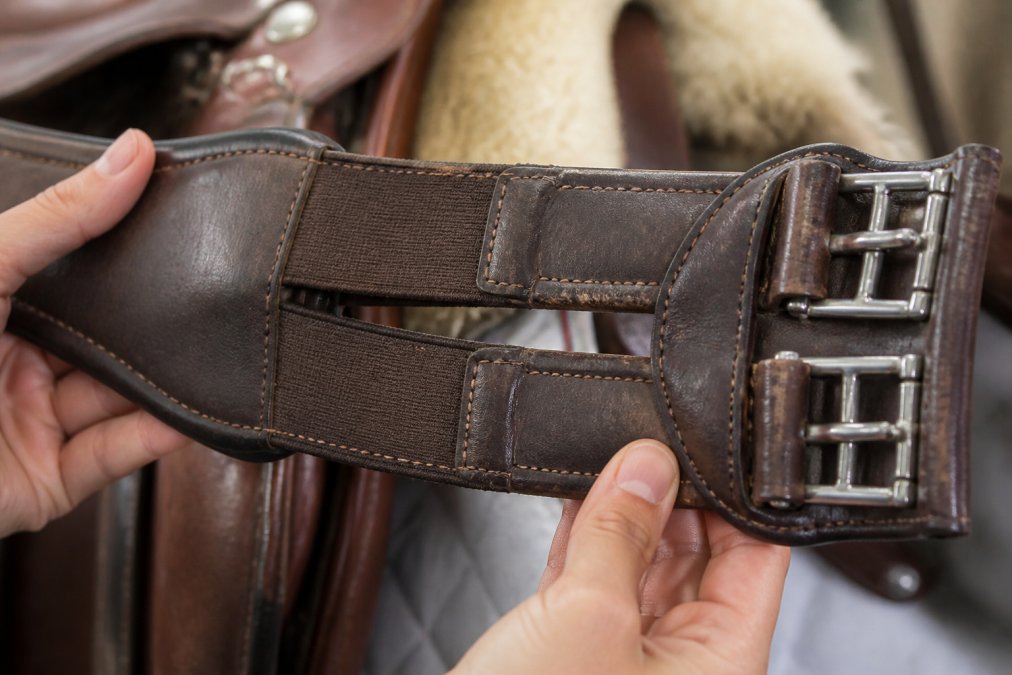
Buckle rollers are the primary failure site. When sweat, dirt, and moisture accumulate around the axle, corrosion begins. A pitted or seized roller won't spin freely, forcing the strap to bind and creating uneven pressure on your horse's barrel.
Attachment points where the girth connects to saddle billets experience constant micro-movement. Corrosion weakens the metal, and loose fasteners allow independent flexing that accelerates stitching failure.
D-rings and metal loops corrode from the inside out if moisture gets trapped. Internal pitting may compromise structural integrity before external corrosion is visible.
Inspection protocol for hardware:
Inspect hardware every two weeks (weekly in wet conditions). Feel for rough spots, pitting, or flaking. Look for discoloration: stainless steel should be uniformly silvery; plated steel showing dull spots or brown streaks is corroding. Test roller function by spinning each buckle roller gently, it should rotate smoothly. A seized roller must be replaced before the next ride.
Check fastener tightness with an appropriate wrench or screwdriver and tighten any that have backed out. Do not over-tighten stainless steel bolts; they can seize if cross-threaded.
Cleaning and protection strategies:
After every ride, wipe all hardware dry with a soft cloth to prevent corrosion. For light corrosion, use a soft brass brush or non-abrasive metal polish, working in the direction of the grain. For stubborn corrosion, apply white vinegar with a soft cloth, then wipe clean and dry immediately. After cleaning, apply a thin coat of silicone-based metal protectant or light machine oil to create a moisture barrier.
When to replace hardware versus repair:
Minor surface corrosion that cleans away easily doesn't require replacement. Pitting deeper than surface level signals compromised material and requires replacement. Seized rollers and loose fasteners that cannot be tightened must be replaced. Most tack shops stock replacement buckles, rollers, and fasteners. Replacing hardware before failure is far cheaper than replacing the entire girth.
The American Association of Equine Practitioners emphasizes that equipment failure is a leading cause of riding accidents. Regular hardware inspection is a core part of pre-ride safety checks.
Signs of Wear on Horse Girths and When to Inspect
Inspect your girth monthly for damage. Check stitching along every seam, loose, frayed, or missing stitches signal structural loss. Test elastic by pulling and releasing; it should snap back immediately. Look for deep cracks in leather that go through the material. Inspect the girth sleeve and lining for matting, holes, tears, or delamination. Feel for debris and buildup in seams that irritate skin and accelerate wear.
SIE EQUESTRIAN Fleece-Padded Horse Girth →
How Often to Replace Horse Girth: A Decision Matrix
| Use Level | Leather Girth | Synthetic Girth | Inspection Frequency |
|---|---|---|---|
| Light (2-3 rides/week) | 3-5 years | 2-4 years | Monthly |
| Moderate (4-5 rides/week) | 2-3 years | 1.5-2.5 years | Every 2 weeks |
| Heavy (daily use) | 1-2 years | 1-1.5 years | Weekly |
Replace your girth when:
- Stitching is broken in multiple places and can't be hand-repaired
- Elastic has lost all tension and won't hold the saddle secure
- Leather has deep cracks that go through the material
- Hardware is corroded and can't be cleaned or replaced
- The girth sleeve is torn or the lining is gone
- It no longer fits your horse due to wear (stretched out or compressed)
Replace your girth when maintenance can no longer restore function, a loose saddle causes falls and injuries.
The American Association of Equine Practitioners recommends replacing tack that shows signs of structural failure to prevent injury to horse and rider.
Storage and Environmental Best Practices
Storage conditions directly impact leather conditioning effectiveness, synthetic fiber elasticity, and bacterial growth that causes girth itch.
Material-specific storage requirements:
Leather is hygroscopic; ideal storage humidity is 45-55%. Below 40%, leather becomes brittle; above 60%, it becomes soft and prone to mold. Use a dehumidifier if needed. Synthetic girths are sensitive to temperature, neoprene and fleece lose elasticity below 50°F. Bring cold-stored girths inside 24 hours before use. Both materials degrade in direct sunlight; store in a shaded area or opaque container.
Sanitization protocol for preventing girth itch:
Girth itch is often caused by bacterial or fungal growth from incomplete drying, sweat residue in seams, or cross-contamination. After each use, air dry the girth completely in a well-ventilated space before storing. Damp girths stored in closed containers promote bacterial growth.
Monthly, wipe leather girths with a cloth dampened in 1:10 white vinegar and water solution, then air dry completely. For synthetic girths, wash with mild antimicrobial soap and cold water, scrubbing the fleece lining and seams, rinse thoroughly, and air dry completely.
If a horse develops girth itch, isolate that girth and sanitize it with antimicrobial soap, rinse thoroughly, and air dry in direct sunlight before using on another horse.
Separation and organization for long-term storage:
Store girths individually on hooks or a girth rack to prevent moisture transfer and bacterial spread. Keep clean girths separate from dirty ones. Avoid plastic bags for long-term storage; use breathable cotton bags instead. Label girths if you have multiple horses to prevent cross-contamination.
Seasonal storage considerations:
Before off-season storage, condition leather girths to prevent cracking and ensure synthetic girths are completely dry and clean. Check stored girths monthly, elastic loses tension, leather can crack in dry environments, and synthetics can develop weak spots from temperature fluctuations.
The storage environment's impact on repair versus replacement decisions:
A girth stored in ideal conditions will maintain durable girths that can last for years. Poor storage accelerates wear and may make repair uneconomical.
Frequently Asked Questions
How often should you clean your horse girth?
Clean your girth after every ride if your horse sweats heavily, or at least once weekly for regular schooling. Remove visible sweat and debris immediately to prevent salt accumulation and fiber degradation. For girths with fleece lining or neoprene, weekly cleaning prevents girth itch and maintains structural integrity. Synthetic girths can be rinsed with cold water, while leather girths benefit from spot cleaning followed by conditioning monthly.
Can you wash synthetic girths in a washing machine?
Yes, many synthetic girths are machine washable, but check the manufacturer's label first. Use cold water on a gentle cycle, and skip the dryer, air dry completely to prevent elastic fatigue. Remove any metal buckles or hardware before washing if possible. Hand-wash is safer for girths with velcro maintenance areas or delicate elastic tension sections. Always inspect stitching and attachment points after washing to catch early signs of fiber degradation.
What is the best way to clean a leather girth?
Start by removing loose debris with a soft brush or cloth. Wipe with a damp cloth using cold water, then dry immediately. Apply a pH-balanced leather conditioner monthly to prevent cracking and maintain tensile strength. Focus on friction points where the girth contacts the saddle. Avoid harsh soaps that strip natural oils. Quality leather conditioners restore elasticity and protect against sweat accumulation damage. The SIE EQUESTRIAN Fleece-Padded Horse Girth ($179.99) benefits from regular conditioning to extend its lifespan.
How do you know when a girth needs to be replaced?
Replace your girth when stitching shows significant separation, elastic has lost tension permanently, or leather shows deep cracking that conditioning cannot repair. If the girth no longer holds your saddle securely or causes friction points despite proper fitting, it's time for a replacement. Hardware corrosion or broken buckle rollers also warrant replacement. If your girth is older and shows multiple wear signs, upgrading to a new girth like the SIE EQUESTRIAN Contoured Chafeless English Girth ($111.99) improves both equine skin health and saddle fit.