

Table of Contents
- Why Saddle Girth Length Matters for Horse Comfort and Safety
- How to Measure a Horse for a Girth: The Two-Method Approach
- Horse Girth Size Chart: Selecting Your Length
- How Tight Should a Horse Girth Be: Fit and Security
- Where Should a Horse Girth Sit: Correct Position and Clearance
- Girth Length for Different Saddle Types
- Fit Checks on a Moving Horse and Troubleshooting Unusual Conformation
- Common Mistakes When Choosing Girth Length
- Frequently Asked Questions
Last Updated: October 14, 2026
Why Saddle Girth Length Matters for Horse Comfort and Safety
A properly fitting saddle girth is one of the most overlooked details in daily horse care. The wrong length creates pressure points, restricts movement, and can cause your horse to develop sore spots under the saddle. A girth that's too short won't stay secure. One that's too long allows the saddle to shift during riding, compromising both your safety and your horse's comfort.
The right saddle girth length keeps your saddle stable, prevents chafing, and lets your horse breathe freely. This matters whether you're trail riding, schooling at home, or working in an arena. Finding your correct girth size takes just a few minutes of measurement, but it pays off every single time you ride.
How to Measure a Horse for a Girth: The Two-Method Approach
You have two reliable ways to find the right saddle girth size. Both work well, and many riders use both to double-check their choice. The key is consistency: measure the same way each time so you get repeatable results.
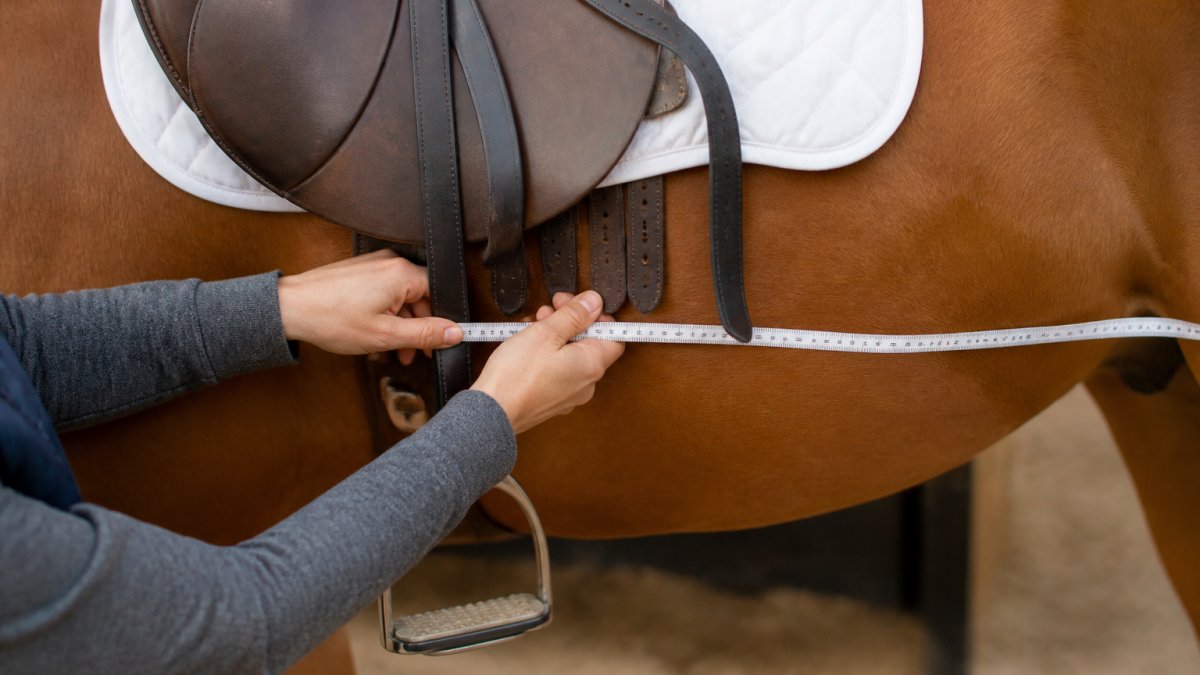
Method 1: Measuring Between the Saddle Billets
This is the most common method. Start with your saddle already on your horse with a saddle pad underneath. The saddle pad setup matters because it affects how the saddle sits.
Take a soft tape measure and locate the middle billet hole on each side of the saddle. Place the tape measure between these two middle holes, running it under the belly of the horse. Pull the tape snug but not tight, just firm enough to take an accurate measurement. Write down the number. This measurement is your starting point for choosing girth length.
Many riders prefer this method because it accounts for the saddle's position and the pad thickness. You're measuring exactly where the girth buckles will sit, which removes guesswork.
Method 2: Measuring Under the Belly
This approach skips the saddle and measures the circumference under your horse's belly directly. Remove the saddle but keep the pad on (if you normally ride with one). Wrap the tape measure around the widest part of the barrel, under the belly, and pull snug. This gives you a baseline measurement of your horse's body.
Girth manufacturers often provide charts that convert belly circumference to girth length. This method works well if you're shopping for a new saddle and girth together, or if you're trying different saddle styles.
The trade-off: this method doesn't account for your specific saddle's billet placement. Two saddles with different designs might require different girth lengths even on the same horse.
Horse Girth Size Chart: Selecting Your Length
Girths come in standard lengths, usually in 2-inch increments. Common sizes range from 30 inches to 56 inches or larger. Your measurement tells you which size keeps the buckles in the right place.
Once you have your measurement, select the girth length that places the buckles in the middle third of the girth strap. If your measurement is 38 inches, a 38-inch girth is your target. If you measured 37 inches, round up to 38 inches rather than down, a slightly longer girth is safer than one that's too short.
The placement of the buckles matters for safety and comfort. Buckles positioned too low sit uncomfortably against your horse's elbow. Buckles too high create pressure and restrict movement. Centered buckles distribute pressure evenly and stay put throughout your ride.
If your measurement falls between two standard sizes, most riders choose the longer option. A 38-inch girth on a horse that measures 37 inches is better than a 36-inch girth that's too short. The extra inch gives you adjustability and prevents the saddle from sliding forward.
How Tight Should a Horse Girth Be: Fit and Security
Your girth should be snug enough to keep the saddle secure but not so tight that it restricts breathing or movement. This balance is critical for your horse's comfort and your safety.
Tighten the girth in stages. Do up the buckles firmly, then walk your horse forward a few steps. Tighten again. Many saddles settle slightly after initial tightening, so a two-stage approach prevents over-tightening. You should be able to slip one or two fingers under the girth when it's properly secure, not loose, but not cutting off circulation.
A girth that's too tight causes your horse to hold tension, hunch the back, and resist forward movement. Over time, excessive tightness leads to girth grooves (permanent indentations in the skin). A girth that's too loose allows the saddle to shift, which is dangerous for both of you.
Where Should a Horse Girth Sit: Correct Position and Clearance
Your girth belongs behind the elbow, not directly under it. Position is just as important as length. A girth that sits too far forward interferes with the shoulder and restricts movement. One positioned too far back won't hold the saddle securely.
The correct position is roughly 4 to 6 inches behind the point of the elbow. When you look at your horse from the side with the saddle on, the girth should sit in the natural groove where the barrel rounds, not pressed against any bony landmarks.
Check clearance by running your hand under the girth. You should feel space between the girth and the elbow. The girth should not create pressure wrinkles in the skin or leave marks after riding. If you see deep grooves or hair rubbed away, the girth is too tight or positioned incorrectly.
The saddle pad affects positioning too. A thicker pad shifts everything back slightly. If you change pad thickness or style, remeasure and recheck girth position because your girth length may need adjustment.
Girth Length for Different Saddle Types
Different saddle styles require different girth lengths because the billet placement varies. Understanding your saddle type helps you choose correctly the first time.
Short Girths for Dressage Saddles
Dressage saddles have billets positioned farther back on the saddle tree compared to jumping saddles. This design moves the girth buckles back, which aligns with dressage riding position and leg placement.
SIE EQUESTRIAN Fleece-Padded Horse Girth →
Short girths typically range from 32 to 42 inches for dressage use. Even a large horse in a dressage saddle might use a girth that seems short compared to jumping tack. The backward billet placement is intentional, it supports the dressage position and keeps the saddle stable.
When shopping for a dressage saddle girth, measure between the dressage saddle's billets specifically. Don't assume your jumping girth length will work. Many riders keep separate girths for different saddle types because the billet spacing differs.
Long Girths for Jumping and All-Purpose Saddles
Jumping saddles and all-purpose saddles have billets positioned more forward than dressage saddles. This forward placement means longer girths are needed to position the buckles correctly.
Long girths typically range from 44 to 56 inches for jumping and all-purpose saddles. The longer length accounts for the forward billet placement. A jumping saddle often requires a girth 4 to 6 inches longer than what you'd use in a dressage saddle on the same horse.
All-purpose saddles fall somewhere in between dressage and jumping designs. Your measurement will determine the right length, but all-purpose girths generally run longer than dressage girths.
At Horsey Horse Store, we carry both styles in our girth selection so you can match your saddle type. The SIE EQUESTRIAN Fleece-Padded Horse Girth is available in Brown, Size 36".

Fit Checks on a Moving Horse and Troubleshooting Unusual Conformation
The real test of girth fit happens when your horse moves. A girth that looks good standing still might shift or pinch once you're riding.
Mount up and walk forward for a few minutes. Feel whether the saddle stays centered or creeps forward. Trot a few strides and check again. A well-fitting girth keeps the saddle stable throughout movement.
Some horses have unusual conformation that makes standard girth sizing tricky. Horses with deep barrels, narrow chests, or prominent ribs need extra attention. Measure carefully and consider a girth with a contoured shape that follows the barrel rather than a straight design.
The SIE EQUESTRIAN Contoured Chafeless English Girth features a shape that conforms to the horse's body, which helps horses with tricky builds stay comfortable. Contoured girths distribute pressure more evenly than straight girths.

If your horse has a very narrow chest or prominent elbows, you might need to go down one size from your measurement to prevent the girth from sitting too far forward.
Common Mistakes When Choosing Girth Length
Most riders make one of three mistakes when selecting girth size.
Mistake 1: Guessing instead of measuring. Many people buy a girth based on what their friend uses or what "sounds about right" for their horse's size. This almost never works.
Mistake 2: Choosing too short. Riders often assume a shorter girth is more secure or looks neater. Too short is actually dangerous.
Mistake 3: Ignoring saddle pad thickness. Many riders measure with one pad, then switch to a thicker pad for winter without remeasuring.
Mistake 4: Assuming one girth fits all saddles. If you own multiple saddles with different designs, you might need different girth lengths. Dressage and jumping saddles almost always require different sizes.
Mistake 5: Not checking fit after purchase. You measured correctly, but the girth still doesn't fit right.
Choosing the right saddle girth length isn't complicated once you know how to measure. Take the time to get it right, and your horse will move better, stay more comfortable, and go happier under saddle.
Frequently Asked Questions
How do I know what size girth I need for my horse?
Measure your horse using one of two methods: between the saddle billets (the most common approach) or under the belly. Place your tape measure horizontally across the widest part of your horse's barrel, measuring from the bottom of the saddle flap on one side to the bottom of the saddle flap on the other. Round up to the nearest whole number, a measurement of 24.5 inches becomes a 26-inch girth. If you fall between standard sizes, choose the larger girth to ensure proper buckle placement and comfort.
Where should a saddle girth sit on a horse?
A girth should sit snugly around the barrel, roughly 4 to 6 inches behind the elbow. When fastened, the buckles should rest on the billet straps without excess leather hanging below them or the girth sitting too far back. The girth must sit far enough back to avoid interfering with the elbow and front legs but not so far back that it slides forward during riding. Check the fit by running your hand under the girth, you should fit one or two fingers comfortably between the girth and your horse's skin.
How tight should a horse girth be?
A girth should be snug enough to keep the saddle secure but not so tight that it restricts breathing or causes discomfort. Tighten the girth in stages: fasten it moderately, mount, and then tighten it further once the saddle has settled. You should be able to fit one to two fingers under the girth when fastened. Overtightening can cause chafing, girthiness, and behavioral problems. Always check the fit after mounting, as the saddle settles and your horse may expand slightly.
What girth length is right for my saddle type?
Dressage saddles typically pair with short girths because the billets sit far back on the saddle. Jumping and all-purpose saddles use longer girths since their billets are positioned more forward. The correct length places the buckles in the middle billet holes. Verify your saddle type and billet placement before ordering.