

Table of Contents
- Feeding and Watering Equipment
- Best Grooming Tools for Daily Use
- Stall Flooring, Mats, and Bedding Essentials
- Essential Barn Cleaning Equipment
- Tack Room Organization and Storage Solutions
- Horse Stable Organization Ideas
- Barn Safety and First Aid Supplies
- Conclusion
Last Updated: August 22, 2026
Feeding and Watering Equipment
Your horses depend on consistent access to fresh water and quality feed, the foundation of daily barn management. Feeding and watering systems deserve your first investment because they directly impact health and reduce daily labor.
The basics are straightforward: grain buckets, hay feeders, and water systems that keep feed clean and accessible. A good grain bucket holds enough for one feeding without tipping, while hay nets slow consumption and reduce waste. The American Association of Equine Practitioners recommends that horses drink 5-10 gallons of water daily, depending on activity level and climate. Automatic systems like The Horse Hydrator Water Filter ($49.99) eliminate manual bucket refilling and encourage consistent water intake.

For hay management, the ASOOLL Corner Hay Feeder Bag ($77.99) fits into stall corners and holds substantial volume while allowing horses to pull hay naturally. Pair it with a Hay Net for Horses Slow Feeder ($35.99) to extend feeding time, particularly useful for horses prone to colic or needing weight management.
Grain storage matters as much as delivery. The Horsemens Pride Horse Feed Tub Large 30 Quarts ($214.99) holds enough for multiple feedings and keeps grain protected from moisture and pests. At Horsey Horse Store, we recommend sizing your buckets and feeders based on your number of horses and feeding frequency.
Best Grooming Tools for Daily Use
Grooming does more than make your horse look polished, it's essential preventive care that catches skin issues, maintains coat health, and strengthens your bond with your horse. The best grooming tools balance durability with efficiency because you'll use them multiple times weekly.
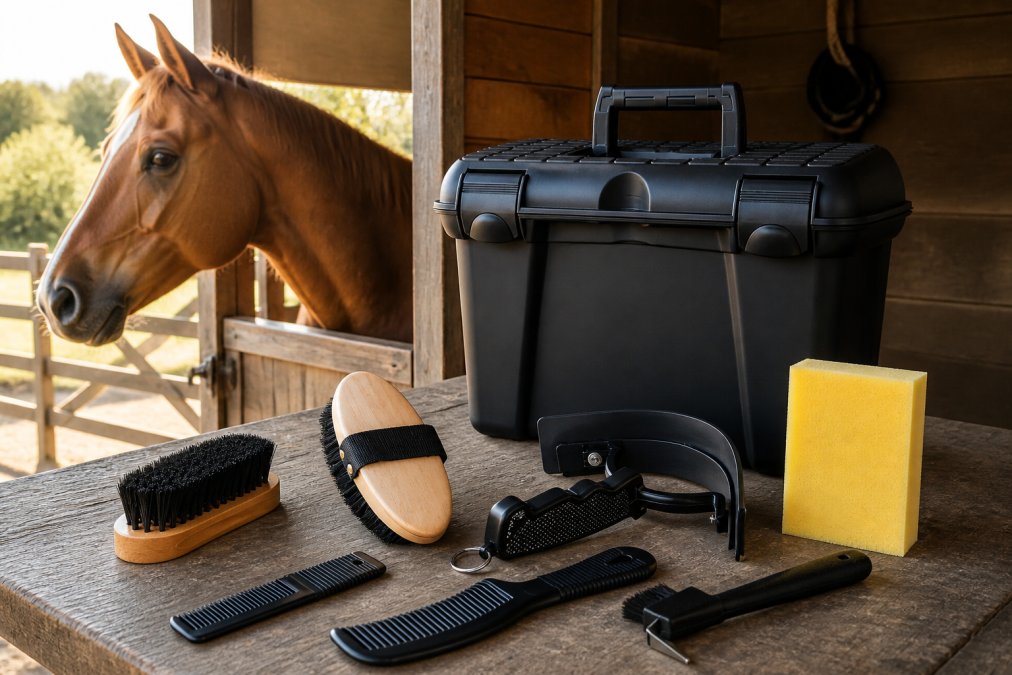
Core Grooming Tools and Their Functions
Start with the foundation: a curry comb for loosening dirt and stimulating circulation, a body brush for finishing and removing loose hair, a mane and tail brush, and a hoof pick. The curry comb, either rubber or metal, works in circular motions to loosen dried mud and dead hair while stimulating blood flow to the skin, allowing you to feel for lumps, heat, or sensitivity that might indicate injury or infection. The Harrison Howard Mane and Tail Brush ($38.99) handles regular coat care and shedding season without tangling. A quality hoof pick with a brush attachment removes packed dirt and allows daily inspection of the sole, frog, and hoof walls, critical for catching thrush, abscesses, or puncture wounds before they become serious.
Seasonal Grooming Adjustments
Your grooming routine changes with the seasons. During spring and fall shedding, a shedding blade or rubber curry becomes essential for removing the thick undercoat efficiently. In winter, horses develop longer coats for insulation; grooming becomes more time-intensive but remains critical for preventing rain rot and mud fever. Summer grooming focuses on fly control and sweat management; removing sweat and dust reduces fly attraction more effectively than spray alone.
Planning your grooming time and tool selection around seasonal coat changes prevents frustration and ensures consistent preventive care.
Organization and Efficiency
The 8-Piece Horse Grooming Box Kit ($237.99) consolidates everything into one organized system. Rather than hunting for tools across your barn, a dedicated grooming box keeps brushes, picks, and supplies in one place.

For deworming, the Ivermectin Horse Dewormer Paste, 2-Pack ($54.99) is a standard part of preventive care administered during grooming sessions. Most horses need deworming 2-4 times annually depending on your region and pasture management (aaep.org).
What to Monitor During Grooming
Use grooming time as a health check. Feel for heat in the legs or joints, which might indicate inflammation. Look for cuts, scratches, or areas where the horse flinches. Check the hooves for thrush (a black, foul-smelling discharge in the frog), abscesses (heat and swelling), or cracks. Examine the skin for rain rot (crusty, scabby patches), fungal infections, or insect bites.
Stall Flooring, Mats, and Bedding Essentials
What your horse stands on directly affects joint stress, hoof health, and daily comfort. Stall flooring and mats are foundational decisions because replacing them later costs significantly more than getting them right initially.
Rubber stall mats provide cushioning that reduces strain on legs and joints, particularly important for older horses or those with joint concerns. They improve drainage and reduce bedding needs. Many home stable owners layer mats under wood shavings or straw, with the mat handling drainage while bedding provides comfort and absorbency.
Wood shavings remain the most common bedding choice because they're absorbent, affordable, and widely available. Avoid black walnut shavings, which are toxic to horses. Pine and aspen shavings work well for most climates. Straw offers a natural alternative but requires more frequent mucking and doesn't absorb as effectively in wet climates.
The 1680D Turnout Blanket with Detachable Neck Cover ($199.99) is essential stall equipment, protecting your horse's coat during turnout and stable time, particularly in variable weather.
Stall ventilation matters more than many barn owners realize. Poor air quality increases respiratory issues and stall odors. Ensure stall guards or half-doors allow airflow without drafts, and muck out daily to control ammonia buildup.
Essential Barn Cleaning Equipment
A clean barn prevents disease, reduces fly populations, and makes daily work manageable. Essential barn cleaning equipment includes a manure fork, wheelbarrow, and storage system because these tools determine whether mucking takes 15 minutes or an hour.
A quality manure fork with a long handle reduces back strain and separates clean bedding from soiled material efficiently. A wheelbarrow sized appropriately for your strength prevents overloading and reduces trips.
Disinfectant is critical in stalls where new horses arrive or illness has occurred. Regular cleaning with water removes most pathogens, but periodic disinfection prevents disease transmission. Many barn managers use diluted bleach solutions or commercial equine disinfectants.
Storage for manure requires planning. Composting manure takes 6-12 months depending on climate and pile management. Many barn owners arrange pickup with local farms that use composted manure for land management.
Tack Room Organization and Storage Solutions
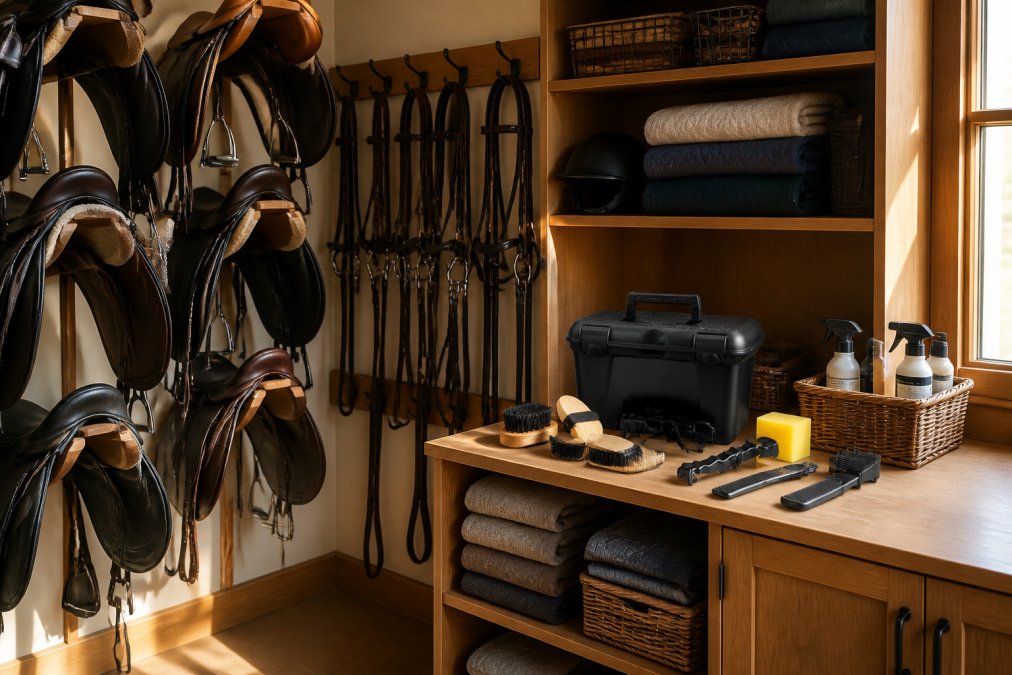
A disorganized tack room wastes time and damages expensive equipment. Proper storage prevents leather deterioration, keeps metal from rusting, and makes finding equipment instant.
Saddle racks keep saddles shaped properly and accessible. Bridle hooks prevent leather from cracking and tangling. The HDYEGIOU Humane Horse Tie Ring Set ($73.99) provides secure tie points for cross-ties and equipment without damaging walls or posts.

Wall-mounted storage maximizes space in smaller barns. Shelving holds blankets, grooming supplies, and first aid kits.
Climate control in your tack room extends equipment life significantly. Leather deteriorates in damp environments, so adequate ventilation prevents mold and mildew. In humid climates, a dehumidifier in the tack room is worth the investment.
Horse Stable Organization Ideas
Organizing your entire stable operation determines whether daily routines run smoothly. Stable organization includes designated areas for feed storage, grooming, tack, first aid, and cleaning equipment.
Separate your feed room from your tack room. Feed attracts rodents and insects; keeping it isolated protects your tack and saddles. Store grain in sealed containers elevated off the ground. Hay should be stored in a dry area away from moisture and direct sunlight, which degrades nutritional content.
Create a grooming station with good lighting and a non-slip surface. Many barn owners set up grooming near water access for easy cleaning. A first aid station visible and accessible saves critical minutes during emergencies. Include bandaging supplies, antiseptics, pain relievers, and emergency contact information.
Cross-ties in a central location allow safe grooming and equipment changes. The Sukh Shatterproof Horse Stall Mirror ($39.99) in stalls provides enrichment and allows you to observe horses for behavioral changes or injuries.
| Organization Area | Primary Purpose | Key Equipment | Maintenance Schedule |
|---|---|---|---|
| Feed Room | Grain and hay storage | Sealed containers, hay racks | Daily inspection, weekly cleaning |
| Grooming Station | Daily coat and hoof care | Brushes, picks, wash supplies | Daily after use, weekly deep clean |
| Tack Room | Equipment storage | Racks, hooks, shelving | Monthly organization, quarterly deep clean |
| First Aid Station | Emergency supplies | Bandages, antiseptics, medications | Quarterly review, replace expired items |
| Cross-Tie Area | Safe grooming space | Tie rings, non-slip surface | Daily sweep, weekly wash |
Barn Safety and First Aid Supplies
Safety in the barn prevents injuries that could sideline you or your horse for weeks. Essential barn supplies for home stables must include a comprehensive first aid kit stocked with specific supplies and the knowledge to use them.
Building a Complete Equine First Aid Kit
A well-stocked first aid kit should include:
Wound Care: Sterile gauze pads (4x4 and 2x2), non-stick pads, elastic bandages (2-inch and 4-inch widths), adhesive tape, and self-adhesive bandages. Wounds are inevitable in horse ownership; having the right materials prevents infection and allows you to stabilize an injury until your veterinarian arrives.
Antiseptics and Disinfectants: Chlorhexidine solution (0.05% concentration for wounds, not full-strength), povidone-iodine scrub for cleaning, and hydrogen peroxide for flushing debris. Many barn owners also stock saline solution for eye irrigation, critical if your horse gets dust or debris in an eye.
Medications: Phenylbutazone (Bute) paste or powder for pain and inflammation, a standard anti-inflammatory for minor injuries and colic. Include antibiotic ointment for minor cuts and a topical fly repellent for wound care during fly season.
Tools: Thermometer (digital preferred for speed), stethoscope to monitor heart rate and gut sounds, tweezers for splinter removal, scissors, and a flashlight for examining eyes and mouths. Normal equine temperature is 99-101.5°F; knowing how to take temperature helps you communicate with your veterinarian during emergencies (aaep.org).
Specialized Items: Epsom salt for soaking hooves (useful for abscesses), cotton swabs, sterile gloves, and a notebook to record what you used and when. Include a blood-stop powder or styptic powder for controlling bleeding from minor cuts.
Structural Barn Safety
Stall guards with proper latches prevent horses from escaping and getting cast. Ensure all hardware is smooth without sharp edges that could cut. Regularly inspect hinges and latches for wear.
Electrical safety in barns requires GFCI (ground fault circuit interrupter) outlets near water sources, these automatically shut off if they detect a ground fault, preventing electrocution. Barn wiring should be protected from rodent damage and moisture with conduit or cable covers. Professional inspection every 2-3 years is worthwhile, particularly if your barn is older than 10 years.
Lighting and Visibility
Lighting prevents accidents during early morning or evening barn work. LED lighting is efficient and long-lasting, consuming less power than incandescent bulbs and generating less heat (reducing fire risk). Ensure main aisles and cross-tie areas are well-lit for safe handling.
Emergency Preparedness
Keep your veterinarian's emergency contact information posted visibly in the barn and on your phone. Know the location of your nearest equine emergency clinic; this matters when minutes count. Fire safety requires a fire extinguisher rated for hay and electrical fires (Class ABC or Class D for electrical), clear exit routes, and a plan for evacuating horses. Store hay away from electrical equipment and heat sources; hay spontaneously combusts if stored with moisture content above 20%.
Post a list of emergency supplies and their locations so anyone handling your horses knows where to find the first aid kit, fire extinguisher, and halters for evacuation.
Frequently Asked Questions
What are the basic supplies needed for a horse barn?
Start with feeding equipment (buckets, hay nets, feeders), grooming tools (brushes, curry combs), stall bedding, cleaning supplies (manure fork, wheelbarrow), tack storage racks, and first aid kits. The 8-Piece Horse Grooming Box Kit ($237.99) covers essential daily grooming needs, while the ASOOLL Corner Hay Feeder Bag ($77.99) and Horsemens Pride Feed Tub ($214.99) handle feeding routines efficiently.
How do I organize my home stable for maximum efficiency?
Dedicate zones for different tasks: a feed room with storage containers and water access, a tack room with saddle racks and bridle hooks, a grooming corner with tool organization, and a cleaning station with equipment storage. Use vertical space with wall-mounted racks and hooks. The HDYEGIOU Humane Horse Tie Ring Set ($73.99) provides secure tying points, while labeled storage bins keep supplies sorted and accessible.
What are the most important grooming tools for daily use?
Essential grooming tools include curry combs for coat care, body brushes, mane and tail brushes, hoof picks, and shedding tools. The Harrison Howard Mane and Tail Brush ($38.99) is designed for regular coat care and bath days. A complete 8-Piece Grooming Box Kit ($237.99) provides everything needed for daily grooming routines, making pre-ride cleanups and maintenance quick and efficient.
How often should barn supplies be replaced or sanitized?
Grooming tools should be cleaned weekly and replaced when bristles wear down or handles crack. Buckets and feeders need daily rinsing and weekly deep cleaning with disinfectant. Stall mats should be inspected monthly for wear and replaced every 3-5 years. Water filters like The Horse Hydrator ($49.99) should be cleaned or replaced per manufacturer guidelines. Bedding gets spot-cleaned daily and fully replaced as needed based on moisture and soiling.
This article was written using GrandRanker