

Table of Contents
- Quick Comparison: Durable Horse Riding Gloves for Daily Use
- What Makes Riding Gloves Last Through Daily Barn Work
- Leather vs. Synthetic: Which Material Wins for Daily Riding
- Riding Glove Sizing Guide: How to Get the Right Fit
- Top Picks: Durable Horse Riding Gloves for Daily Use
- How to Clean Leather Riding Gloves (and Keep Them Soft)
- Repair and Longevity Hacks for Daily Riders
- Seasonal Glove Choices: Summer Mesh vs. Winter Insulation
- Frequently Asked Questions
Last Updated: September 15, 2026
Quick Comparison: Durable Horse Riding Gloves for Daily Use
Durable horse riding gloves for daily use are the piece of tack riders replace most often, and the reason is rarely the leather itself. It's the stitching at the rein contact points, the grip surface, and whether the fit was ever right to begin with. This guide from Horsey Horse Store breaks down what actually determines glove lifespan, compares leather against synthetic options, and lists the specific models worth buying for schooling, stable work, and show days.
Below, we'll cover the material differences that matter, a sizing method you can run with a tape measure in two minutes, and the repair habits that add a full season to a pair of gloves.
| Glove | Price | Material | Best For |
|---|---|---|---|
| FARRIS Flexgrip Riding Gloves | $199.99 | Leather with breathable mesh | All-day schooling and competition |
| Women's Leather Equestrian Gloves | $64.99 | 100% real leather | Daily practice, dressage |
| Men's Leather Equestrian Gloves | $61.99 | 100% real leather | Daily practice, trail riding |
| Guansheng 1075 Breathable Riding Gloves | $41.57 | Breathable synthetic | Hot-weather training |
| Youth All-Weather Equestrian Gloves | $36.99 | All-weather synthetic | Kids riding year-round |
| ChinFun Kids' Insulated Riding Gloves | $66.99 | Leather with insulation | Cold-weather youth riding |
What Makes Riding Gloves Last Through Daily Barn Work
Stitching and grip surface decide glove lifespan, not the leather grade. A glove that fits perfectly but has single-stitch seams at the rein channel will split within a season of daily use.

Reinforced Stitching and Abrasion Resistance
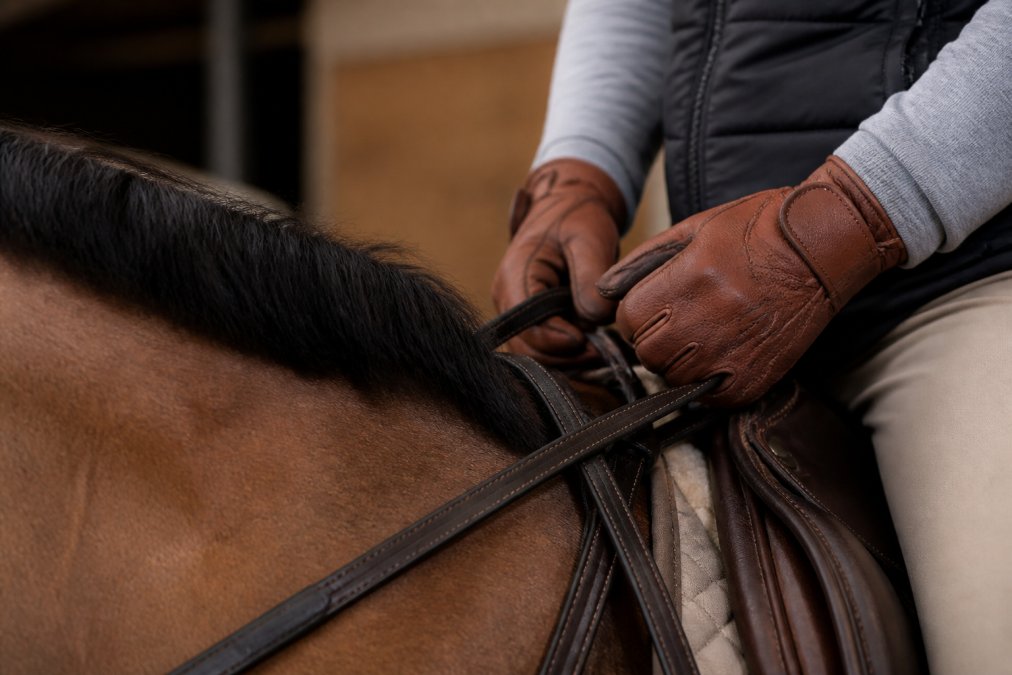
Reinforced stitching at the thumbs and fingers is the single strongest predictor of how long a glove survives daily barn work. Double-stitched seams at the rein contact points resist the constant friction that wears through single-stitch construction, and reinforced thumbs matter most because that's where the rein crosses under load. Look for bar-tacked stress points at the wrist closure too. Abrasion resistance follows the same logic: the palm and inner fingers take the punishment, so any reinforcement there extends usable life significantly.
Grip Performance and Rein Connection
Grip performance depends on surface texture and how the glove conforms to the rein, not on thickness. A thinner, well-fitted palm gives better tactile sensitivity through the rein, which matters more for dressage and show jumping than raw padding. Palm padding helps on long trail rides and during stable work, but too much padding deadens the non-slip connection riders need for precise rein aids. The best daily-use gloves balance a textured palm against enough flexibility that the rein sits in your fingers rather than your fist.
Leather vs. Synthetic: Which Material Wins for Daily Riding
Leather wins on durability and feel; synthetic wins on cost and climate control. But the real question for daily riders isn't which material is "better", it's which material survives your specific riding conditions and rein type. A $60 leather glove that never dries out will fail faster than a $40 synthetic that gets rotated and aired properly.
Deerskin, Real Leather, and Breathable Mesh Compared
Deerskin is the traditional premium choice: soft from the first wear, excellent tactile sensitivity, and naturally abrasion resistant. Real leather gloves, including the Women's Leather Equestrian Gloves and Men's Leather Equestrian Gloves from Horsey Horse Store, offer similar longevity with a break-in period. Synthetic leather and breathable mesh trade some durability for ventilation and lower cost, which makes them a reasonable choice for summer schooling or a spare pair in the tack trunk.


- Leather: best abrasion resistance, molds to your hand, needs conditioning
- Deerskin: softest feel, premium price, less structured
- Synthetic mesh: most breathable, fastest drying, shortest lifespan
How Rein Material Changes Which Glove You Should Buy
Most guides ignore this, but the rein in your hand determines how fast your glove wears out. A glove that grips beautifully on rubber reins can slip on smooth leather reins, and a glove that feels too sticky on web reins may be perfect for laced leather.
- Rubber reins: The textured surface grips almost any palm, but it also abrades glove leather quickly. A smooth leather palm with a reinforced thumb wears longer here than a heavily textured synthetic, which can pill and lose grip within weeks.
- Web reins (cotton or nylon): These are the most abrasive on glove palms because the woven texture acts like sandpaper under tension. Leather gloves with a reinforced palm patch outlast synthetics by a wide margin. If you ride web reins daily, prioritize a glove with a double-layer palm.
- Leather reins: Smooth leather reins demand a glove with tactile sensitivity. A thin, broken-in leather palm gives the best feel, while thick padded synthetics deaden the connection. Deerskin excels here.
- Laced or braided leather reins: The raised lacing provides grip on its own, so you can use a thinner glove. This is where breathable mesh synthetics make sense, the rein does the gripping, and the glove just needs to manage moisture.
A common pattern among daily riders: one pair of reinforced leather gloves for web or rubber reins during schooling, and a lighter synthetic or deerskin pair for leather reins on show days. Matching glove to rein is the single most overlooked factor in how long a pair lasts.
The Maintenance Trade-Off Nobody Mentions
Leather requires conditioning every few weeks and must dry fully between rides. Synthetic gloves can be wiped clean and air-dried in hours. For riders who board at a barn with limited tack room ventilation, synthetic may actually last longer simply because it dries faster and doesn't crack from trapped sweat. The "leather lasts longer" rule only holds when you actually maintain it.
Riding Glove Sizing Guide: How to Get the Right Fit
The correct riding glove fit leaves no slack at the fingertips and no tightness across the knuckles.
Top Picks: Durable Horse Riding Gloves for Daily Use
FARRIS Flexgrip Riding Gloves
Women's and Men's Leather Equestrian Gloves
Guansheng 1075 Breathable Riding Gloves
Youth and Kids' Options for Younger Riders
How to Clean Leather Riding Gloves (and Keep Them Soft)
Repair and Longevity Hacks for Daily Riders
Seasonal Glove Choices: Summer Mesh vs. Winter Insulation
Summer: Managing Sweat Without Losing Grip
Winter: Insulation vs. Rein Feel
The Shoulder-Season Solution: Layering and Rotation
What About Rain?
Frequently Asked Questions
What are the best everyday riding gloves for barn chores?
For barn chores, look for gloves with reinforced stitching, abrasion resistance, and a secure adjustable wrist closure. Leather gloves handle hay and bucket edges well, while breathable mesh options keep hands cool during long stable work sessions. The FARRIS Flexgrip Riding Gloves ($199.99) and Guansheng 1075 Breathable Riding Gloves ($41.57) both suit daily barn work and riding, with reinforced thumbs and fingers to resist wear and tear.
Are leather or synthetic gloves better for daily riding?
Leather gloves offer superior grip performance, tactile sensitivity, and mold to your hand over time, making them a strong choice for rein contact during schooling and show jumping. Synthetic leather and stretch fabric options dry faster and cost less, which suits wet or muddy daily practice. Real leather like the Women's Leather Equestrian Gloves ($64.99) needs occasional conditioning, while synthetics need less care but may wear faster at the fingertips.
How should horse riding gloves fit to prevent blisters?
Gloves should fit snugly with no fabric bunching at the palm or fingers, but leave enough room to flex your hand fully. Measure around your dominant hand's palm circumference and compare to the sizing guide. A hook and loop fastener at the wrist keeps the glove from shifting during rein contact, which reduces friction and blisters. If gloves are too loose, they slide against your skin on every rein adjustment, causing hot spots during long training sessions.
How do I clean leather riding gloves to make them last longer?
Wipe leather gloves with a damp cloth after each ride to remove sweat and dirt, then air dry away from direct heat. Apply a leather conditioner every few weeks to prevent cracking. Never machine wash or soak real leather gloves. For synthetic leather and mesh gloves, hand wash in cool water with mild soap and air dry. Proper care keeps the leather supple and extends the life of your durable horse riding gloves through daily use.
What materials make riding gloves the most durable?
Deerskin and full-grain leather resist abrasion well and develop a custom fit over time, making them a top pick for daily riding. Reinforced stitching at the thumbs and fingers prevents seam blowouts, the most common failure point. Synthetic leather with stretch fabric panels offers good durability at a lower price. Palm padding adds hand protection without sacrificing dexterity, and moisture-wicking linings reduce sweat damage from the inside out.
Finding gloves that survive daily barn work comes down to reinforced construction, correct fit, and consistent care. Horsey Horse Store stocks a full range of durable horse riding gloves for daily use, from the reinforced FARRIS Flexgrip to budget-friendly youth options, all backed by free shipping over $25 and 30-day returns on clean, unused items. Browse the Rider's Corner collection and add a pair to your tack trunk before the next schooling session.