

Last Updated: October 23, 2026
Quick Summary
The best riding tights for women over 40 prioritize comfort, fit, and durability over style, with high-waisted designs, breathable four-way stretch fabric, and full-seat grip that reduces leg fatigue during longer rides. Look for tights that fit snugly at your natural waist without bunching at the knees or ankles, and choose between full-seat options for maximum security or knee-patch styles if you prefer a sleeker fit.
- High-waisted designs work better than low-rise options, which tend to slip during longer rides.
- Full-seat tights reduce leg and lower back fatigue because you're not constantly working to stay in place.
- Most quality riding tights last 2-3 years with proper care using cold water, gentle cycles, and air drying.
- Avoid buying tights one size up for comfort, as loose tights slip during mounting and create friction points that lead to chafing.
- Four-way stretch fabric moves with your body in all directions, which matters more than any single feature when navigating varied terrain.
Table of Contents
- What Matters Most in Riding Tights for Women Over 40
- How Should Riding Tights Fit
- Full-Seat Riding Tights vs. Knee-Patch Options
- Riding Tights vs. Breeches: Which Works Better for Your Needs
- Winter Riding Tights: Warmth and Breathability
- Durability, Care, and Long-Term Value
- Common Mistakes to Avoid When Choosing Riding Tights
- Conclusion
- Frequently Asked Questions
What Matters Most in Riding Tights for Women Over 40
When you're shopping for the best riding tights for women over 40, comfort and fit matter more than flashy features. Your body has changed since your twenties, and the tights that worked then won't work now. At Horsey Horse Store, we understand that mature riders need gear designed for real bodies, not aspirational ones.
The most important factors are support where you need it, breathable fabric that won't overheat, and a waistband that stays put without digging in. Many riders over 40 find that high-waisted designs work better than low-rise options, which tend to slip during longer rides. Grip matters too, but not in the way you might think.
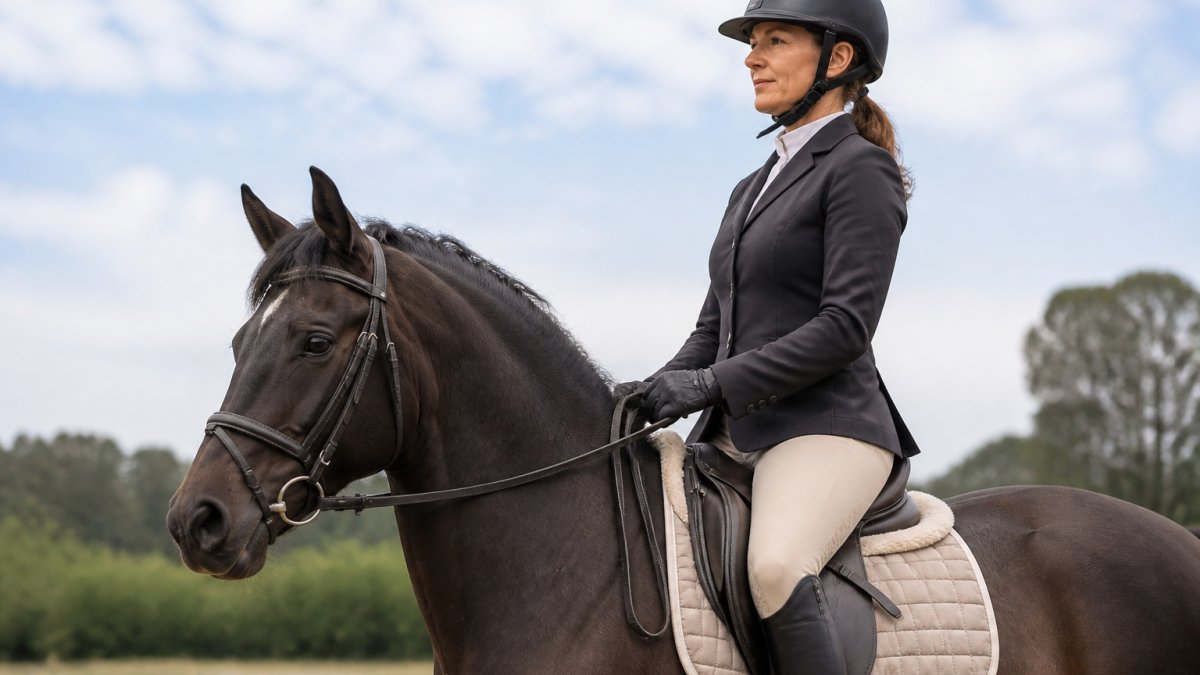
The real difference between good riding tights and great ones comes down to three things: how they fit your proportions, whether the fabric breathes during work, and if they hold up after repeated washing. Most guides skip this part and focus on aesthetics. That's a mistake. A beautiful pair of tights that bunch at the waist or lose elasticity after five washes will frustrate you far more than a practical option that just works.
How Should Riding Tights Fit
Riding tights should fit snugly without restricting movement or cutting off circulation. The waistband should sit at your natural waist, not below your hip bones, and stay there without rolling or sliding down during mounting or riding.
The leg should be smooth from hip to ankle with no excess fabric bunching at the knees or ankles. A common mistake is buying tights that fit your thighs perfectly but leave extra fabric at the lower leg.
For women over 40, pay special attention to how the tights feel when you're mounted. Sit in the saddle before you buy if possible. Does the waistband dig in? Does the seat cup properly without sliding?
American Academy of Orthopaedic Surgeons guidance on proper posture and ergonomics emphasizes that correct positioning reduces strain on joints and muscles during repetitive activities, and riding is no exception.
You can find Equestrian Long Boots For Riders that work with your tights once you've settled on the right fit. Proper footwear completes the system and ensures your tights stay in place without shifting.
Full-Seat Riding Tights vs. Knee-Patch Options
Full-seat tights cover your entire seat and inner thigh with reinforced fabric, typically silicone grip or suede-like material. Knee-patch tights have grip only from the knee down. The choice depends on your riding style, confidence level, and what feels secure to you.
Full-seat tights offer more surface contact with the saddle, which many riders over 40 prefer. The extra grip reduces the need to squeeze with your legs to stay in place, which means less fatigue and better stability over varied terrain.
Knee-patch tights work well if you have an established, independent leg position and prefer a sleeker silhouette. They offer grip where it matters most for steering and security, while keeping the seat and thigh area lighter and more breathable.
The real difference shows up during transitions. Neither is "better", it's about what your body and riding style need. Are Silicone Grip Breeches Worth It? A Rider's Guide explores grip options in more detail if you want to understand the mechanics further.
Riding Tights vs. Breeches: Which Works Better for Your Needs
Riding tights extend all the way to your ankle, while breeches end at the knee or calf. For women over 40, tights offer distinct advantages: full leg coverage means better protection from chafing, more warmth in cool weather, and a unified fit that doesn't rely on socks to bridge the gap between tights and boots.
Breeches can work well if you prefer a looser fit through the hip and thigh, or if you ride in very warm conditions where full leg coverage feels too heavy. However, most mature riders find that the seam where breeches meet socks creates a pressure point that becomes uncomfortable on longer rides.
Tights also simplify your outfit. You pull them on, and you're done. No need to coordinate socks or worry about gaps. This matters when you're managing a busy barn and time is limited.
For everyday schooling and trail riding, tights are the practical choice for women over 40. They're easier to care for, more comfortable over extended wear, and they work with any boot style without adjustment.
FitsT4 Sports Women's Full Seat Riding Tights →
Winter Riding Tights: Warmth and Breathability
Winter riding tights need to balance two competing demands: keeping you warm without overheating during active riding. This is where fabric choice becomes critical.
Fleece-lined tights trap heat but can feel clammy if you're working hard. Thermal fabrics with moisture-wicking properties move sweat away from your skin, so you stay warm without that damp, cold feeling when you stop riding. Look for tights labeled as "four-way stretch" with thermal or quick-dry technology.
Many riders over 40 find that layering works better than heavy fleece. A base layer under regular tights gives you adjustable warmth without the bulk. This approach also means you're not trapped in one weight, you can adapt as your ride progresses and your body temperature changes.
Winter tights should have reinforced seams and quality stitching, especially in the seat and inner thigh where most wear occurs. Check the inseam carefully before buying. A weak seam will fail within a few seasons, and winter riding puts extra stress on fabric because of the repeated mounting and dismounting in cold conditions.
Durability, Care, and Long-Term Value
The best riding tights for women over 40 are the ones that last. Durability matters because replacing tights frequently gets expensive, and you want gear you can trust through multiple seasons.
Most quality riding tights last 2-3 years with proper care. Wash them in cold water on a gentle cycle, and air dry them. Heat from the dryer breaks down elastic fibers and shortens the life of the fabric. If you ride multiple times a week, consider rotating between two pairs so each gets more rest between washes.
Silicone grip areas need special attention. Don't use fabric softener, which leaves a coating that reduces grip over time. Avoid bleach and harsh detergents. A simple cold wash with regular detergent is all you need. Many riders find that hand-washing their tights extends the life by a season or more.
Pockets are worth considering for durability too. Tights with reinforced side pockets distribute stress more evenly than those without, which means seams last longer. Pocket construction also tells you something about overall quality, if the pockets are poorly stitched, the rest of the tights probably are too.
Common Mistakes to Avoid When Choosing Riding Tights
The biggest mistake is prioritizing style over function. A beautiful pair of tights that don't fit your body or move the way you need them to will sit in your tack room unused. Fit and comfort come first. Aesthetics second.
Another common error is buying tights based on sizing charts alone without considering your body shape. Women over 40 often have different proportions than younger riders, a longer torso, fuller hips, or a different rise preference.
Don't assume that expensive tights are always better. A moderately priced pair from a brand that understands mature riders' needs will outperform an expensive pair designed for a different body type.
Ignoring the fabric content is another trap. Polyester blends breathe differently than nylon blends, and the percentage of spandex affects how much stretch you get. Check the tag and understand what you're buying.
Finally, don't buy tights that are "close enough" in fit. That half-inch of extra waist room or the slightly-too-long inseam will bother you every single ride. Take the time to find the right fit.
| Mistake | What Happens | How to Avoid It |
|---|---|---|
| Buying based on style alone | Tights sit unused; wasted money | Prioritize fit and function first |
| Ignoring body shape differences | Poor fit; discomfort during rides | Order multiple sizes; use 30-day returns |
| Assuming expensive = better | Wrong tights for your needs | Read reviews from mature riders |
| Choosing wrong fabric blend | Poor breathability; quick wear | Check tag; understand fabric content |
| Accepting "close enough" fit | Constant discomfort; distraction | Take time to find right fit |
Conclusion
Finding the best riding tights for women over 40 means prioritizing fit, function, and durability over trends. Your body has earned the right to gear that works with you, not against you. At Horsey Horse Store, we stock riding tights designed for real riders with real bodies, including options like the FitsT4 Sports Women's Full Seat Riding Tights that deliver full-seat grip and a high waistband that stays in place. With free shipping over $25 and 30-day returns, you can find the right fit without risk. Start with tights that prioritize comfort and security in the saddle, everything else follows from there.

Frequently Asked Questions
What features should women over 40 look for in riding tights?
Women over 40 benefit from riding tights with high-waisted designs for waistband security, fabric for freedom of movement, and silicone grip panels for saddle stability. Look for moisture-management fabrics that keep you dry during longer rides, and consider options with pockets for practical storage. Durability matters more as you invest in gear you'll wear frequently, so prioritize quality construction over trendy designs.
How should riding tights fit around the waist and legs?
Riding tights should sit snugly at the waist without rolling or bunching, with the waistband positioned at your natural waist for security throughout your ride. The leg should be fitted but not restrictive, allowing full freedom of movement in the saddle. Grip panels should align with your thighs and seat without gaps or excess fabric. If you're between sizes, prioritize a secure waistband over a slightly looser leg, since waistband slippage creates discomfort and distraction while riding.
Are full-seat riding tights better than knee-patch options?
Full-seat tights offer continuous silicone grip from waist to knee, providing maximum saddle stability and slip prevention. Knee-patch tights have grip only at the knee and inner thigh, offering more breathability and a lighter feel. For everyday schooling and trail riding, full-seat options are preferred by riders seeking maximum contact and confidence. Choose knee-patch if you prioritize breathability over maximum grip, or if you ride in warm weather and value the reduced fabric coverage.
What's the difference between riding tights and breeches for everyday riding?
Riding tights are full-length leggings with grip panels, offering continuous leg coverage and slip prevention. Breeches end at the knee or calf and are typically paired with tall boots or half-chaps. Tights provide more warmth and coverage, making them ideal for cooler months and trail riding. Breeches offer more styling options and easier boot transitions. For everyday barn use and schooling, many riders prefer tights for their comfort, simplicity, and all-season versatility.
