

Table of Contents
- What to Look for in a Fly Mask for Allergic Horses
- Top Fly Masks and Face Protection Options
- Signs of Fly Allergy in Horses
- How to Fit a Horse Fly Mask
- How to Clean Horse Fly Masks
- Troubleshooting Mask Rubbing and Comfort Issues
- Frequently Asked Questions
Last Updated: September 19, 2026
What to Look for in a Fly Mask for Allergic Horses
Choosing the best fly masks for horses with allergies comes down to four things: UV-blocking mesh, real eye clearance, a fit that stays put without rubbing, and a face fabric that does not feed the allergic cycle.
Allergy-Specific Material Science
Most fly-mask guides stop at "soft mesh." That is not enough for a horse with insect bite hypersensitivity or recurrent uveitis, where the skin barrier is already compromised. The material touching the face separates a calming mask from one that keeps the vet on speed dial.
Three material families dominate the market:
- Polyester mesh (often 200-400 denier). Holds shape, resists UV, takes a tight weave. The trade-off: cheap bindings and edge tape can be stiff, and stiff edges are the number-one cause of rub sores along the cheek and brow. Look for soft-bound or rolled edges, not flat heat-sealed tape.
- Nylon mesh. Lighter and softer than polyester at the same denier, so it suits horses that rub. It dries faster but degrades faster under UV, so expect a shorter service life in full sun.
- Spandex or Lycra blends. Used in stretch panels and ear bonnets for a snug, low-pressure fit over the poll and ears, but they offer little UV block and almost no insect barrier. Best as a comfort layer, not a primary allergy barrier.
Two more details worth checking:
- Dye and finish. Some horses react to residual dye or sizing agents. A lukewarm rinse before first use removes most surface residue.
- Antimicrobial or silver-ion treatments. Marketed for odor and bacterial control, they help with moisture management but are no substitute for washing, and some horses react to the treatment itself. If your horse has reacted to treated wraps or blankets, choose untreated mesh.
UV Protection and Mesh Density
UV protection and mesh density work together: a tighter weave blocks more sunlight and smaller insects but cuts airflow.
Eye Clearance and Jowl Coverage
Eye clearance is the gap between the mesh and the horse's eye, enough space that the fabric never touches the eyelashes, even when the horse grazes or rolls. Jowl coverage protects the lower jaw and cheek, where allergic horses often develop dermatitis.
Top Fly Masks and Face Protection Options
The best fly masks for horses with allergies combine eye clearance, breathable mesh, and a secure closure. Below are Horsey Horse Store options, from full face covers to ear bonnets.
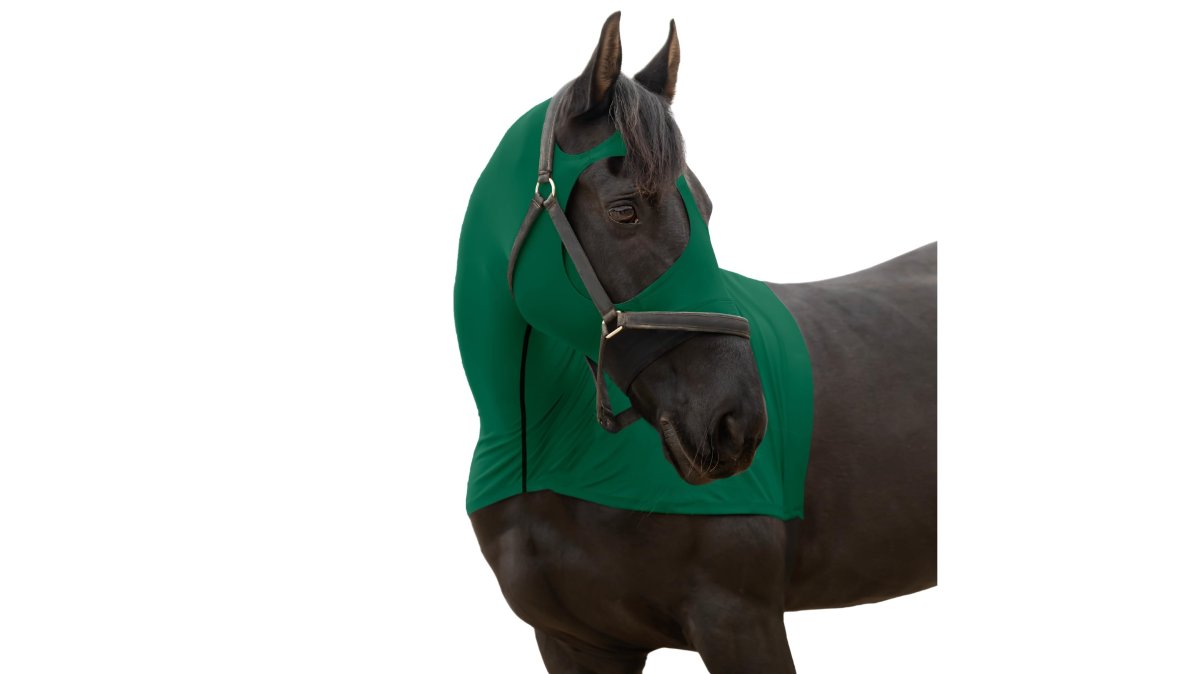
| Product | Price | Coverage | Best For |
|---|---|---|---|
| Horse Face Mosquito Protection Cover | $29.01 | Face and muzzle | Budget-friendly daily turnout |
| RESISTANCE Horse Hood with Face Cover | $80.99 | Full head and neck | Full-body allergy protection |
| RESISTANCE Full-Zipper Horse Hood with Face | $59.99 | Head, face, and neck | Easy on-and-off for sensitive horses |
| TGW RIDING Horse Fly Bonnet | $41.99 | Ears and poll | Ridden work and schooling |
| Crochet Horse Ear Bonnet Fly Veil | $35.99 | Ears | Light ear protection under a bridle |
| Crochet Horse Ear Bonnet | $57.12 | Ears | Hand-crocheted ear coverage |
Horse Face Mosquito Protection Cover
Our top pick for everyday turnout is the Horse Face Mosquito Protection Cover at $29.01. It covers the face and muzzle, which matters for horses whose allergies flare around the nose and eyes. It comes in five colors: Pink, Blue, Black, Purple, and Grey. Compare the product photos, shape, and color before ordering. Compare the product photos, shape, and color before ordering.


RESISTANCE Horse Hood with Face Cover
If your horse needs more than a face mask, the RESISTANCE Horse Hood with Face Cover ($80.99) covers the head and neck, helping horses with dermatitis along the neck and shoulders where Culicoides midges bite.
RESISTANCE Full-Zipper Horse Hood with Face
The RESISTANCE Full-Zipper Horse Hood with Face ($59.99) solves one real problem: getting a hood on and off a sensitive horse. The full zipper means no pulling fabric over the ears and eyes, which many allergic horses hate.
TGW RIDING Horse Fly Bonnet
For ridden work, the TGW RIDING Horse Fly Bonnet ($41.99) covers the ears and poll without blocking vision. It comes in White in Pony size.
Crochet Horse Ear Bonnet Fly Veil
The Crochet Horse Ear Bonnet Fly Veil ($35.99) is a lightweight ear cover that fits under a bridle. It comes in Coffee in Large/Full.
Crochet Horse Ear Bonnet
The Crochet Horse Ear Bonnet ($57.12) is hand-crocheted with elastic for a snug fit over the ears. It suits horses that only need ear protection.
Signs of Fly Allergy in Horses
Fly allergy in horses shows up as intense itching, swelling around the eyes, and clear or watery discharge, most common in summer when flies and midges are active.
Watch for these signs:
- Constant head shaking or rubbing the face on fences and legs
- Swollen, teary eyes or crusty discharge
- Raised bumps or scabs along the neck, jaw, and belly
- Hair loss from scratching
- Restlessness during turnout
How to Fit a Horse Fly Mask
Fitting a fly mask correctly takes about five minutes and prevents most rubbing problems. The goal: a snug fit with clear space over the eyes.
Follow these steps:
- Measure your horse's head from poll to muzzle and around the jaw.
- Match those measurements to the size chart before ordering.
- Slide the mask on, keeping the forelock clear of the eyes.
- Check that the mesh stands away from both eyes.
- Adjust the hook and loop closure so it's snug but not tight.
- Watch your horse walk and graze to confirm the mask stays in place.
How to Clean Horse Fly Masks
Cleaning a fly mask every one to two weeks keeps mesh clear and reduces skin irritation. Dirt and pollen trapped in the fabric sit against the face all day.
Here's the routine:
- Rinse in lukewarm water after every few wears.
- Use mild soap, not harsh detergent.
- Work dirt out of the mesh with your fingers.
- Rinse until the water runs clear.
- Air-dry in shade, never direct sun.
- Check the hook and loop closure for lint and hair.
Troubleshooting Mask Rubbing and Comfort Issues
Mask rubbing usually comes from one of four causes: the wrong size, a stiff mesh, a closure that's too tight, or a mask asked to do a job it was never designed for. Fix the cause, not the symptom.
Work through this checklist:
- If the mask rubs the eyelid, eye clearance is too small. Try a larger size or a double-darted design.
- If hair is missing along the jaw, the closure is too tight. Loosen it one notch.
- If the mask slips, the size is too big. Size down or switch to a stretchier fit.
- If skin is irritated under the mesh, the fabric may be too stiff. Choose soft mesh with better breathability.
- If the rub appears only in hot weather, trapped heat and sweat may be the cause. A lighter denier or more open weave can solve it.
- If the rub appears only overnight, check whether the mask stays wet against the skin. A damp mask is a chafing mask.
Adjusting for Horses With Sensitive Skin
Standard masks are built for the average head. Horses with chronic dermatitis, thin skin, or a history of rub sores need a different approach:
- Pad the pressure points, not the whole mask. A small fleece or moleskin patch on the browband and cheek edges spreads pressure without adding bulk that shifts the fit.
- Rotate two masks. Alternating every few days lets one air out and dry completely, reducing the moisture that drives rubs.
- Trim the forelock, don't trap it. Hair caught under the browband creates a lump that presses into the skin.
- Re-check fit after every wash. Mesh relaxes and bindings shrink, so a mask that fit in May may rub by August.
- Watch the ears. Ear covers that are too tight cause head shaking that looks like a fly problem but is a fit problem.
Pairing the Mask With the Rest of the Allergy Plan
A fly mask is one tool, not the whole toolkit. For horses with insect bite hypersensitivity, recurrent uveitis, or seasonal eye allergies, it works best as part of a layered plan:
- Feed and supplements. Omega-3 fatty acids and other nutritional support are commonly used for skin barrier health. Ask your veterinarian before adding anything, especially if your horse is on other medication.
- Topical eye care. Apply prescribed eye drops or ointment before putting the mask on, and keep a clean spare on hand so medication residue does not build up in the fabric.
- Fly control. A mask does not replace fly spray, fans, or manure management. Reducing the midge population in the barn reduces the allergic load the mask has to handle.
- Veterinary follow-up. Chronic eye allergies can progress. A mask that manages symptoms today may need pairing with veterinary treatment if the horse starts squinting, holding the eye closed, or showing cloudiness.
Frequently Asked Questions
What features should I look for in a fly mask for a horse with allergies?
Prioritize UV protection, high mesh density, and soft materials that won't rub. Look for masks with eye clearance to prevent contact with the cornea and jowl coverage for pollen filtration. Breakaway safety closures and adjustable fit are also important. For horses with seasonal allergies, a mask with nose net capability helps filter pollen and midges. Check that the material is breathable and abrasion-resistant to avoid dermatitis during long turnout.
How do I know if my horse is having an allergic reaction to flies?
Watch for eye discharge, conjunctivitis, swelling around the eyes, and head shaking. Photosensitivity and dermatitis along the face and ears are common. Your horse may rub its face excessively or show signs of fly-borne irritation. Culicoides midges often trigger seasonal allergies. If symptoms persist, consult your veterinarian for equine ophthalmology evaluation. A fly mask with pollen filtration and UV protection can reduce exposure.
Are fly masks with ears better for horses with allergies?
Yes, masks with ear coverage protect against midges and culicoides that gather around the ears. Ear bonnets and full-coverage hoods provide an insect barrier for sensitive skin. For horses with eye allergies, choose a mask with ear clearance and soft mesh to prevent rubbing. Options like the TGW RIDING Horse Fly Bonnet offer ear protection with visibility. Combine with a fly repellent for best results.
How often should I wash my horse's fly mask to prevent skin irritation?
Wash your fly mask every 1-2 weeks during peak fly season. Dirt, sweat, and fly debris build up in the mesh and can cause abrasion or dermatitis. Use a mild horse-safe detergent and air dry completely before refitting. Check hook and loop closures for wear. A clean mask maintains airflow and pollen filtration. If your horse has seasonal allergies, clean more frequently to remove pollen.
Can a fly mask help with equine uveitis or eye allergies?
Yes, a fly mask with UV protection reduces sunlight exposure, which can trigger uveitis flare-ups. Masks also block fly-borne irritation that worsens eye allergies. Look for masks with eye clearance and dense mesh to filter pollen and insects. Veterinary recommendation often includes fly masks for horses with recurrent uveitis. Pair with fly repellent and avoid turnout during peak fly hours. Always follow your vet's treatment plan.
Allergic horses need gear that works as hard as you do, and the wrong mask makes a long summer worse. Horsey Horse Store stocks practical fly protection built for daily barn routines, from the $29.01 Horse Face Mosquito Protection Cover to full hoods with face covers. Every order ships free over $25, comes with 30-day returns on clean, unused items, and checks out through secure payment. Get started with Horsey Horse Store and keep your horse comfortable through allergy season.