

Last Updated: October 27, 2026
Quick Summary
The best equestrian helmets daily schooling balance protection, comfort, and durability for frequent riders. Options range from the TuffRider Starter at $49.99 for budget-conscious beginners to the IRH IR4G at $399.99 for premium daily protection, with mid-range choices like the Troxel Sport 2.0 at $78.99 offering solid value for barn use.
- Helmets reduce head injury risk by up to 70% in equestrian activities according to safety guidelines.
- ASTM and SEI certifications indicate a helmet has been tested against real impact scenarios.
- Replace your helmet after five years of regular use due to UV exposure and moisture breakdown.
- A $120 helmet used over three years costs roughly $0.15 per ride for frequent schoolers.
- Fit varies by manufacturer, so try multiple brands if you have a particularly wide or narrow head.
Table of Contents
- Why Choosing the Right Equestrian Helmet for Daily Schooling Matters
- How Equestrian Helmet Safety Ratings and Certifications Protect You
- How to Fit a Riding Helmet Correctly for Maximum Protection
-
Top Equestrian Helmets for Daily Schooling: Options at Every Price Point
- Budget-Friendly Choice: TuffRider Starter Riding Helmet
- Mid-Range Value: Troxel Sport 2.0 Riding Helmet
- Best Riding Helmet for Beginners: IRH Equi-Pro Riding Helmet
- Comfort-Focused Daily Rider: Ovation Metallic Schooler Riding Helmet
- All-Weather Option: OutdoorMaster Equestrian Helmet with Sun Visor
- Premium Protection: IRH IR4G Riding Helmet
- When to Replace Your Riding Helmet After a Fall or Impact
- Helmet Care, Durability, and Cost Per Ride for Schooling
- Selecting Your Helmet: Fit, Head Shape, and Long-Term Comfort
- Shop Your Best Equestrian Helmet Today
- Frequently Asked Questions
Why Choosing the Right Equestrian Helmet for Daily Schooling Matters
Daily schooling means repetition, you're in the saddle multiple times per week, sometimes several times per day. Equestrian helmets daily schooling aren't just about safety; they're about comfort, durability, and confidence in your choice.
The stakes are straightforward. Head injuries are serious. According to the American Academy of Pediatrics safety guidelines, helmets reduce the risk of head injury by up to 70% in equestrian activities. That's not a marketing claim, that's why you wear one. But protection only works if the helmet stays on your head, fits correctly, and hasn't been damaged. Below, we'll show you how to evaluate equestrian helmets for daily schooling and compare options at different price points.
How Equestrian Helmet Safety Ratings and Certifications Protect You
A helmet's safety rating tells you it has been tested against real impact scenarios. Two certifications matter most: ASTM (American Society for Testing and Materials) and SEI (Safety Equipment Institute).
How to Fit a Riding Helmet Correctly for Maximum Protection
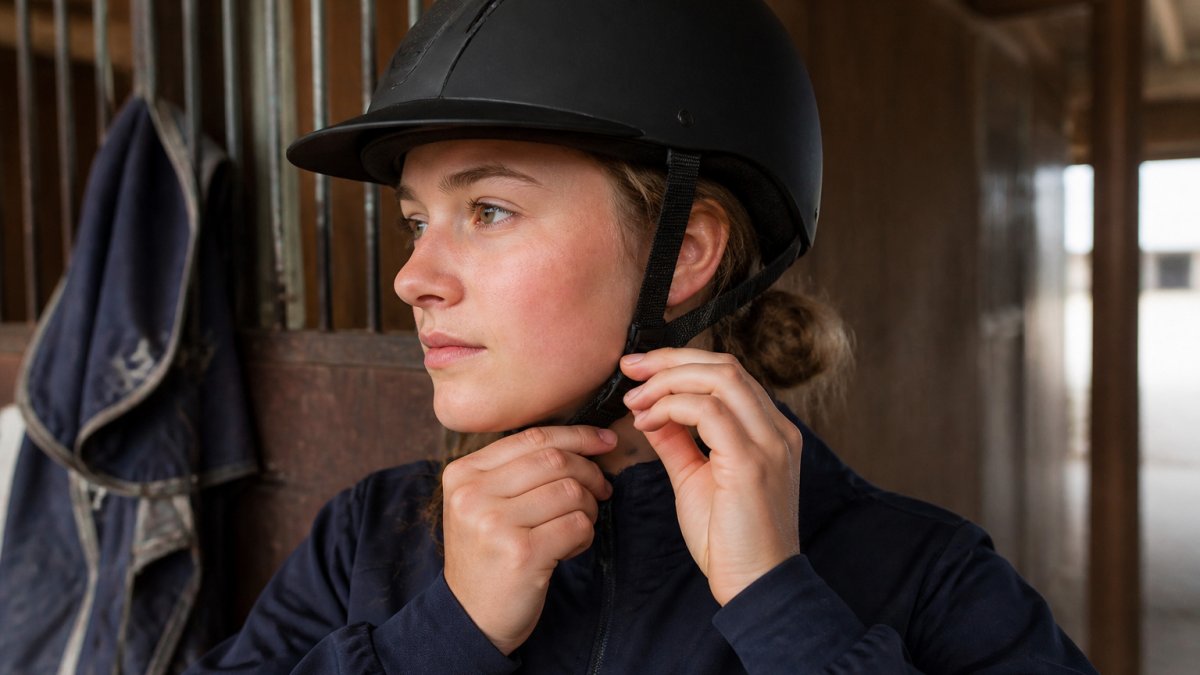
Hair, helmet liners, and head shape all affect fit. Thick hair adds effective helmet size, and thin liners change it slightly. If you have a particularly wide or narrow head, try multiple brands, fit varies by manufacturer.
Top Equestrian Helmets for Daily Schooling: Options at Every Price Point
| Helmet | Price | Best For | Key Feature |
|---|---|---|---|
| TuffRider Starter | $49.99 | Budget-conscious beginners | Entry-level protection, lightweight |
| OutdoorMaster with Sun Visor | $69.99 | All-weather schooling | Built-in sun visor, ventilation |
| Troxel Sport 2.0 | $78.99 | Daily barn use | Balanced comfort and protection |
| IRH Equi-Pro | $117.99 | Beginner riders | Ergonomic design, washable liner |
| Ovation Metallic Schooler | $162.99 | Comfort-focused riders | Lightweight, low-profile design |
| IRH IR4G | $399.99 | Premium daily protection | Advanced safety features, durability |
Budget-Friendly Choice: TuffRider Starter Riding Helmet
The TuffRider Starter Riding Helmet is listed at $49.99.
Mid-Range Value: Troxel Sport 2.0 Riding Helmet
The Troxel Sport 2.0 Riding Helmet is listed at $78.99.

Best Riding Helmet for Beginners: IRH Equi-Pro Riding Helmet
The IRH Equi-Pro Riding Helmet is listed at $117.99. The available option is Matte Black, X Small (6 1/8 - 6 3/8).

Comfort-Focused Daily Rider: Ovation Metallic Schooler Riding Helmet
The Ovation Metallic Schooler Riding Helmet is listed at $162.99. The available option is Teal, Large/X-Large.

All-Weather Option: OutdoorMaster Equestrian Helmet with Sun Visor
The OutdoorMaster Equestrian Helmet with Sun Visor is listed at $69.99. The available option is Matte Blue, Small: 50-55cm | 6 1/4 - 6 7/8.
Troxel Sport 2.0 Riding Helmet →
Premium Protection: IRH IR4G Riding Helmet
The IRH IR4G Riding Helmet is listed at $399.99. The available option is Matte Black w/ Matte Black Vent, X-Large.
When to Replace Your Riding Helmet After a Fall or Impact
Mark the date you purchase your helmet. Even without impacts, replace it after five years of regular use, UV exposure weakens the shell, and sweat and moisture accelerate breakdown.
Helmet Care, Durability, and Cost Per Ride for Schooling
Cost per ride matters for daily schooling. If you school five times per week, a $120 helmet used over three years costs roughly $0.15 per ride; a $400 helmet used over five years costs roughly $0.31 per ride. For frequent riders, durability and comfort often justify the investment.
Selecting Your Helmet: Fit, Head Shape, and Long-Term Comfort
Consider your riding schedule: if you school daily, prioritize comfort and ventilation; if once a week, a simpler helmet works fine. Match the helmet to your actual use.
Shop Your Best Equestrian Helmet Today
Horsey Horse Store offers the TuffRider Starter Riding Helmet for $49.99 and the IRH IR4G Riding Helmet for $399.99. Free shipping is available on orders over $25, and clean, unused items may be returned within 30 days.
Your head is worth protecting. Find the helmet that fits your head, matches your riding schedule, and gives you confidence every time you ride.
Frequently Asked Questions
What should I look for in an equestrian helmet for daily schooling?
Look for ASTM or SEI certification to ensure the helmet meets safety standards. Check that it fits snugly without gaps, with the chin strap secure. For daily riding, prioritize comfort features like ventilation and adjustable fit systems, since you'll wear it frequently. Consider the helmet's weight and padding thickness for long schooling sessions. A helmet with a low profile is practical for everyday barn work, while one with a sun visor helps during outdoor trail riding.
How often should you replace an equestrian helmet?
Replace your helmet immediately after any significant fall or impact to the head, even if it looks undamaged. ASTM standards recommend replacing helmets every 3-5 years of regular use, as the protective liner degrades over time. If you school daily, inspect your helmet regularly for cracks, dents, or compressed padding. If the helmet has been involved in a fall or shows visible damage, do not reuse it, a compromised helmet cannot protect you properly in another impact.
What is the best riding helmet for beginners?
The IRH Equi-Pro Riding Helmet is listed at $117.99, and the TuffRider Starter Riding Helmet is listed at $49.99.
How should an equestrian helmet fit?
A proper fit is critical for safety. The helmet should sit level on your head, about one inch above your eyebrows, with no gaps between the helmet and your head. The chin strap must be snug enough that you cannot fit more than one finger under it when fastened. The helmet should not move when you shake your head. If you wear your hair up, test the fit with your hair in its typical riding style. Many riders find that trying on helmets in person helps confirm proper fit, though online retailers like Horsey Horse Store offer 30-day returns if the fit isn't right.
The difference between a good schooling season and a frustrating one often comes down to gear that works for you. Start with the right helmet.
