

Last Updated: October 29, 2026
Quick Summary
Leather is not the only choice for horse halters. Nylon resists moisture and costs less, rope halters give training control, and breakaway designs reduce injury risk. Coated synthetics like Biothane wipe clean and suit muddy turnout.
- Nylon tolerates wet conditions and frequent washing, with lower upfront cost than leather.
- A rope halter applies pressure across the nose and poll for clear groundwork communication.
- Breakaway halters release at a predetermined point, so inspect the fuse or link before every use.
- Biothane resists water and manure and wipes clean, but it is heavier and needs a precise fit.
- Fleece linings spread pressure on sensitive skin but trap dirt and need frequent washing.
Table of Contents
- Why Riders Look Beyond Traditional Leather Halters
- Leather vs Nylon Horse Halter: Durability and Cost
- Rope Halter for Horses: Training Control and Feel
- Breakaway Horse Halter Designs and Safety Mechanisms
- Synthetic, Biothane and Fleece Options: Cleaning, Comfort and Sensitive Skin
- How to Choose a Horse Halter for Daily Use or Stable Use
- Choosing Your Next Halter From the Horsey Horse Store Range
- Frequently Asked Questions
Why Riders Look Beyond Traditional Leather Halters
Many riders reach for a horse halters without thinking about the material. For generations, leather has been the default. It looks traditional, it breaks in over time, and it suits a lot of horses. Yet a growing number of owners now look at nylon, synthetic blends, rope and fleece-lined designs before they buy.
Leather is not the wrong choice. It is simply one option among several, and each carries trade-offs in durability, cost, comfort and upkeep. Those trade-offs matter more when a halter gets used every day in a stable, tied out for grooming, or taken on a trailer. This guide compares the main alternatives so you can match a halter to the work you actually do.
Leather vs Nylon Horse Halter: Durability and Cost
Nylon is a common alternative to leather. It resists moisture and is generally easier on the budget. The EU Equestrian Braided Nylon Rope Halter, priced at $58.99, is a braided nylon option (Purple).
Pros of nylon:
- Tolerates wet conditions and frequent washing
- Lower upfront cost
- Less upkeep than leather
Cons of nylon:
- Can feel stiffer against sensitive skin
- Less traditional appearance for show settings
Rope Halter for Horses: Training Control and Feel
A rope halter applies pressure across the nose and poll when the handler pulls on the lead. The EU Equestrian Braided Nylon Rope Halter is a braided nylon rope halter option for riders who want that level of control during groundwork and schooling.
Pros of a rope halter:
- Clear communication during leading and ground training
- Lightweight and simple to store
Cons of a rope halter:
- Not designed for tying up a horse unattended
- Requires correct fitting so the knot sits properly
Breakaway Horse Halter Designs and Safety Mechanisms
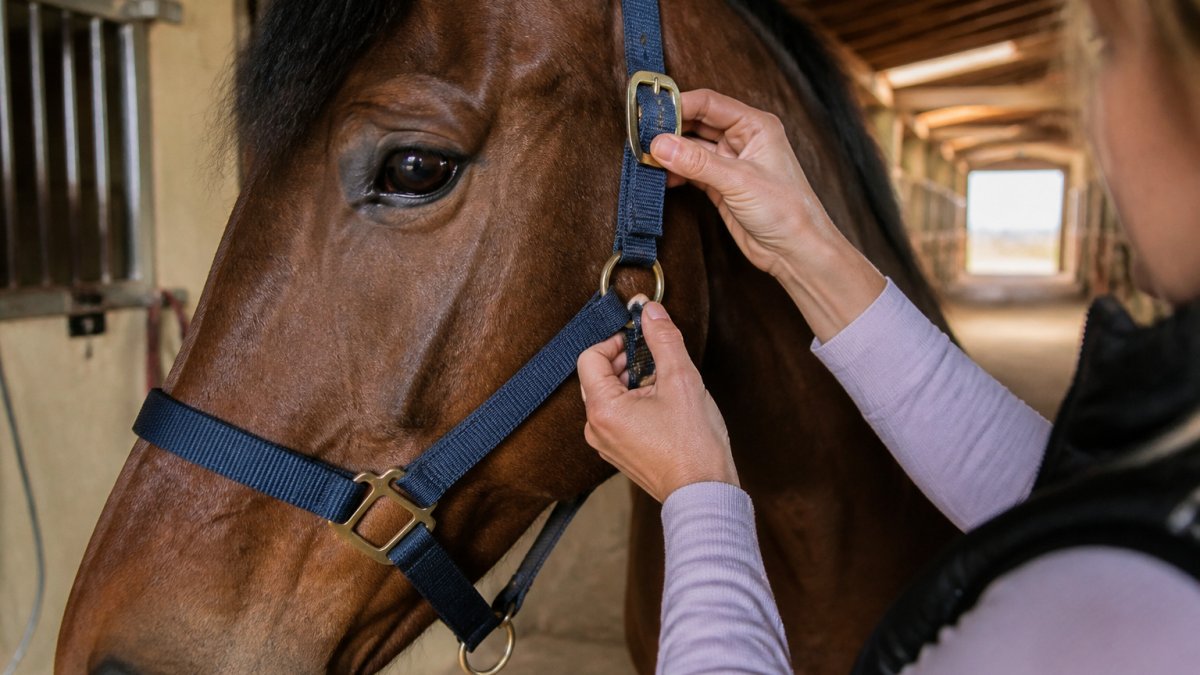
A breakaway halter is engineered to fail at a predetermined point so a panicked horse does not injure its poll or neck when it pulls back against a fixed object. The concept is simple, but the execution varies widely, and the differences matter for turnout, trailer loading, and tying.
The three common breakaway mechanisms
- Leather crown strap with a fuse or tab: A thin leather link or stitched tab at the crown gives way under load. This is the most traditional design and the easiest to inspect. The trade-off is that leather degrades with sweat and UV exposure, so the fuse weakens over time even without a incident.
- Replaceable breakaway link: A nylon or plastic link, often sold in multi-packs, snaps at a rated load and can be swapped out after a release. This design is common on turnout halters because the release point is consistent and inexpensive to renew.
- Velcro or hook-and-loop crown: The crown separates under sudden force and reattaches easily. It is convenient for trailers and grooming, but hook-and-loop loses holding power with dirt and hair, so it is a poor choice for a horse that leans or paws.
What to inspect before every use
Run a hand along the release point and check four things: the fuse or link is not cracked, stretched, or discolored; the stitching is intact and not sun-bleached; the hardware (snaps, rings, buckles) is not bent or corroded; and the halter still fits snugly enough that the release point sits at the crown, not down the side of the face. A breakaway that has already released once should be treated as spent unless the link is designed to be reused.
Never tie a horse with a halter whose release point is damaged, sewn over, or replaced with a non-breakaway strap. A modified breakaway is more dangerous than a standard halter because the handler expects a release that will not happen.
How breakaway designs compare on safety
Pros of breakaway designs:
- Lower risk of serious poll or neck injury if the horse pulls back or catches the halter on a fence, trailer, or stall gate
- Useful for turnout, trailer ties, and stable use where a fixed tie is unavoidable
- Replaceable-link designs let you restore a known release point cheaply
Cons of breakaway designs:
EU Equestrian Braided Nylon Rope Halter →
- Can release more often than some riders want, especially with Velcro crowns and dirty conditions
- Requires regular inspection of the fuse, stitching, and hardware
- No universal breaking-strength rating, so cross-brand comparison is difficult
Choose a breakaway halter with a replaceable link or a clearly visible leather fuse, inspect it before every turnout, and replace the release point after any incident. Treat the breakaway as a safety device with a service life, not a permanent feature.
Synthetic, Biothane and Fleece Options: Cleaning, Comfort and Sensitive Skin
Material-by-material trade-offs
- Nylon webbing: Strong, affordable, and widely available. It absorbs some water and can stiffen in cold weather, and the cut edges can feel abrasive against thin-skinned faces. It wipes clean but holds grit in the weave.
- Polyester webbing: Similar to nylon but less stretch and better UV resistance. It dries faster and is a good choice for horses that live outside.
- Biothane: A PVC coating over a polyester core. It does not absorb water, wipes clean with a damp cloth, and resists manure and mud. It is heavier than nylon and has less give, so fit matters more.
- Fleece-lined nylon: A fleece layer sewn over the nose and cheek spreads pressure and reduces rubs. The fleece is the weak point for hygiene because it traps dirt, sweat, and hair, and it must be washed or replaced regularly.
Cleaning mechanics that actually matter
Biothane and coated synthetics wipe clean with a damp cloth and mild soap; avoid solvents that can break down the PVC coating. Nylon and polyester webbing should be scrubbed with a soft brush and mild detergent, rinsed thoroughly, and air-dried out of direct sun. Fleece linings should be washed more often than the halter body, and any lining that stays damp against the skin is a rub waiting to happen. A common pattern is to keep two fleece-lined halters in rotation so one can dry completely between uses.
Matching material to skin sensitivity and allergies
Metal allergies are less common but real; if a horse reacts at the buckle or ring, look for stainless steel or coated hardware and avoid unknown pot-metal alloys. There is no single "hypoallergenic" halter, so the practical approach is to introduce one material change at a time and watch the pressure points for a week.
If you are unsure which material suits a sensitive horse, start with a smooth coated synthetic for turnout and reserve the fleece-lined halter for grooming and handling, when you can keep the lining clean and dry.
Pros of synthetic and fleece options:
- Easy to wipe clean and quick to dry, especially coated synthetics
- Padding reduces rubbing on sensitive skin when kept clean
- Biothane resists manure, mud, and repeated washing
Cons of synthetic and fleece options:
- Fleece traps dirt and needs frequent washing or replacement
- Coated synthetics are heavier and less forgiving of poor fit
- Fewer traditional styling choices for show settings
Pick the material by the horse's skin and the barn's conditions: coated synthetic for muddy turnout and sensitive skin, nylon or polyester for budget daily use, and fleece only when you can keep the lining clean and dry.
The main materials differ mainly in how they handle water, grit and skin pressure.
| Material | Key trait | Best for |
|---|---|---|
| Nylon webbing | Strong, affordable, can stiffen in cold | Budget daily use |
| Polyester webbing | Better UV resistance, dries faster | Horses kept outside |
| Biothane | Non-absorbent PVC coating, wipes clean | Muddy turnout, manure |
| Fleece-lined nylon | Spreads pressure, traps dirt and hair | Grooming and handling |
How to Choose a Horse Halter for Daily Use or Stable Use
For daily stable use, prioritize an adjustable fit, a secure buckle and a release design you can inspect easily. For trail or trailer work, choose a material that handles moisture and abrasion well. Measure your horse's head before ordering, and check the size chart against the listing. A halter that fits poorly causes rubs no matter how good the material is.
Once the halter fits, a matching blanket or sheet can complete the turnout setup. Our Hombys combo neck winter horse blanket and waterproof turnout sheet, available in a 75-inch size, pairs well with a fleece-lined halter for cold-weather routines.
Choosing Your Next Halter From the Horsey Horse Store Range
Start with how you use the halter. Daily stable work and turnout favor adjustable, easy-clean designs. Groundwork favors a rope halter with a clear fit. Riders with sensitive-skinned horses should look at fleece-lined options first. Browse the Horsey Horse Store range to compare materials and prices side by side.
Frequently Asked Questions
What are the alternatives to leather horse halters?
The most common alternatives are nylon halters, rope halters, biothane (a coated synthetic webbing), and fleece-lined halters. Nylon is widely available and inexpensive, and it does not need the conditioning leather requires. Each option trades off durability, safety and cleaning differently, so match the material to how you use the halter.
Are nylon halters better than leather halters?
Nylon is not better across the board. Nylon and leather each suit different riders. Choose the material that fits how you use the halter and how much upkeep you are willing to do.
Which type of horse halter is safest?
Check that any halter you buy is sized so it does not slip over the eyes or cheekbones. Always inspect hardware and stitching before each use, and never leave a halter on a horse that is unsupervised in a field unless it is built with a release design.
How do you choose the right halter for a horse?
Start with fit. Measure the crown, noseband and cheek pieces against your horse's head, and confirm the halter adjusts enough for a custom fit without leaving pressure points. Next, decide on use: a rope halter suits groundwork and training, a breakaway style suits turnout, and a durable nylon or biothane halter suits daily stable and trail work. Finally, check material comfort if your horse has sensitive skin, and confirm the return policy in case the size is wrong. Horsey Horse Store offers free shipping on orders over $25 and 30-day returns on clean, unused items.
